
After reporters were detained at Delhi demonstrations, the Press Council of India issued new guidance on identification, physical safety and impartial reporting during protests.
The guidelines were released on 15 October 2026 amid Delhi protests over electoral-roll revisions and demands concerning Chief Election Commissioner Gyanesh Kumar. For reporters heading into crowds, the advice is practical: carry identification, plan an exit and verify claims before publication. It is not a new law granting journalists immunity from police action.
Key Highlights
- Journalists are advised to display valid newsroom identity cards or applicable PIB/DIP accreditation.
- Reporters should remain neutral and comply with lawful safety instructions.
- First-aid supplies, escape planning and regular newsroom contact are recommended.
- Unverified protest claims and sensitive police movements require particular care.
What Are the Press Council’s New Rules for Protest Coverage?
Dated 15 October on the Council’s official press-release page, the Guidelines for Journalists Covering Protests and Demonstrations cover six areas, from identifying oneself to protecting people featured in coverage. They are not limited to Delhi.
At a barricade, the instructions are straightforward:
- Show press identity: Carry a valid employer-issued card and/or PIB or Directorate of Information and Publicity (DIP) accreditation, where applicable. Keep it visible, with the lanyard secured.
- Keep the reporting role clear: Do not join the demonstration, provoke confrontations, or interfere with police, protesters, or counter-protesters.
- Respond calmly: Identify yourself to officers and follow lawful directions, especially those concerning immediate safety.
- Give clashes space: Stay clear of confrontations and do not fix cameras on police barricades or vehicles if they obstruct movement.
A press card identifies a reporter. It does not by itself guarantee access to a restricted area.
What Safety Equipment and Reporting Checks Are Recommended?
Crowds rarely stay in one place. A reporter standing safely beside a march may find an exit blocked when police or demonstrators move. The PCI therefore asks journalists to keep reassessing the crowd and identify nearby streets or other safe routes out.
Its suggested emergency kit includes:
- A basic first-aid kit and necessary personal medication.
- Drinking water, snacks and a flashlight.
- Eye protection and a washcloth; protective headgear or body armour where the risk warrants it.
The Council specifically warns against handling tear-gas canisters, smoke grenades and flash-bang devices. During tear gas, leaving safely comes before footage.
The reporting itself needs similar care. If organisers claim a particular number of detentions and police give another, neither figure should quietly become an established fact. Attribute the competing claims, seek independent verification and say what remains unconfirmed. The guidance also cautions against exposing minors or people in distress unnecessarily and publishing real-time tactical police locations where disclosure could threaten safety.
Why Did the Delhi Protests Lead to These Guidelines?
The advisory follows complaints that journalists covering demonstrations against Chief Election Commissioner Gyanesh Kumar and the Special Intensive Revision of electoral rolls were stopped or detained despite identifying themselves.
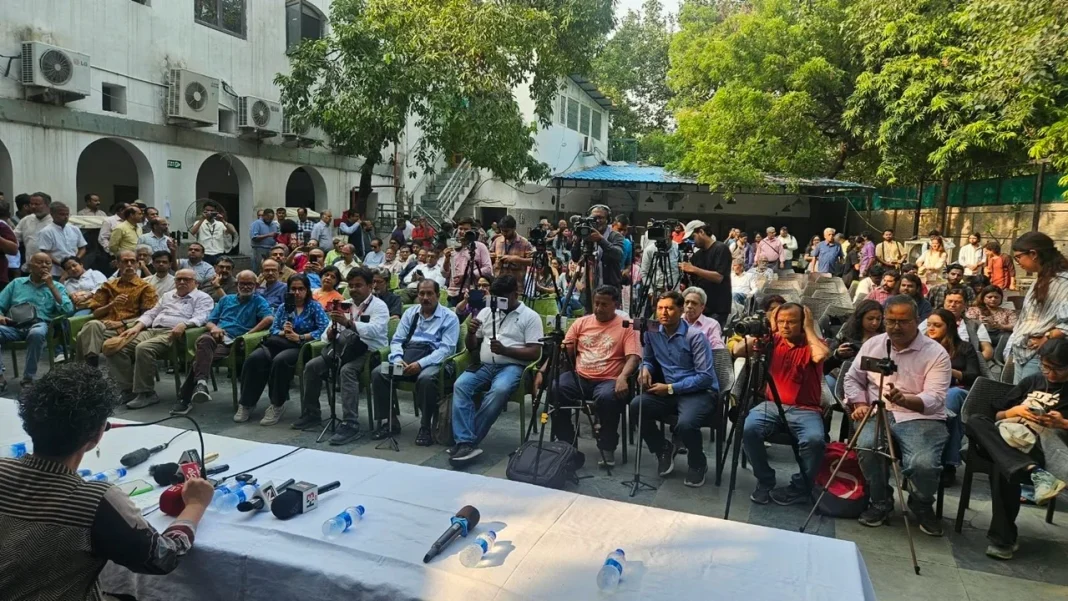
On 11 October, three Indian Express journalists were briefly detained while reporting in Delhi. Newslaundry subsequently reported that more than 30 journalists had been detained during the protests. Journalists’ groups criticised the actions; the allegations and the broader policing of demonstrations have also reached the Supreme Court. Detention figures reported by newsrooms describe those incidents, not a formal police tally.
The Press Information Bureau shared a visual account of the guidelines on its official X account on 16 October, reproduced in Mint’s coverage. A visible ID had not prevented every reported detention.
Do the Guidelines Change Journalists’ Rights or Newsroom Duties?
The Press Council is a statutory body operating under the Press Council Act, 1978. Its formal jurisdiction concerns newspapers and news agencies, not television broadcasts or digital-only platforms. The October guidance sets professional expectations; it does not create a separate criminal offence or resolve disputes about the legality of detentions.
Newsrooms share responsibility. The Council recommends appointing an emergency contact, tracking assignments and agreeing communication arrangements with police liaison officers where feasible. Freelancers need their own check-in plan: someone trusted should know where they are going and when to expect them back.
No shot is worth losing a safe exit. For the original advisory, readers can consult the Press Council’s official release, while India Focus Daily will follow further developments involving journalist safety and protest coverage.
Are Press IDs Mandatory Under the New PCI Guidelines?
The Council advises journalists to carry and visibly display valid newsroom identification or applicable PIB/DIP accreditation. The guidance does not establish a new universal accreditation requirement.
Can Journalists Take Part in Protests While Reporting?
The PCI advises reporters to remain professionally neutral rather than joining demonstrations or provoking confrontations. Personal participation and independent coverage should not be confused during reporting assignments.
What Should a Journalist Carry to a Demonstration?
The suggested kit includes first aid, essential medication, water, snacks, a flashlight and eye protection. Additional protective equipment depends on the assessed risk at the location.
Can Reporters Publish Live Police Positions?
The advisory cautions against broadcasting tactical movements, positions or escape routes in real time when disclosure could endanger people or compromise operational security at the scene.
Do These Guidelines Cover Digital News Platforms?
The Press Council’s statutory jurisdiction primarily covers print newspapers and news agencies. Digital journalists may use its safety recommendations, but their regulatory position differs from print organisations.
India’s Latest Legal, Security and Government Updates
1. How Is Delhi Preparing BRICS Security?
Explore Delhi’s BRICS security arrangements involving 30,000 police personnel.
2. What Changed in Delhi Challan Appeals?
Find out about Delhi’s traffic challan rules and the 50% deposit requirement for court appeals.
3. Why Are Delhi Voters Receiving Notices?
Uncover why 3.3 million Delhi voters are linked to SIR notices and what the process involves.
4. Can You Track Supreme Court Cases?
Check out how virtual hearings, online case filing and case tracking work at the Supreme Court.
5. What Raised Concerns About CBSE Evaluation?