
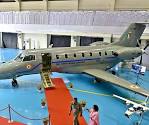

India’s SARAS MkII is back in the aviation news because CSIR-National Aerospace Laboratories has completed the design phase of the 19-seater light transport aircraft. The aircraft is being built for short-haul flying, smaller airports, air taxi services, military support, medical evacuation, and regional routes where a larger plane does not make business or operational sense. The update was also shared through Civil Aviation Minister Ram Mohan Naidu’s official X post.
Why India Is Building The SARAS MkII Aircraft
India is building the SARAS MkII because the country still needs a small, locally designed aircraft for regional connectivity. Big jets work for Delhi, Mumbai, Bengaluru, Hyderabad, and other busy routes. They do not always work for small towns, hilly regions, border areas, or thin passenger routes.
The aircraft is also tied to India’s push for indigenous aviation manufacturing. PIB said the 19-seater SARAS Mk-2 is being developed by CSIR-NAL for civilian and military operations, with features such as a pressurized cabin, digital avionics, glass cockpit, autopilot, and command-by-wire flight controls.
The timing is important. India is trying to widen regional air travel under UDAN, and a small aircraft can help airlines test low-demand routes without the cost burden of a bigger plane. The Economic Times reported that NAL has completed the design phase and is preparing for prototype manufacturing.
Who Will Use The SARAS MkII Aircraft?
The SARAS MkII is not being built only for regular passenger flights. CSIR-NAL’s own brochure lists several uses, including air taxi, executive transport, light package carrier, border patrol, air ambulance, and community services.
Likely users may include:
- Regional airlines flying short routes under UDAN
- State governments needing medical or emergency aircraft
- Defence and border agencies for patrol duties
- Charter operators offering air taxi services
- Cargo firms carrying light packages to smaller airports
The aircraft can also help routes where 70-seat or 180-seat aircraft are too large. For example, a short route between a small hill airport and a regional hub may not fill a bigger aircraft daily. A 19-seater makes the trial more realistic.
What Makes SARAS MkII Useful For Smaller Airports
The SARAS MkII has been designed for places where airport infrastructure is limited. The CSIR-NAL brochure says it can operate from semi-prepared runways and hot, high-altitude airfields. That is useful for remote regions, tourism towns, defence locations, and areas where long runways are not available.
The aircraft’s listed take-off distance is 820 meters, while its landing distance is 665 meters. With 19 passengers, the maximum range is 750 km. With 10 passengers, the maximum range goes up to 2,350 km. Its cruise speed is listed at 485 km/h, and its endurance is 6 hours.
That makes it suitable for short regional hops, emergency movement, low-volume passenger routes, and quick government travel. It is not trying to replace big aircraft. It is trying to fill the gap between helicopters, small charter planes, and larger regional aircraft.
What Happens Next For The 19-Seater Plane
The next big step is prototype manufacturing, integration, testing, and certification. ET Manufacturing quoted CSIR-NAL officials saying the design has been frozen and the focus is now on manufacturing partners, assembly, and integration.
India still has work to do before passengers can fly on the SARAS MkII. Aircraft development moves slowly because every system must pass safety checks. Engines, avionics, cabin systems, controls, weight balance, and runway performance all need validation.
Still, the project gives India a chance to build a homegrown aircraft ecosystem beyond defence jets and helicopters. If SARAS MkII succeeds, it can support UDAN routes, medical flying, air taxi networks, and military utility roles without depending fully on imported small aircraft.
FAQs
Who is developing SARAS MkII?
CSIR-National Aerospace Laboratories in Bengaluru is developing the SARAS MkII aircraft for India.
How many passengers can SARAS MkII carry?
The aircraft is designed as a 19-seater light transport plane for short routes.
Will SARAS MkII be used by airlines?
Yes, regional operators may use it for low-demand routes and smaller airports.
Can SARAS MkII work as an air ambulance?
Yes, CSIR-NAL lists air ambulance use among its planned applications.
Is SARAS MkII ready for passenger service?
No, prototype manufacturing, testing, and certification still need to be completed.