

Twenty-five people went to work inside a Himalayan tunnel and did not return. The Sikkim tunnel disaster is no longer only a rescue story. It is now a test of how India plans, audits and pushes difficult infrastructure through fragile terrain.
The blast at NHPC’s Teesta Stage VI project has raised a blunt question. When geology starts resisting a schedule, does the deadline move, or are workers expected to absorb the extra risk?
What Happened Inside The Teesta Stage VI Tunnel?
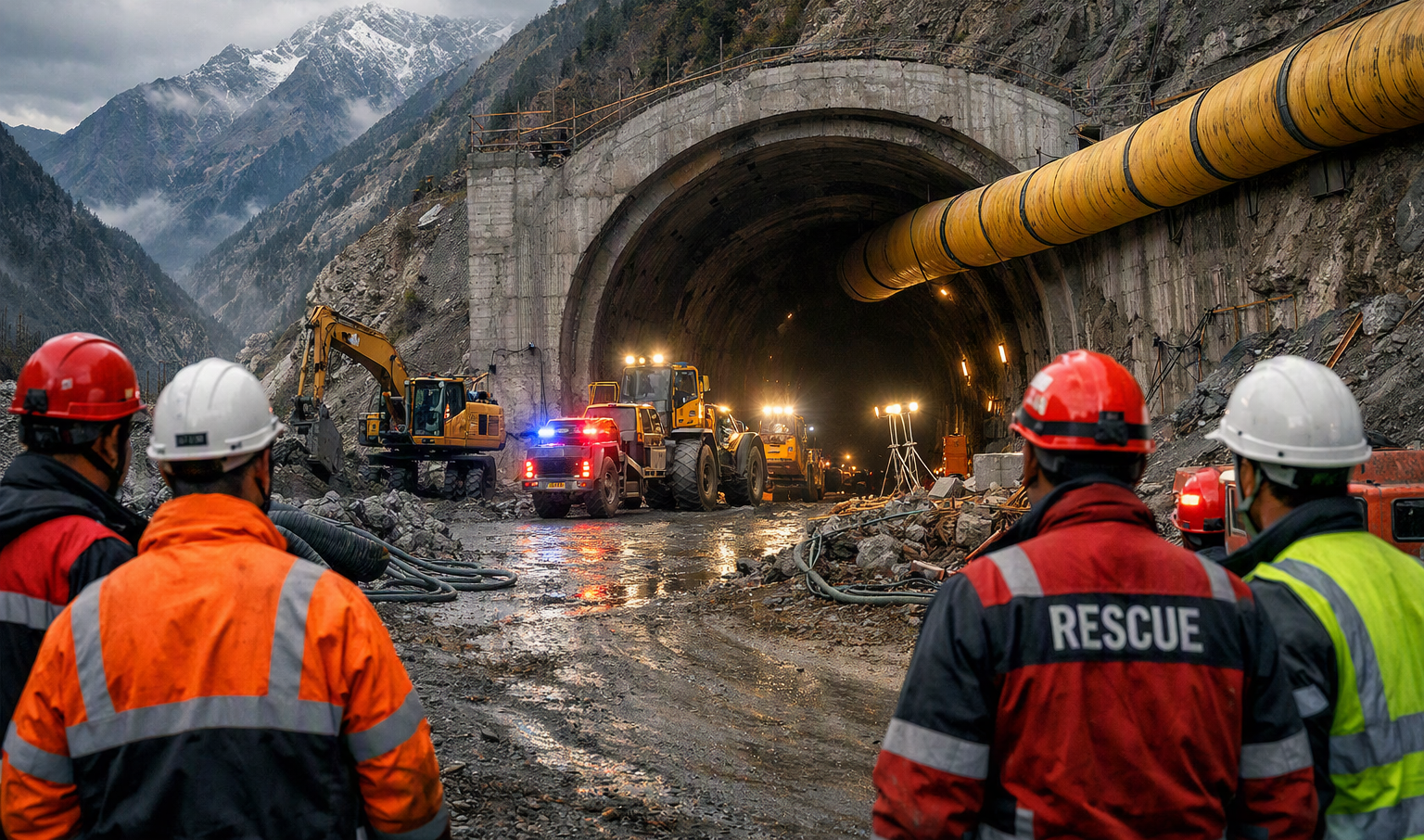
The incident occurred on July 20, 2026, inside an under-construction tunnel at Samardung in Sikkim’s Namchi district. NHPC said a sudden burst of suspected methane trapped within the rock led to an explosion, dense smoke, and toxic gases. Of the 27 people inside, two escaped. Search teams recovered all 25 bodies before the four-day operation ended. The latest rescue update confirmed the final toll.
The tunnel belongs to the 500 MW Teesta Stage VI hydropower project. NHPC’s official project page lists September 2029 as the expected commissioning date and an anticipated cost of ₹8,448.74 crore, up from ₹5,748.04 crore at July 2018 price levels. Those figures do not prove schedule pressure caused the tragedy. They do show a project already carrying years of delay, higher costs and difficult construction.
Sikkim Chief Minister Prem Singh Tamang visited the site and shared an official update on X. The state later formed a high-level committee and asked it to report within 15 days.
Were Warning Signs Already Visible?
This is where the Sikkim tunnel disaster becomes harder to dismiss as an unforeseeable underground event. A report based on NHPC documents said the company had issued an Expression of Interest just 10 days before the blast, seeking specialists to speed excavation in a stretch affected by poor geology, water and slush ingress, cavity formation, face collapses and methane. The same documents reportedly marked earlier methane releases near the accident zone.
A cited technical study recommended continuous methane monitoring, strong ventilation and a one-hour gas dilution period after each excavation cycle. The inquiry must now establish what equipment was operating, what readings were recorded and who cleared the shift to continue. Until then, blame should not be guessed. Records should speak.
The committee should publicly answer four questions:
- Were methane levels logged continuously and independently checked?
- Did alarms trigger before workers entered the affected stretch?
- Were ventilation pauses followed after drilling, blasting or excavation?
- Did any production target influence a safety decision?
These are not paperwork questions. They decide whether the disaster came without warning or after warnings were normalised.
Should Deadlines Ever Come Before Worker Safety?
No infrastructure deadline should outrun worker safety. A completion date can be revised. A budget can be reworked. A dead worker cannot be restored to a family through compensation or a press conference.
India already has specific requirements. The Occupational Safety, Health and Working Conditions Rules, 2026 require adequate tunnel ventilation and instruments for measuring oxygen, flammable gases, toxic gases, temperature and dust. They also require controls before workers enter areas where oxygen deficiency or a flammable atmosphere may exist.
The gap is often not the absence of a rule. It is whether readings are live, alarms stop work automatically, contractors report near misses, workers can refuse unsafe entry, and outside inspectors can halt excavation without managerial pressure.
Silkyara should have ended any habit of treating tunnel emergencies as rare surprises. In 2023, 41 workers remained trapped for 17 days before being rescued, according to the NDRF’s official account. The Sikkim tunnel disaster ended far worse.
What Must Change After The Sikkim Tunnel Disaster?
First, high-risk tunnel projects need publicly auditable gas and ventilation records, not summaries released after an accident. Second, independent safety engineers should report outside the contractor’s production chain. Third, every dangerous geological change should trigger a documented stop-work review.
Tender documents should separate safety milestones from construction milestones. Contractors should never gain time or money by taking a thinner safety margin. Workers and their families also deserve transparent contracts, insurance details, attendance records and rapid compensation without repeated visits to government offices.
The inquiry’s report must be published, with names of responsible agencies, missed warnings and deadlines for corrective action. Otherwise, the Sikkim tunnel disaster will become another cycle of grief, compensation and forgotten recommendations.
Development does not slow when a dangerous shift is stopped. It becomes more credible. The only deadline that should never move is the one for protecting people underground.
Frequently Asked Questions
Did project documents mention methane before the Sikkim tunnel blast?
Reports say earlier methane releases and geological conditions had already been documented near excavation areas.
What safety instruments should operate at tunnel construction sites?
Rules require instruments measuring oxygen, flammable gases, toxic gases, temperature and airborne dust levels continuously.
Can the inquiry confirm whether deadline pressure caused the disaster?
Only records, testimony, gas logs and work orders can establish whether schedule pressure influenced decisions.
Why are Himalayan tunnel projects especially difficult to manage safely?
Young fractured rock, water ingress, unstable faces and trapped gases can change conditions without notice.
What should authorities publish after completing the investigation?
They should release findings, accountability decisions, corrective deadlines, inspection records and compensation progress publicly online.