

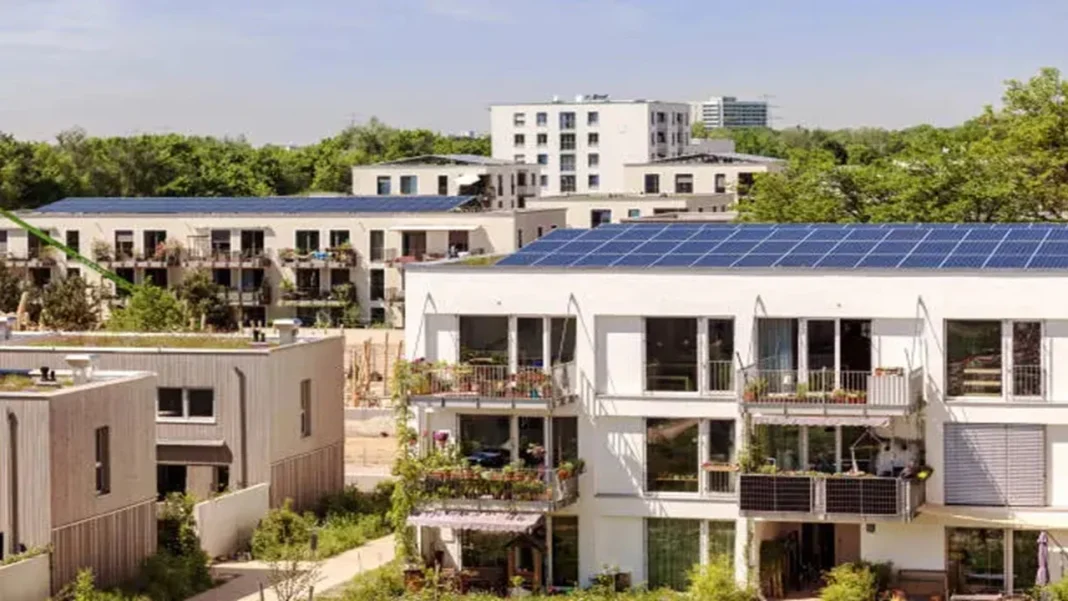

Yes, you can install Solar Panels In An Apartment, but the answer depends on one key point: who controls the roof. In most Indian apartment buildings, the rooftop is a common area, so one resident cannot use it freely without approval from the society, RWA, apartment association, builder, or housing board.
This is why flat owners should not treat rooftop solar like installing an AC outdoor unit. Solar panels need space, wiring access, structural safety checks, DISCOM approval, net metering, and clear cost sharing. The good part is that India’s PM Surya Ghar: Muft Bijli Yojana has made apartment solar more attractive, especially for common facilities in Group Housing Societies and RWAs.
The scheme gives residential households central subsidy support and also covers Group Housing Societies or RWAs for common facilities, including EV charging, up to 500 kW capacity. Delhi’s official solar subsidy page lists ₹18,000 per kW support for GHS/RWA common facilities.
Can Apartment Owners Install Solar Panels On The Roof?
Apartment owners can install solar panels only after checking ownership and permission rules. A private terrace flat may have easier access if the sale deed clearly gives exclusive terrace rights. In a normal multi-storey apartment, the roof belongs to all residents.
That means the RWA must approve the project in a meeting. The approval should mention rooftop area, panel layout, wiring route, maintenance access, inverter location, meter changes, fire safety access, and who will receive the solar benefit.
A single flat owner may face resistance if the panel blocks water tanks, lift rooms, dish antennas, fire exits, or future repairs. Societies usually prefer a shared solar plant for lifts, corridor lights, water pumps, clubhouses, security cabins, and EV charging. This lowers the common-area electricity bill and avoids disputes between residents.
How Much Does Apartment Solar Cost In India?
The cost depends on system size, panel quality, inverter type, mounting structure, cable length, net meter charges, and roof condition. In 2026, a 1 kW rooftop solar system in India usually costs around ₹55,000 to ₹85,000 per kW, while a complete 1 kW system may cost around ₹70,000 to ₹1.1 lakh before subsidy.
For apartments, cost changes because shared systems need stronger mounting, longer wiring, safety routing, approvals, and sometimes extra civil work. A small 3 kW system for one flat may not work if the society does not allow private rooftop usage. A 25 kW to 100 kW common-area system may suit larger societies better.
Tata Power Solar’s residential guide says a 1 kVA grid-tie solar setup can generate around 1,400 units annually, while a 3 kVA setup can generate around 4,200 units annually. These figures help residents estimate savings before approving the project.
A simple cost view looks like this:
| Solar Setup | Approx Use In Apartments | Cost Point To Check |
| 1 kW to 3 kW | Individual flat, only if roof access is approved | Subsidy, meter link, roof rights |
| 10 kW to 25 kW | Small society common load | Lifts, lights, pumps |
| 50 kW to 100 kW | Larger apartment society | Common bill reduction |
| Up to 500 kW | Large GHS/RWA common facilities | Subsidy cap and DISCOM approval |
What Subsidy Can Apartment Residents Claim?
Under PM Surya Ghar: Muft Bijli Yojana, households can get central financial assistance for rooftop solar. myScheme lists subsidy support up to 40% of solar panel cost, with ₹30,000 to ₹60,000 for 1 kW to 2 kW systems and ₹78,000 for systems above 3 kW.
For apartment societies, the more useful route is the GHS/RWA subsidy. Delhi’s official page states that Group Housing Societies and Resident Welfare Associations can get ₹18,000 per kW for common facilities, including EV charging, up to 500 kW capacity, with a limit linked to 3 kW per house.
This means a society can use solar to cut electricity bills for shared services. The benefit may reduce monthly maintenance charges if the association passes the savings to residents.
What Documents And Approvals Are Usually Needed?
Residents should keep the electricity bill, consumer number, ownership proof, Aadhaar-linked details, bank details, RWA resolution, rooftop layout, vendor quotation, DISCOM application, and net-metering documents ready.
The MNRE’s official X post says the PM Surya Ghar portal works as a one-stop platform to apply for rooftop solar, track applications, and access subsidy details.
What Rooftop Rules Should Residents Check First?
Before installing Solar Panels In An Apartment, residents must check 5 points.
- First, check if the roof can take the load. Solar panels are not extremely heavy, but mounting structures, wind load, and roof waterproofing need proper review.
- Second, check shadow-free space. Water tanks, taller towers, lift rooms, nearby buildings, trees, and dish antennas can reduce output.
- Third, check DISCOM rules. Net metering and net billing rules differ by state. Some states also offer extra subsidy or faster approvals.
- Fourth, check fire and maintenance access. Panels should not block service routes, drainage points, terrace doors, lightning arresters, or water tank access.
- Fifth, check benefit sharing. If solar powers common areas, the RWA must decide whether savings reduce maintenance bills, create a sinking fund, or repay a society loan.
Recent adoption is rising. The Economic Times reported that PM Surya Ghar is expected to reach 7.5 million beneficiary households by December 2026, with over 4 million households already benefiting from the scheme.
More Solar & Energy Updates Here!
Is Your Solar Subsidy Delayed?
Check out simple ways to track application status.
Which June Rule Changes Matter?
Find key updates affecting households and finances.
Why Is Rajasthan Leading Solar?
Explore the drivers behind rapid solar growth.
Want Lower Electricity Bills Fast?
Learn how to apply for rooftop subsidies.
How Did This Village Win?
Discover the achievement behind the solar success.
Final Word For Apartment Residents
Installing Solar Panels In An Apartment is possible, but it needs collective approval more than individual interest. A private flat owner should not start installation before checking rooftop rights, RWA rules, DISCOM approval, and subsidy eligibility.
For most apartment buildings, a society-level solar project gives the cleanest result. It reduces common-area bills, avoids roof disputes, supports EV charging, and fits the GHS/RWA subsidy route better. Residents should start with a roof survey, monthly common electricity bill, official PM Surya Ghar portal check, and a written RWA resolution.
FAQs
1. Can One Flat Owner Install Solar Panels?
Yes, but only with roof rights, RWA approval, and DISCOM permission.
2. Is Apartment Solar Eligible For Subsidy?
Yes, GHS/RWA projects can claim subsidy for common facilities.
3. How Much Subsidy Can RWAs Get?
RWAs can get ₹18,000 per kW for eligible common-area systems.
4. Can Solar Reduce Apartment Maintenance Charges?
Yes, if solar savings reduce common electricity bills.
5. Is Net Metering Needed For Apartments?
Yes, grid-connected apartment solar usually needs DISCOM net-metering approval.