

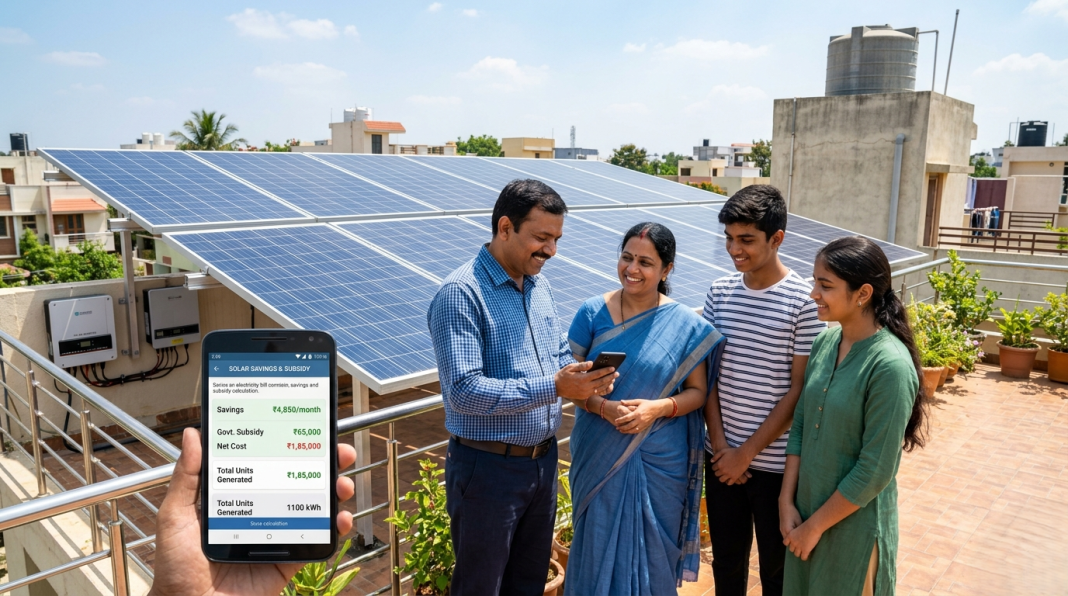

A lot of families like the idea of rooftop solar until the price quote lands in the WhatsApp chat. That is usually the moment the big question comes up: after subsidy, what is the actual amount left to pay under PM Surya Ghar?
The short answer is simpler than many people expect. Based on the Centre’s subsidy structure linked to benchmark prices, a 2kW home system works out to roughly ₹40,000 after subsidy, while a 3kW system comes to about ₹67,000 after subsidy. Actual quotes can move up or down depending on roof type, brand, wiring run, and local installation conditions, but these figures are the clearest starting point from official scheme numbers.
What The Government Subsidy Covers For 2kW And 3kW
The scheme gives Central Financial Assistance of 60% of the system cost for up to 2kW, then 40% for the extra capacity between 2kW and 3kW. The subsidy is capped at 3kW. That is why the official support works out to ₹60,000 for a 2kW system and ₹78,000 for a 3kW system or higher.
Using those same official benchmark-linked figures, the implied base cost comes to about:
- 2kW system: around ₹1,00,000 before subsidy, about ₹40,000 after subsidy
- 3kW system: around ₹1,45,000 before subsidy, about ₹67,000 after subsidy
That is the cleanest way to read the scheme without sales talk. In many homes, a 2kW setup fits households with lighter daytime use, while 3kW is often more comfortable for families running fans, fridge, TV, washing machine, and regular kitchen loads.
Full Expense Breakdown Homeowners Should Expect
The subsidy reduces the headline cost, but the final bill still depends on what the installer includes in the quote. A standard rooftop package usually covers panels, an inverter, a mounting structure, wiring, earthing, and installation labour. If the roof needs extra civil work or a longer cable route, the figure can climb.
A simple way to look at it is this:
For 2kW
- Benchmark-linked system cost: about ₹1,00,000
- Central subsidy: ₹60,000
- Likely homeowner outflow: about ₹40,000
For 3kW
- Benchmark-linked system cost: about ₹1,45,000
- Central subsidy: ₹78,000
- Likely homeowner outflow: about ₹67,000
One more point gets missed often. The subsidy is released after installation, inspection, and commissioning through the scheme process, so some households still plan their cash flow carefully even when the net cost looks attractive. For families that do not want to pay the full amount upfront, the scheme has also been linked with loans at around 7% interest for residential rooftop systems up to 3kW.
Why This Topic Is Trending Again In 2026
The scheme is moving faster now than it did in the early months. As of May 2026, more than 33 lakh rooftop systems had been installed, over 1 crore households had registered on the national portal, and more than ₹22,750 crore in subsidies had been disbursed. The government also said May 2026 was the strongest month since launch, with a record 3.16 lakh installations.
That is one reason the cost question keeps returning. People are no longer asking whether rooftop solar is available. They are asking whether the maths works for their own house.
An official update on X from PIB India highlighted the scale of the scheme and the sharp rise in adoption, which makes it a useful reference when checking how quickly the rollout is moving.
Before Booking An Installer
Check these points before paying any advance:
- Confirm the vendor is approved in your DISCOM or portal workflow
- Ask whether the quote includes the inverter, structure, earthing, and net meter support
- Check roof shadow, usable area, and daily power use
- Compare 2kW and 3kW savings, not just the opening quote
- Read the subsidy and commissioning steps on the official portal
For most homes, the smarter decision is not the cheapest quote. It is the quote that clearly shows what is included, when the subsidy is expected, and what support is available after commissioning.
Is PM Surya Ghar Worth It At These Prices
For households with steady monthly power use, the post-subsidy price is now far less intimidating than many assume. A 2kW system landing near ₹40,000 net and a 3kW system near ₹67,000 puts rooftop solar into the range of a major home appliance purchase, not a luxury upgrade.
The official portal remains the best place to start the process, and the MNRE rooftop solar page is useful for scheme documents and operational rules.
FAQs
How much subsidy is available for a 2kW solar system?
A 2kW residential system gets ₹60,000 Central subsidy under the PM Surya Ghar scheme.
How much subsidy is available for a 3kW solar system?
A 3kW residential system gets ₹78,000 Central subsidy, which is the maximum standard support.
What is the likely net cost after subsidy for 2kW?
Using official benchmark-linked figures, the likely net cost is about ₹40,000 after subsidy.
What is the likely net cost after subsidy for 3kW?
Using official benchmark-linked figures, the likely net cost is about ₹67,000 after subsidy.
Can households finance the installation instead of paying everything up front?
Yes, loans around 7% interest are available for residential rooftop systems up to 3kW