
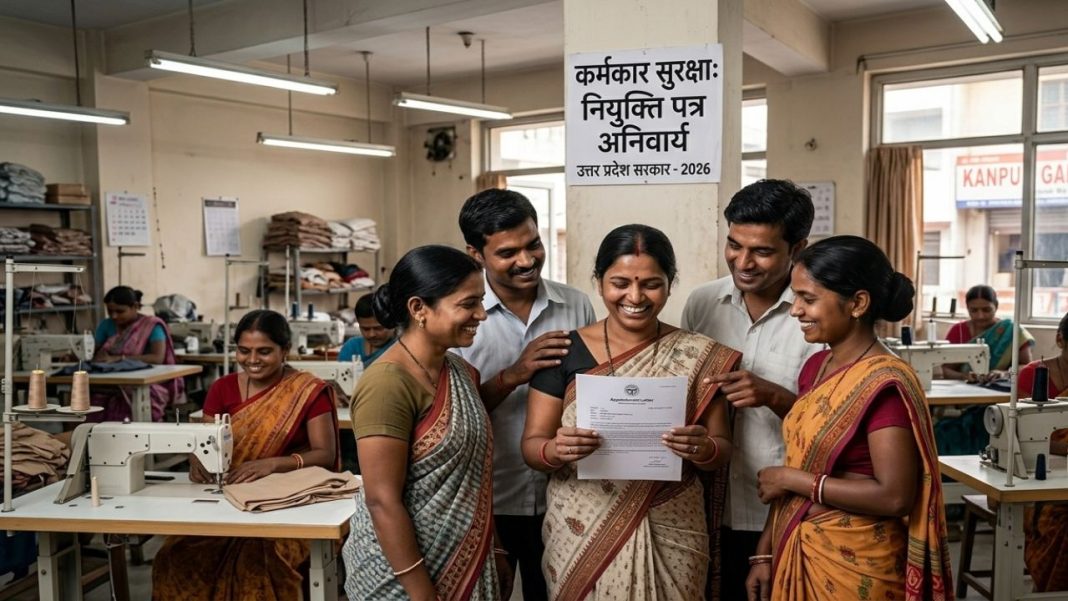

Uttar Pradesh has moved to make written appointment letters a standard requirement for workers in covered private establishments employing at least 10 people. The state Cabinet, chaired by Chief Minister Yogi Adityanath, approved the Uttar Pradesh Occupational Safety, Health and Working Conditions Rules, 2026 on August 25.
For workers who have spent years relying on verbal promises, salary slips or WhatsApp messages, that could be a practical shift. An appointment letter puts the employer, job, wages and employment terms on paper. The rules also bring annual health checks, workplace welfare requirements and night-shift safeguards into the same framework.
Key Highlights
- Establishments with at least 10 employees come within the reported threshold for the new framework.
- Covered workers must receive appointment letters, while domestic and agricultural workers remain outside this reported scope.
- Employers will also have to provide annual health examinations and basic workplace safety facilities.
- Women may work night shifts with consent and prescribed safety arrangements.
- Uttar Pradesh has more than 8.45 crore e-Shram registrations, but that is not the number covered.
What Exactly Has Uttar Pradesh Changed?
The Cabinet has cleared state rules for implementing the Occupational Safety, Health and Working Conditions Code, 2020 in Uttar Pradesh. Section 6 of the central Code already requires employers to issue appointment letters, while the state rules set out the form, process and compliance details.
Reports on the Cabinet decision say the requirement applies to factories, shops and commercial establishments with at least 10 employees. Domestic and agricultural workers are excluded from the reported coverage. The rules also move employers toward a single registration and common licensing system instead of separate processes for different labour categories.
The draft rules had proposed a Form 9 appointment letter and a deadline of one month after joining for new workers, with existing workers to be covered within three months of commencement. Final Gazette publication will be important for confirming the operative wording and dates.
Why Could An Appointment Letter Change Private Employment?
A written appointment letter does not automatically stop wage delays, illegal deductions, or unfair dismissal. It does remove one common problem: a worker having no document that clearly says who employed them and on what terms.
The letter can record designation, wages, employment type, joining date, and other prescribed information. That can help when a worker needs to prove employment for a labour complaint, social-security enrolment, a bank process, or a dispute over agreed salary.
There is also a broader formalisation angle. India Code already places the appointment-letter duty on employers under the national OSH Code. Uttar Pradesh’s state rules give local administration a framework for implementation and inspections. For factories, retail chains, warehouses, workshops, offices and service businesses, this paperwork cannot be treated as optional HR practice once the rules are operational.
What Else Will Change At The Workplace?
The Cabinet package goes beyond appointment letters. Employers are expected to arrange free annual health examinations and provide prescribed safety equipment and facilities. Reports list drinking water, toilets, bathing facilities, rest rooms, canteens and first aid among workplace obligations, depending on the applicable rule and establishment category.
Women can also work night shifts with consent, provided the employer meets safety conditions. The wider labour-code framework includes transport, adequate lighting and other safeguards for women working before 6 am or after 7 pm.
Another notable change concerns contract labour. The state has reportedly tightened restrictions on using contract workers for an establishment’s core activity, while providing common licences for specified categories, including contract and inter-state migrant workers. Electronic filing of licences, registrations, records and returns is also part of the shift.
Could Millions Of UP Workers Actually Benefit?
The potential scale is large, but there is no official estimate yet for how many workers will receive appointment letters under the new state rules.
Uttar Pradesh had 8,45,90,721 workers registered on e-Shram as of July 14, 2026, the highest figure among Indian states. Many registrants work in agriculture, domestic work, or other unorganised occupations, so that figure cannot be used as a direct beneficiary count for the 10-employee workplace rule.
Still, the data show why formal employment records carry weight in Uttar Pradesh. Even if only a fraction of the state’s workforce falls inside covered establishments, the number affected could run into millions.
The next document to watch is the final state Gazette notification. It should settle commencement dates, forms, transitional deadlines and enforcement details. For employees, the practical test is simpler: after joining a covered workplace, does a signed appointment letter actually arrive?
FAQs
Who must issue appointment letters under the new UP rules?
Covered factories, shops, and commercial establishments employing at least 10 workers must issue appointment letters.
Are domestic workers covered by the new appointment-letter rule?
Current reports say domestic and agricultural workers remain outside the reported scope of these rules.
Will existing employees also receive appointment letters?
The draft rules proposed appointment letters for existing workers within three months after the rules commence.
Do the rules allow women to work night shifts?
Women may work night shifts with consent, transport, security, and other prescribed workplace safeguards provided.
When will the new Uttar Pradesh rules take effect?
The final Gazette notification should confirm commencement, forms, transition deadlines, and detailed enforcement requirements officially.