

India’s Special Intensive Revision, or SIR, has left 13.37 crore names outside draft electoral rolls across 30 states and Union Territories, equal to about 14.1% of the pre-revision electorate. Delhi stands out sharply. Its August 31 draft roll contains 97,53,577 electors, down from 1,45,10,299 before the exercise. That leaves 47,56,722 names, or 32.8%, outside the draft list.
Delhi has the highest exclusion rate recorded so far. These are draft-roll exclusions, however, not automatically permanent deletions. Eligible voters whose names are missing can still seek inclusion.
How Big Is The Electoral Roll Revision Across India?
The Election Commission began the SIR with Bihar in June 2025, later expanding it across more states and Union Territories. Unlike a routine summary revision, this exercise prepares rolls afresh and requires prescribed voter verification. The Election Commission’s Phase III announcement was issued on May 14, 2026.
The exercise now covers most of the country, while Assam, Himachal Pradesh and Jammu and Kashmir follow different timelines or conditions.
The latest figures show how wide the revision has become:
- 13.37 crore names are outside draft rolls across the three SIR phases
- Delhi leads with a 32.8% exclusion rate
- Dadra and Nagar Haveli and Daman and Diu follow at about 29.6%
- Telangana is at 21.7%, while Maharashtra is at 21.1%
- Maharashtra has more than 2.06 crore draft exclusions, higher than Delhi in absolute numbers
Other large figures include about 90 lakh names removed in West Bengal, nearly 65 lakh in Bihar, 1.07 crore in Karnataka and 44.89 lakh in Andhra Pradesh. These figures can still change through claims and corrections.
Why Has Delhi Recorded The Highest Share Of Exclusions?
Delhi’s rate is closely linked to the capital’s highly mobile population. Election officials and booth-level staff have cited people shifting homes, moving outside Delhi, duplicate registrations, deaths, and voters who could not be found at registered addresses during verification.
Of the 47,56,722 names not included in Delhi’s draft roll, 43,32,775 were classified as shifted or unavailable. Another 1,41,535 were enrolled at multiple locations or treated as duplicates, while 2,82,412 were recorded as deceased.
The pattern varies sharply inside Delhi. South East district recorded the highest district-level exclusion rate at 43.61%. Tughlakabad had close to 48% of registered voters missing from its draft roll, followed by Okhla at 45.3%. Rohini, meanwhile, was around 16.5%.
Delhi’s rental turnover, migrant population, and students and professionals changing addresses can make door-to-door verification harder. That helps explain why dense urban constituencies can show steep reductions before claims are processed.
Can A Missing Voter Still Get Back On The Delhi Roll?
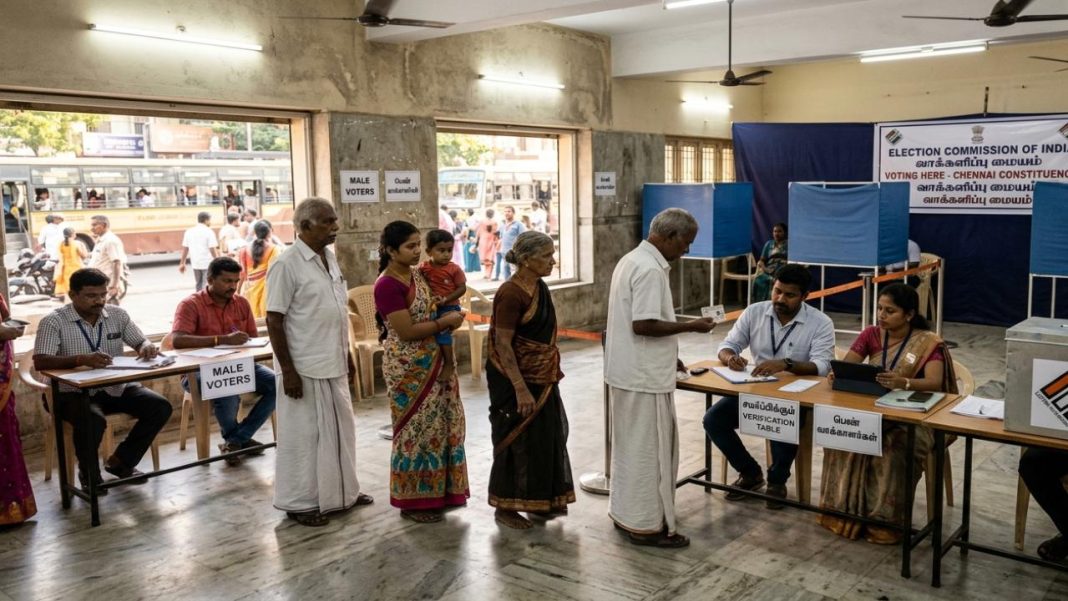
Yes. A missing name does not automatically mean permanent loss of registration. Delhi’s claims and objections window runs until September 30, 2026. Eligible voters can use Form 6 with the required declaration and supporting documents to seek inclusion.
The Election Commission’s Voters’ Service Portal lets citizens search electoral records and access registration forms. Delhi residents should check the draft roll rather than assume an older voter ID guarantees an active entry.
Press Trust of India also posted an official X update on Delhi’s draft electoral roll, reporting that 47.7 lakh Delhi electors were excluded from the draft and that claims could be filed.
Claims are expected to be processed before Delhi’s final roll is published on November 4, 2026. September is therefore a key correction period for residents who moved homes or were unavailable when booth-level officers visited.
Why Is The SIR Becoming A Major Political Issue?
The scale of exclusions has turned the SIR into a national political dispute over voter-list accuracy and possible disenfranchisement. Opposition leaders have questioned the removal of millions of existing names, while the Election Commission says the exercise is intended to remove duplicate, deceased, shifted, and otherwise ineligible entries while retaining eligible voters.
The legal framework has already faced scrutiny. On May 27, 2026, the Supreme Court upheld the Election Commission’s power to conduct SIR and found a legitimate link with free and fair elections. Individual exclusions can still be challenged through the prescribed process.
For Delhi, the next important number is how many of the 47.56 lakh excluded names return after verification. The November final roll should show how much of the 32.8% drop reflected migration and stale entries, and how many eligible voters needed restoration.
FAQs
Why were so many Delhi voter names excluded?
Most exclusions involved shifted or unavailable voters, alongside duplicate registrations and records of deceased electors.
Is a draft-roll exclusion the same as permanent deletion?
No, eligible voters can file claims and seek restoration before authorities publish Delhi’s final roll.
What is the deadline for Delhi voter claims?
Delhi voters can file claims and objections until September 30, 2026, under the SIR process.
Which area recorded Delhi’s highest exclusion rate?
Tughlakabad recorded nearly 48% exclusions, the highest among Delhi’s 70 Assembly constituencies in the draft roll.
When will Delhi’s final electoral roll be published?
The revised Delhi electoral roll is scheduled for publication on November 4, 2026, after verification.