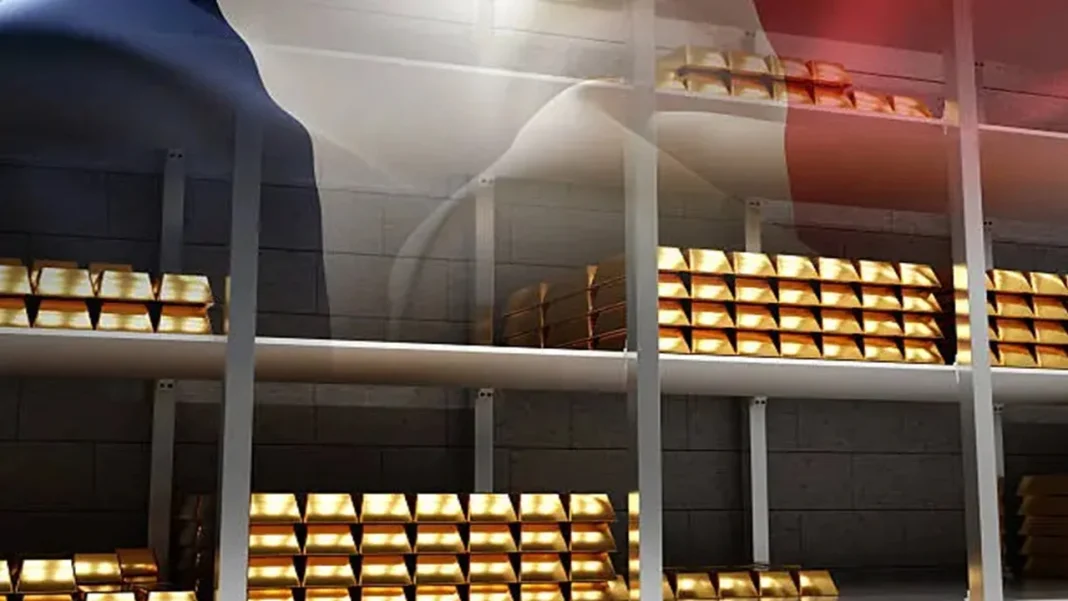

Gold still plays a quiet but serious role in sovereign finance, and France treats it that way. Rather than using its bullion as a trading asset, France uses it as a stability anchor inside a broader reserve strategy led by the Banque de France. That approach has stayed in focus in 2026 because the central bank recently upgraded part of its gold stock, brought the last portion held in New York back to Paris, and booked a large gain without reducing its total holdings. France still holds about 2,437 tonnes of gold, keeping it among the world’s biggest official holders.
Why France Still Treats Gold As A Strategic Reserve Asset
France does not hold gold for headlines. It holds gold because bullion adds credibility, diversifies reserve assets, and stays outside direct credit risk. The Banque de France says it manages and safeguards the country’s gold reserves as part of its public mission, which shows that gold remains a core state asset, not a symbolic relic. At a time when central banks keep looking for reserve diversification, that discipline gives France a stronger long-term buffer.
The 2026 Upgrade That Strengthened The Reserve Strategy
The biggest recent development came in March 2026. The Banque de France said it aligned a residual 5% portion of reserves with technical standards while keeping the overall gold volume unchanged. Reuters reported that this covered 129 tonnes of non-standard gold, sold and replaced with compliant bars between July 2025 and January 2026. That move generated nearly €12.8 billion in gains as gold prices stayed high, helping the central bank swing back to profit.
Why Repatriation Added More Control
France also completed the transfer of that remaining New York-held gold exposure back to Paris during the same process. The practical value is clear: domestic custody gives the central bank tighter operational control, simpler access, and less dependency on foreign vault logistics. The quantity did not rise, but reserve quality and control improved. That is the kind of quiet balance-sheet move central banks prefer.
Don’t Miss These Trending Stories
1.What changed in Redmi Note 15 series?
Explore the latest upgrades and differences between Redmi Note 15 SE 5G and Redmi Note 15 5G before choosing your next smartphone.
2.How different is Galaxy Fold 8 Wide?
Discover the key specs, design changes, and features that separate Samsung Galaxy Z Fold 8 Wide from the standard Fold 8.
3.Why is S Saraswathi trending now?
Check out why this new Telugu thriller is drawing huge theatre crowds and creating buzz with its strong opening.
4.How is Indian Rupee performing today?
Explore today’s exchange rates of INR against major global currencies like USD, Euro, Pound, and Dirham.
5.Can INR beat global currencies today?
Discover how the Indian Rupee stands against USD, Euro, Taka, PKR, and Ruble in today’s global currency comparison.
How This Supports Long-Term Financial Stability
France’s strategy is not built on frequent buying or dramatic selling. It is built on preserving a large gold base, modernising bar standards, and holding the asset in a form that is easier to manage. With official reserve data showing gold valued at €345.9 billion in February 2026, the reserve now carries even more weight on France’s external balance sheet. In a volatile rates, currency, and geopolitical cycle, that gives France a steadier line of defence than paper assets alone.
What Other Central Banks Will Watch Next
Markets will now watch whether France upgrades more legacy bars by 2028, as reported, while keeping the headline reserve total intact. That would fit France’s pattern: no noise, no panic, just gradual reserve hardening for the long haul.
FAQs
1. Why does France still hold so much gold?
Gold helps France diversify reserves and reduce dependence on currencies, bonds, and external sovereign risks.
2. Did France increase its gold quantity recently?
No. France upgraded bar quality and storage arrangements, but total gold tonnage stayed unchanged.
3. Why were some French gold bars replaced?
Older bars were swapped for modern compliant bullion that fits current market and custody standards.
4. Is France storing more gold inside the country now?
Yes. Reuters said the upgraded portion is now held in Paris under domestic control.
5. How does gold support long-term financial stability?
It adds reserve diversification, protects confidence, and keeps value during volatile currency and debt cycles.