

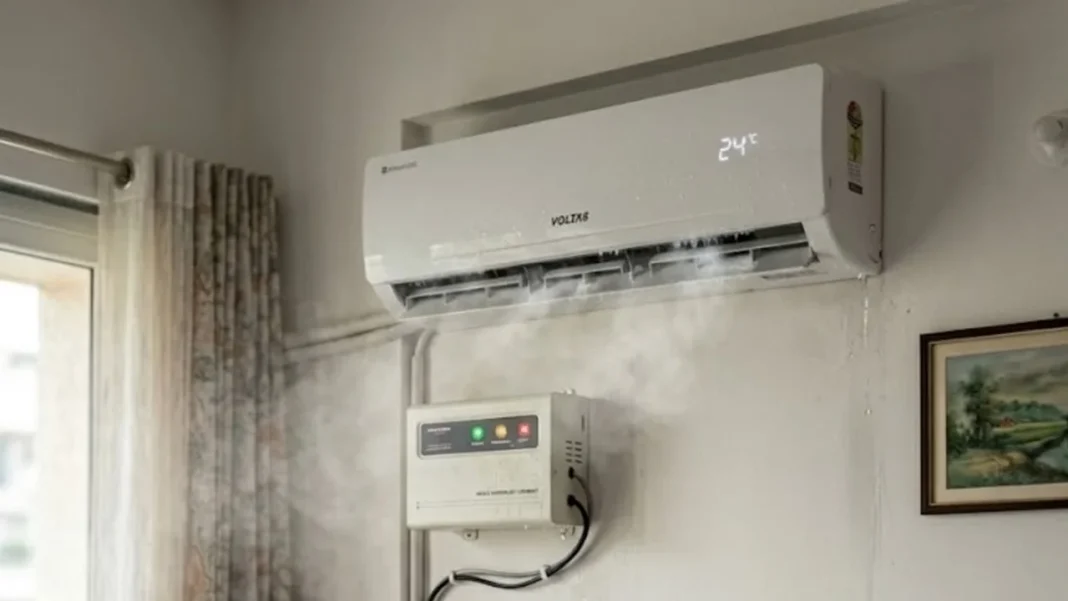

May heat can turn a tired air conditioner into a serious home hazard. With heatwave advisories active across parts of India, ACs are running longer, harder, and often without proper service. The India Meteorological Department has issued heatwave guidance as temperatures rise across several regions, while the Labour Ministry has also asked states to take heat-protection measures for workers.
This AC Overload Alert is not about panic. It is about timely checks before a compressor, plug point, stabilizer, or old wire gets pushed beyond capacity.
Why AC Overload Rises During May Heatwaves
An AC compressor works harder when outdoor temperatures stay high for long hours. If the unit is dirty, low on gas, poorly ventilated, or connected to weak wiring, heat builds faster. Indian Express recently reported that AC fires in summer are commonly linked to overheating, short circuits, and faulty wiring.
A common mistake is keeping the AC at 16°C or 18°C for hours. Fire officials have advised keeping the temperature around 24°C because very low settings increase compressor load during peak summer.
Warning Signs Your AC Needs Immediate Attention
Do not ignore burning smell, frequent tripping, hot plug points, buzzing noise, weak cooling, water leakage near wiring, or sparks from the stabilizer. These signs can point to electrical stress or compressor strain.
Delhi Fire Service advises switching off power supply during electrical fire risk and using dry sand, CO2, dry powder, or Halon extinguishers instead of water.
The 24°C Rule Can Save Your Compressor
Set the AC between 24°C and 26°C, clean filters, and let the unit rest after long use. This reduces pressure on the compressor and keeps electricity load lower. A ceiling fan with AC also helps cooling spread faster.
3 Safety Steps To Prevent Compressor Fires
- First, service the AC before full summer load. Clean filters, check refrigerant, inspect the outdoor unit, and clear dust near coils. A blocked condenser makes the compressor heat up quickly.
- Second, check wiring, MCB, stabilizer, and socket quality. Avoid extension boards for ACs. Use a dedicated line, proper earthing, and suitable circuit protection.
- Third, give the AC short breaks. Running an old unit all night and all afternoon without rest can push weak parts toward failure.
Heat, tech and safety updates explained
Why Heatwaves Need Health System Focus?
Dive into why India must rethink response.
What Causes India Heat And Cold Swings?
Uncover the science behind extreme weather shifts.
How To Save Phone Battery Heat?
Check out simple tips to protect your device.
What Is India Emergency Alert System?
Find how it helps during disasters.
What Is INS Malwan Role India?
Explore its features and defence importance.
Final Safety Checklist Before Peak Heat
Keep curtains closed in the afternoon, avoid flammable items near the indoor or outdoor unit, and never cover the outdoor unit tightly. Call a technician if cooling drops suddenly or the compressor sounds louder than usual.
For current heat alerts, follow IMD and official government advisories. For fire response, follow local fire department instructions first.
FAQs
1. Why Do ACs Catch Fire In Summer?
Overheating, faulty wiring, dirty coils, and short circuits can trigger AC fire during heavy use.
2. What AC Temperature Is Safer In Heatwaves?
Keep the AC around 24°C to reduce compressor pressure and avoid unnecessary electrical load.
3. Can An Old Stabilizer Cause AC Fire?
Yes, damaged stabilizers, loose sockets, or poor earthing can increase fire and shock risk.
4. Should AC Run All Night In May?
Use timer mode, clean filters, and allow breaks when the unit feels unusually hot.
5. What To Do If AC Smells Burnt?
Switch off power immediately, avoid water, evacuate if needed, and call emergency help.