
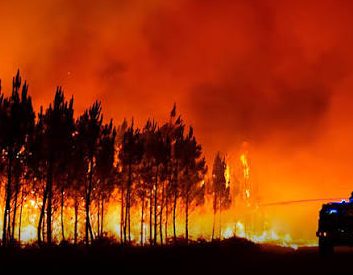

France has ordered around 4,000 more tourists to leave campsites, holiday villages and leisure parks in Lacanau as a vast Gironde wildfire threatens its Atlantic coast. The preventive evacuation, announced on July 28, follows weeks of fire emergencies across southern France and central Spain. Combined displacement estimates have crossed 300,000, although totals keep changing as families return to safer districts while fresh communities are cleared.
The crisis is hitting during the peak holiday season. Roads near beach resorts have filled with evacuees, ash has fallen over coastal towns, trains have faced disruption and emergency shelters have opened far from the flames. Hotels, restaurants and campsites are also losing their busiest trading days as travellers cancel plans or move inland. Firefighters have gained ground in places, but another burst of heat, low humidity and shifting winds could quickly undo that progress.
Why Did France Evacuate Another 4,000 People?
The latest order focuses on tourist accommodation around Lacanau, west of Bordeaux. Officials chose a preventive evacuation rather than waiting for flames or smoke to cut access roads. Seasonal visitors may not know local escape routes, while crowded campsites can become difficult to clear once traffic builds. An official Gironde prefecture update confirmed the Lacanau evacuation and continued to publish safety instructions.
Gironde has become the centre of France’s emergency. About 220,000 people have reportedly been displaced in the wider region, while fires have burned an area described as roughly four times the size of Paris. Homes have been destroyed, businesses interrupted and scores of firefighters injured. Some residents briefly returned before renewed flare-ups forced another safety review.
How Did Evacuations Across France And Spain Pass 300,000?
The number is a running total, not a count of everyone still in shelters at one moment. France accounts for the largest share, led by Gironde. Spain has also moved residents from fire zones around Ávila, Madrid, Toledo and other threatened areas. Some reports place the combined figure near 330,000, while higher estimates include temporary movements and repeat evacuations.
The main developments include:
- Around 4,000 tourists were ordered out of Lacanau accommodation sites.
- Roughly 220,000 people were displaced in France’s Gironde region.
- Spanish authorities evacuated communities and told others to remain indoors.
- About 20,000 people later returned home in parts of Toledo province.
Spain’s largest blaze, near Ávila, has reportedly burned more than 500 square kilometres. Smoke near Madrid has darkened skies, while crews have guarded roads, villages and power infrastructure. France and Spain have also received firefighting assistance from other European countries as emergency resources face growing pressure. The latest Reuters wildfire update reported progress in some sectors but warned that renewed heat could expose weak containment lines.
Why Are The Wildfires Spreading So Aggressively?
Weeks of extreme heat have dried grass, shrubs and forest litter into fast-burning fuel. Spain’s weather agency said June 2026 was its second-hottest and third-driest June on record, with rainfall reaching only 39% of normal levels. Its official heatwave warning said fire danger would rise to extreme levels because of high temperatures, southerly winds and widespread low humidity.
The fires have also produced pyrocumulonimbus clouds, known as fire thunderstorms. They form when fierce heat drives smoke and moisture rapidly upwards. Such clouds can create violent winds, lightning and sudden changes in fire direction, making evacuation routes less predictable.
Europe entered 2026 after its most destructive EU wildfire season on record. The European Commission’s wildfire plan includes 777 pre-positioned firefighters from 14 countries, reflecting concern that national crews may be overwhelmed by simultaneous fires.
What Happens Next In France And Spain?
Authorities will focus on preventing fresh ignitions, protecting evacuation corridors and checking whether returning residents have electricity, water and safe road access. Holidaymakers should follow local prefecture or civil protection alerts instead of hotel messages or unverified clips.
The immediate danger will depend on wind, temperature and overnight humidity. Even a contained fire can restart when buried roots or tree stumps keep burning. With another heatwave forecast through early August, the evacuation total may rise again before crews secure the largest perimeters.
FAQs
Why were 4,000 more people evacuated in France?
Officials feared Gironde flames and smoke could block roads serving Lacanau’s crowded tourist accommodation areas.
How many people have fled the France and Spain wildfires?
Combined estimates exceed 300,000, though totals change as residents return or enter newly evacuated areas.
Which areas are facing the greatest danger?
Gironde, Lacanau, Ávila, Madrid and Toledo remain among the most closely watched fire-hit locations today.
What is making these wildfires unusually powerful?
Extreme heat, drought, dry vegetation, low humidity and winds are helping flames spread rapidly overnight.
Could more evacuations be ordered soon?
Yes, rising temperatures and changing winds may force authorities to clear additional communities without warning.