
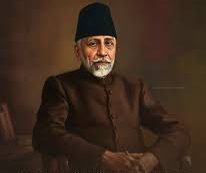

Maulana Abul Kalam Azad never studied in a conventional school, yet he became independent India’s first Education Minister and helped design institutions that still influence millions of students. Educated at home by his father and private tutors, he mastered languages, theology, philosophy, mathematics, history and science. His journey showed what disciplined self-learning could produce when books, debate and curiosity were taken seriously.
Azad served as Education Minister from August 15, 1947, until his death on February 22, 1958. During those nation-building years, India opened its first IIT and created the University Grants Commission. However, the popular claim that he “built AIIMS” needs correction. AIIMS was principally championed by India’s first Health Minister, Rajkumari Amrit Kaur.
How Did A Home-Educated Child Become India’s Education Minister?
Born in Mecca on November 11, 1888, Azad moved to Calcutta with his family while young. The government-funded Maulana Abul Kalam Azad Institute of Asian Studies biography records that his family arranged traditional education at home, first under his father and later through appointed teachers. He had no school certificate, but his education was extensive.
As a teenager, he read beyond the syllabus chosen for him, taught older students and developed an interest in journalism. He later used newspapers such as Al-Hilal to discuss colonial rule, nationalism and social reform. This background shaped his belief that education could not remain a privilege of wealthy urban families.
After independence, he argued for free and compulsory education up to age 14, adult literacy, women’s education, technical training and stronger universities. The Press Information Bureau’s profile of Maulana Azad notes that he guided national education policy for nearly eleven years.
How Did Maulana Azad Help Create IITs And UGC?
Azad wanted the new country to train its own engineers, scientists, teachers and researchers. India’s first IIT began at Hijli, Kharagpur, and was formally inaugurated on August 18, 1951. The official IIT Kharagpur history states that the name “Indian Institute of Technology” was adopted before Azad inaugurated it.
His institution-building record included:
- IIT Kharagpur opened as India’s first Indian Institute of Technology in 1951.
- The University Grants Commission began operating formally on December 28, 1953.
- Parliament gave the UGC statutory status through the UGC Act, 1956.
- National academies supported literature, music, theatre and visual arts alongside scientific education.
The UGC’s official genesis page confirms its 1953 inauguration and statutory establishment in November 1956. Azad’s plan was broad: engineering institutes would build industrial capacity, while the UGC would coordinate funding and academic standards across universities.
Did Maulana Azad Really Help Build AIIMS?
Azad backed a government investing in national institutions, but calling him the founder of AIIMS gives him credit that belongs mainly elsewhere. The official AIIMS history links its creation to the Bhore Committee’s recommendation, Prime Minister Jawaharlal Nehru’s support and Rajkumari Amrit Kaur’s campaign.
On February 18, 1956, Health Minister Amrit Kaur introduced the Bill for establishing AIIMS in the Lok Sabha. The AIIMS archive of the parliamentary debate preserves that record. AIIMS was created through the AIIMS Act, 1956, as a national centre for medical education, research and patient care.
Azad’s contribution was indirect. His ministry promoted higher education, research and institution-led nation-building. Amrit Kaur raised international support, moved the legislation and became AIIMS’ first president. The accurate story celebrates both leaders instead of compressing their work into one viral claim.
Why Does Maulana Azad’s Education Legacy Still Feel Current?
Azad’s life fits today’s conversation around online learning, AI tutors and education beyond classrooms. Yet his career carries a warning: self-learning worked for him because it involved demanding teachers, deep reading, multilingual study and constant writing, not shortcuts.
India marks November 11 as National Education Day in his memory. The Ministry of Education honoured him through its official National Education Day post on X, recalling his role as the country’s first Education Minister.
His strongest legacy is not that he missed regular school. It is what he did after becoming responsible for a young republic’s education. He pushed India toward public universities, technical institutes, cultural academies and wider access. The IITs and UGC stand firmly within that record. AIIMS belongs chiefly to Amrit Kaur’s record, though both projects came from the same early national ambition.
Frequently Asked Questions
Who was India’s first Education Minister?
Maulana Abul Kalam Azad became independent India’s first Education Minister on August 15, 1947, officially.
Did Maulana Abul Kalam Azad attend school?
No, he received home education from his father, private tutors and independent reading throughout childhood.
Which IIT was established during Maulana Azad’s tenure?
IIT Kharagpur, India’s first IIT, was formally inaugurated by Maulana Azad on August 18, 1951.
Did Maulana Azad establish the UGC?
His ministry launched UGC in 1953; Parliament later granted statutory status through the 1956 Act.
Was Maulana Azad the founder of AIIMS?
No, Health Minister Rajkumari Amrit Kaur championed AIIMS and introduced its founding legislation in Parliament.