
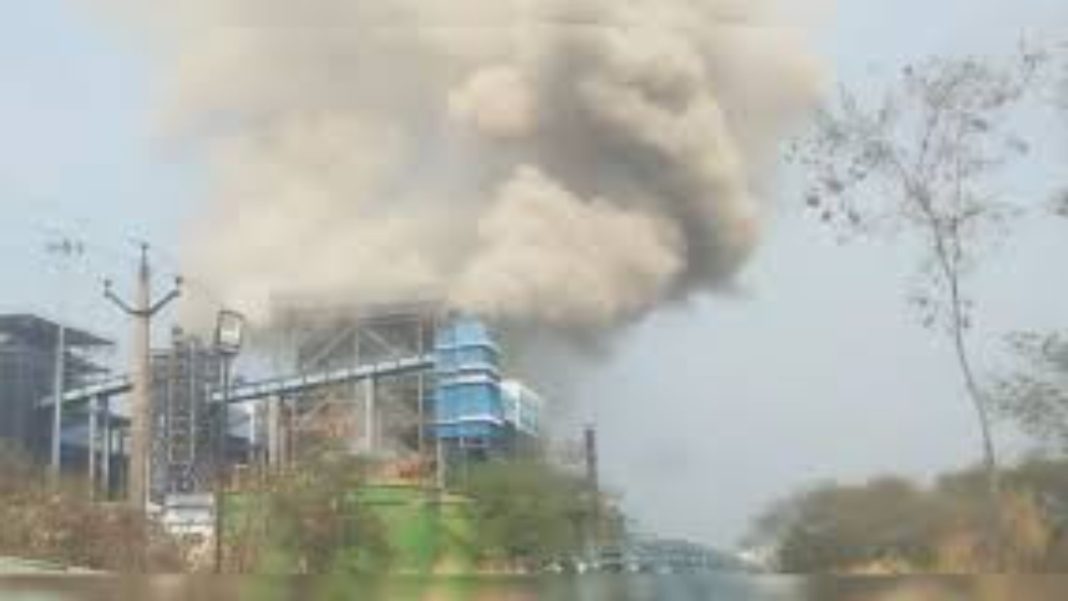

The death toll from the Vedanta power plant blast in Chhattisgarh’s Sakti district reached 20 on April 16, 2026, two days after a boiler-related failure at the Singhitarai thermal power facility. Workers were struck by superheated steam, and several rescued alive later died from severe burns. The 20 figure was an early milestone in the tragedy; later reports put the toll at 25.
The April 14 explosion quickly became a wider industrial-safety case. Police opened a criminal investigation, state authorities ordered inquiries, and the National Human Rights Commission sought a detailed report. Families, meanwhile, were still asking how routine work inside a power station ended in such heavy loss of life.
Key Highlights
- The explosion occurred on April 14 at Vedanta’s Singhitarai plant in Sakti district, Chhattisgarh.
- Twenty deaths had been recorded by April 16; later reports put the toll at 25.
- Investigators examined a sudden rise in boiler load, pressure build-up and possible safety lapses.
- Vedanta announced compensation and employment support, while state and central relief was also declared.
What Happened Inside The Vedanta Power Plant?
The blast struck Unit 1 during afternoon operations. Early accounts described a boiler tube or high-pressure steam-system rupture that released extremely hot steam across the work area. Reuters reported that overheating in a boiler tube was being examined as a likely trigger, while local investigators also looked at the wider boiler-turbine system.
The plant is a 1,200 MW coal-fired facility acquired by Vedanta in 2022 through insolvency proceedings. At the time, one 600 MW unit was operational. Vedanta said NTPC GE Power Services handled operation and maintenance, while personnel from subcontractors were among those affected.
An ANI post on X carried an official Sakti police update on the casualties, showing how rapidly the scale of the disaster became clear.
What Went Wrong And Why Is Negligence Being Investigated?
No final technical finding was available when the toll reached 20, so negligence allegations remained under investigation. An initial industrial-safety inspection reportedly found that boiler load had been raised sharply from about 350 MW to around 590 MW within a short period. Investigators suspected the jump may have contributed to instability, pressure build-up and mechanical failure.
Authorities also examined machinery maintenance, operating procedures, inspection practices and emergency safeguards. A magisterial inquiry was ordered to look at technical causes, possible human error, safety compliance and responsibility.
Police later registered an FIR against management officials and others under provisions covering negligent handling of machinery and causing death by negligence. The FIR did not establish guilt, but it moved the case beyond an internal technical review and into criminal scrutiny.
Who Were The Victims Of The Chhattisgarh Boiler Blast?
The victims were mainly workers and contract personnel from Chhattisgarh and states including Bihar, Uttar Pradesh, Jharkhand and West Bengal. The Indian Express documented several families behind the casualty count.
Ritesh Kumar, 45, from Bhagalpur in Bihar, had worked as a welder since 18 and was saving to finish his family home. Shaikh Saifuddin, 40, a painter from Haldia in West Bengal, was a widower supporting two teenage children. Brijesh Kumar, 28, from Sonbhadra in Uttar Pradesh, left behind his wife and two young sons.
Among the youngest was 20-year-old Aakib Khan from Darbhanga, Bihar. He worked at the plant while studying for a BA and helped support two younger sisters. Uddhav Singh Yadav also died, while his son Kirtan survived because he had missed work that day.
What Happened After The Blast?
Vedanta announced ₹35 lakh in compensation and employment support for families of those killed, plus ₹15 lakh for injured workers, salary continuation during recovery and counselling. The Chhattisgarh government announced ₹5 lakh for families of the deceased and ₹50,000 for the injured. The PMO announced ₹2 lakh from PMNRF for each deceased worker’s next of kin and ₹50,000 for each injured person.
The NHRC later took suo motu cognisance and issued notices to the Chhattisgarh Chief Secretary and DGP, seeking details on compensation and injured workers’ health. By April 24, reports said the death toll had risen to 25, a figure that should be used in any fully updated version of the story.
The Vedanta plant blast has left one central question for investigators: did operating pressure, maintenance gaps or preventable safety failures turn a technical fault into a mass-casualty disaster? The inquiries, not early assumptions, will determine where responsibility finally rests.
FAQs
When did the Vedanta power plant blast happen?
The explosion occurred on April 14, 2026, at the Singhitarai thermal power facility in Chhattisgarh.
How many people died in the Vedanta plant blast?
The toll reached 20 by April 16, later rising to 25 according to subsequent reports.
What caused the Vedanta power plant explosion?
Investigators examined boiler overheating, pressure build-up, rapid load changes and possible operational safety failures there.
Where is the Vedanta Singhitarai power plant located?
The coal-fired power facility is located in Singhitarai village, Sakti district, in India’s Chhattisgarh state.
What compensation was announced for victims’ families?
Vedanta announced ₹35 lakh plus employment support, alongside separate relief from state and central governments.