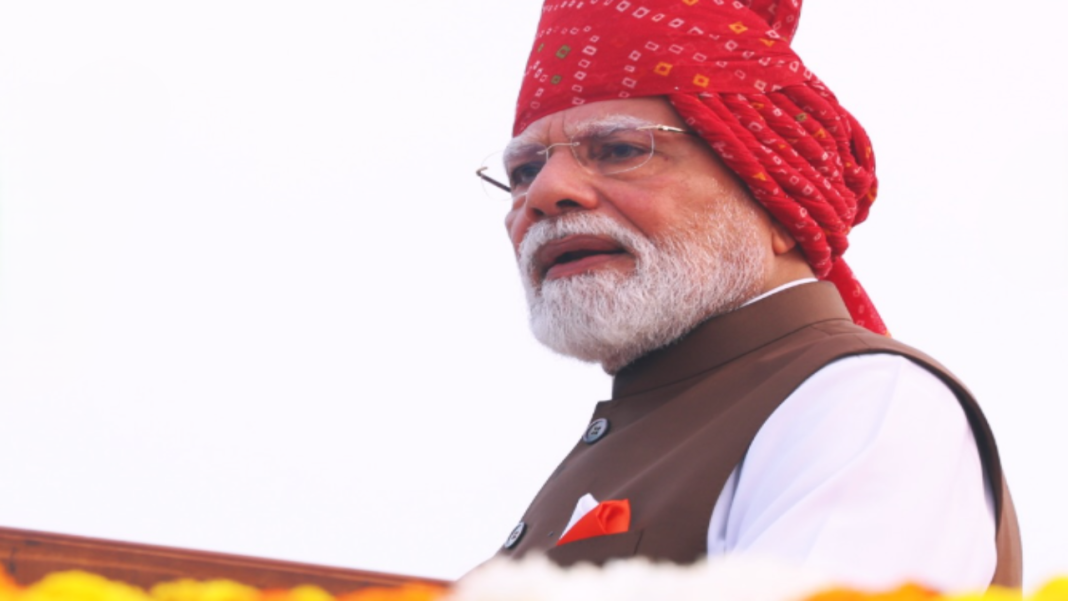

India’s 80th Independence Day opened with a first at Delhi’s Red Fort. As Prime Minister Narendra Modi arrived on August 15, 2026, “Vande Mataram” was rendered before the flag-hoisting sequence, giving the National Song a place in the Red Fort Independence Day programme for the first time since Independence.
The moment came during the national commemoration of 150 years of “Vande Mataram”, linking the 2026 ceremony with a song that moved from Bankim Chandra Chattopadhyay’s writing into the vocabulary of India’s freedom movement.
What Happened At The Red Fort On Independence Day 2026?
The Ministry of Defence had announced that “Vande Mataram” would be sung from the Red Fort ramparts for the first time. On August 15, Akashvani reported that it was rendered on the Prime Minister’s arrival. Modi then hoisted the Tricolour, followed by the National Anthem and his customary address.
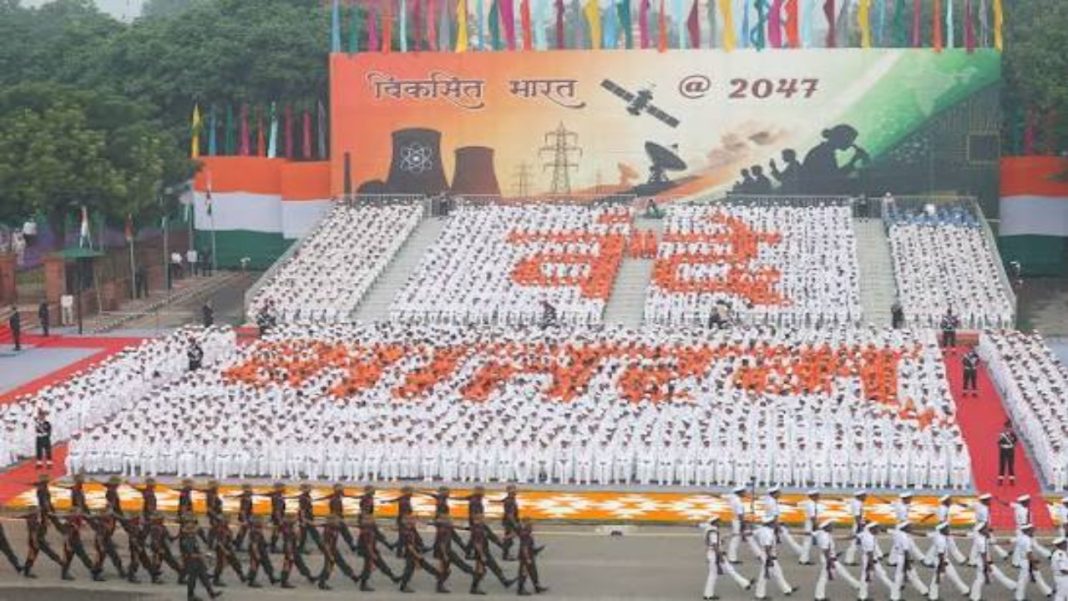
The theme extended beyond the rendition. Around 2,500 NCC cadets and MY Bharat volunteers formed “वंदे मातरम्” on Gyanpath opposite the ramparts. Floral displays carried the same theme, while an Indian Air Force Mi-17 was planned to display a 150-year commemorative banner and shower flower petals.
Key highlights from the 2026 observance included:
- The first Independence Day rendering of “Vande Mataram” at the Red Fort.
- A 2,500-member NCC and MY Bharat formation on Gyanpath.
- Military-band performances at 343 locations across India from August 8 to August 15.
- About 5,000 special guests, including youth achievers, innovators, volunteers and scheme beneficiaries.
The Ministry of Defence’s Independence Day 2026 briefing detailed these arrangements before the event.
Why Is 2026 A Landmark Year For Vande Mataram?
The answer goes back to November 7, 1875. Government records state that Bankim Chandra Chattopadhyay’s “Vande Mataram” was first published in the literary journal Bangadarshan on that date. Its 150th anniversary fell on November 7, 2025, and a year-long government commemoration runs from November 7, 2025 to November 7, 2026.
That places Independence Day 2026 inside the song’s 150-year commemorative cycle. Events have included mass singing, cultural programmes, military-band performances, exhibitions, competitions and public outreach. The government planned the anniversary in four phases, giving the song a recurring public presence across the commemorative year. The PIB backgrounder on 150 years of Vande Mataram traces both the history and the anniversary programme.
The theme had already taken a national stage at Republic Day 2026, where “150 Years of Vande Mataram” appeared across tableaux, cultural performances and ceremonial presentation. By August, the Red Fort became the next high-profile stage.
How Did Vande Mataram Become A Freedom Movement Rallying Cry?
“Vande Mataram” began as a literary composition, but its political journey expanded quickly. Bankim later included it in Anandamath, published in 1882. Rabindranath Tagore sang it at the 1896 Indian National Congress session in Calcutta, carrying the composition into a wider public setting.
Its role became especially visible during the Swadeshi and anti-partition movement in Bengal. Government historical material records “Vande Mataram” being used as a political slogan on August 7, 1905, when students joined a procession in Calcutta during protests connected with the boycott of foreign goods.
Over the following decades, the phrase appeared at meetings, marches and protests against colonial rule. On January 24, 1950, the Constituent Assembly recorded the special place of “Vande Mataram” because of its role in the freedom struggle, while “Jana Gana Mana” became the National Anthem. Government references identify “Vande Mataram” as India’s National Song.
Why The Red Fort Moment Goes Beyond Ceremony
The 2026 rendition brought a freedom-era song into India’s most watched annual Independence Day ceremony. It also connected the anniversary with the wider theme of “Yuva Shakti for Viksit Bharat@2047”, with young participants placed visibly at the centre of the celebrations.
Ministry of Culture shared the historic Red Fort rendition. The ministry described the complete rendition as a first since Independence.
Prime Minister Modi also referred to the milestone in his 80th Independence Day address, saying the country was celebrating 150 years of “Vande Mataram”.
For 2026, two timelines met at once: India’s Red Fort Independence Day tradition and the 150-year journey of a song closely tied to the freedom movement.
FAQs
1. Why was Vande Mataram sung at the Red Fort in 2026?
It marked the 150-year commemoration and entered the Independence Day ceremony for the first time.
2. When was Vande Mataram first published?
Bankim Chandra Chattopadhyay’s composition was published in Bangadarshan on November 7, 1875, government records state.
3. Who wrote Vande Mataram?
Bankim Chandra Chattopadhyay wrote Vande Mataram, later including the composition in his famous novel Anandamath.
4. When was Vande Mataram first sung at a Congress session?
Rabindranath Tagore sang it at the Indian National Congress session in Calcutta in year 1896.
5. Is Vande Mataram India’s National Anthem?
No. Jana Gana Mana is the National Anthem, while Vande Mataram is India’s National Song.