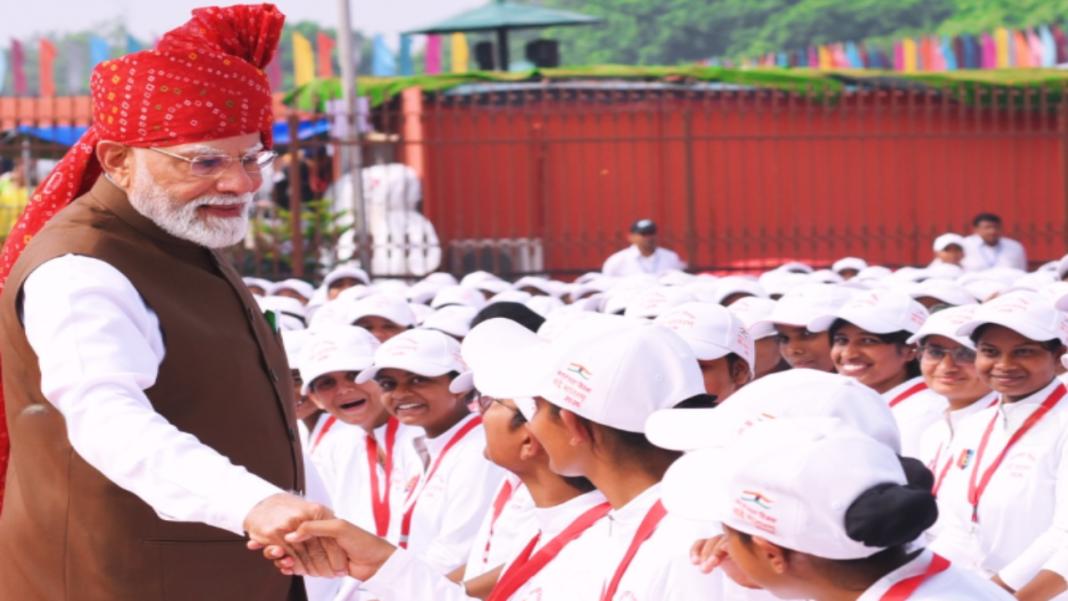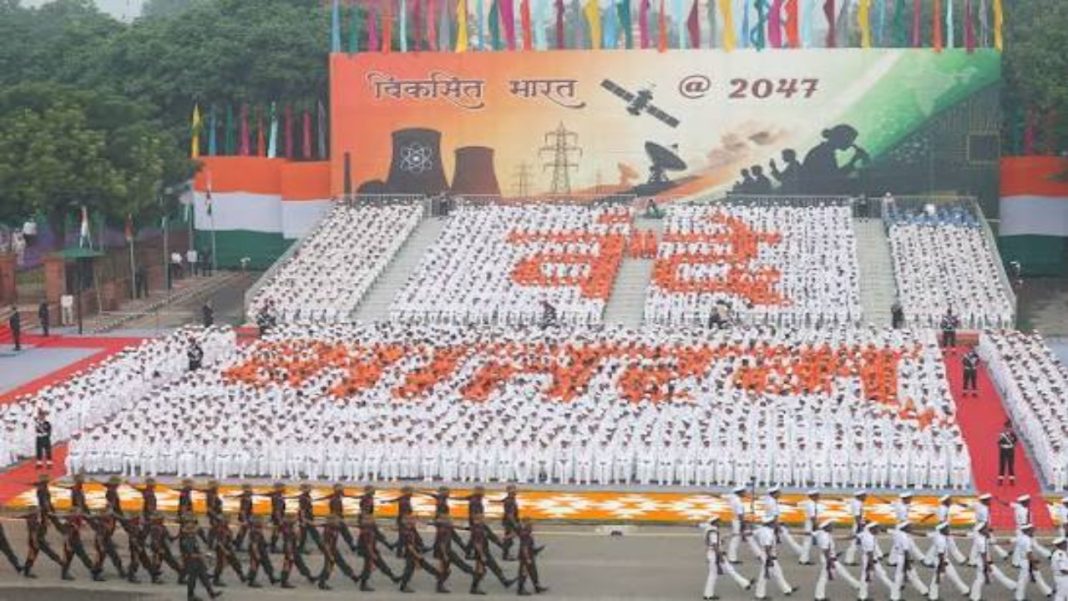
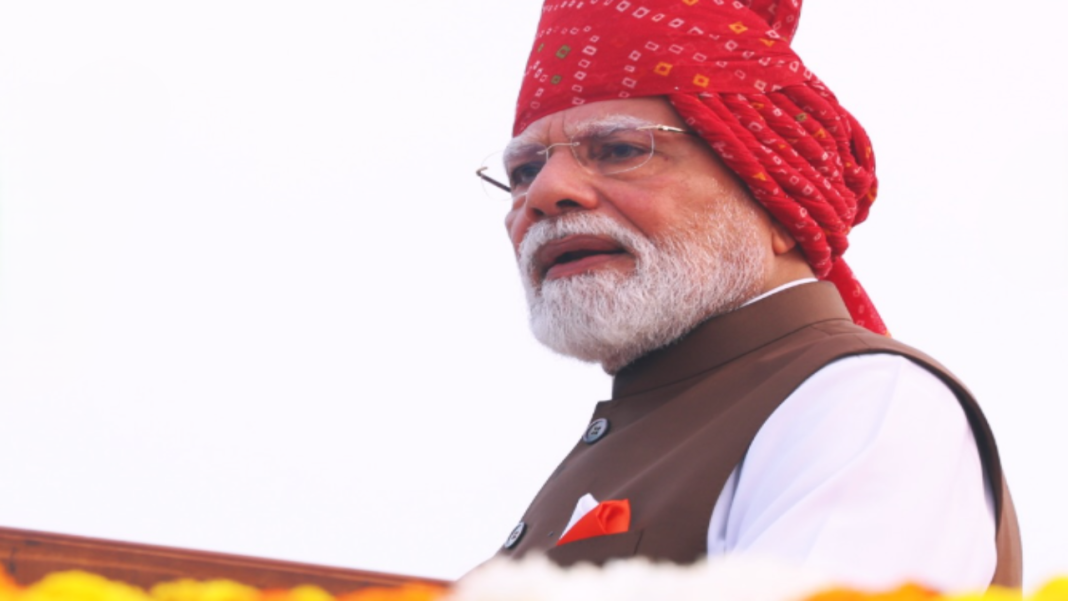

Prime Minister Narendra Modi used his 80th Independence Day address from the Red Fort on August 15, 2026, to renew the push for 33% women’s representation in the Lok Sabha and State Legislative Assemblies. He urged political parties to come together and move quickly, saying women should have a stronger role in shaping national policy. The appeal has brought the Nari Shakti Vandan Adhiniyam back into focus, but the quota still cannot begin automatically. A census-linked delimitation process remains the key constitutional step. Modi’s remarks were reported by DD India, while an ANI video from the speech was carried in this Free Press Journal report.
What Did PM Modi Say About The Women’s Reservation Quota?
Modi said women representatives are already playing major roles in Panchayats, municipalities and municipal corporations. He asked political parties to support faster implementation of the one-third reservation in the Lok Sabha and State Assemblies. The message was political as well as legislative: the law exists, but the route to activate it remains unfinished.
The 2023 constitutional amendment reserves roughly one-third of directly elected seats for women in the Lok Sabha, State Legislative Assemblies and the Delhi Assembly. It also provides one-third reservation for women within seats already reserved for Scheduled Castes and Scheduled Tribes. The quota does not extend to the Rajya Sabha or State Legislative Councils.
The gap is visible even before the quota starts. According to PRS Legislative Research’s profile of the 18th Lok Sabha, 74 of the 543 elected MPs are women, or about 14%. That is below the one-third level envisioned by the amendment.
Key points now driving the debate are:
- The 33% quota is already written into the Constitution through the 106th Amendment.
- It does not take effect simply because Parliament passed the law in 2023.
- A fresh census must be published before the linked delimitation can be completed.
- Census 2027 is now the first post-amendment census relevant to that process.
- An April 2026 attempt to change the route to implementation failed in the Lok Sabha.
Why Has the 33% Reservation Not Taken Effect Yet?
The main reason lies in Article 334A, inserted through the 2023 amendment. The reservation begins only after a delimitation exercise is carried out using figures from the first census published after the amendment came into force. That means the government first needs the new population count, then a redrawing or reallocation of constituencies under the constitutional framework.
The Census 2027 announcement by the Press Information Bureau fixes March 1, 2027, as the reference date for most of India. Snow-bound areas of Ladakh, Jammu and Kashmir, Himachal Pradesh and Uttarakhand use October 1, 2026. Census work is already moving through its phases, but publication of final population data is what becomes important for the women’s quota trigger.
There was an attempt to speed things up. In April 2026, the government introduced the Constitution (131st Amendment) Bill along with delimitation-related legislation. According to PRS Legislative Research, the package sought to change the census requirement and enable an earlier delimitation route. The constitutional amendment was voted down in the Lok Sabha, with 298 members supporting it and 230 opposing it. The related bills then became infructuous.
What Must Happen Before Women Get One-Third Of The Seats?
First, Census 2027 must move from enumeration to published population figures. After that, delimitation has to be undertaken under the constitutional provisions that remain in force. The exercise will decide constituency boundaries and seat allocation, after which reserved constituencies for women can be identified.
This is also where political disagreement becomes sharper. Delimitation can affect how seats are distributed among states, so parties are debating both women’s representation and the balance of political power between faster-growing and slower-growing states. On August 12, 2026, the Tamil Nadu Assembly passed a resolution opposing a population-based redistribution of Lok Sabha seats and called for the women’s quota to be implemented within the existing 543-seat structure.
Why 2029 Is Not Guaranteed Yet
The next Lok Sabha election is due by 2029, but the current constitutional text does not simply name 2029 as the start date. Census publication and delimitation must be completed first. PRS has noted that a full delimitation exercise can take considerable time; the previous Delimitation Commission, set up in 2002, completed its orders in 2008. That history is why the timing remains politically important.
So Modi’s fresh appeal does not by itself activate the quota. It increases pressure for political agreement on the steps needed before implementation. Until Parliament and the constitutional process clear those remaining hurdles, women’s reservation stays enacted but not operational.
Frequently Asked Questions
When was the women’s reservation law passed?
Parliament passed the constitutional amendment in September 2023, reserving one-third of directly elected legislative seats.
Does the quota apply to the Rajya Sabha?
No, the reservation covers the Lok Sabha, State Assemblies and Delhi Assembly, not Rajya Sabha seats.
Why is Census 2027 important for women’s reservation?
It is the first post-amendment census whose figures can trigger the required delimitation exercise nationally.
Can the 33% quota start before delimitation?
Under the current constitutional framework, reservation begins only after the census-linked delimitation process is completed.
Will the women’s quota definitely apply in the 2029 election?
Not automatically; implementation depends on census publication, delimitation completion and the legal process finishing first.