

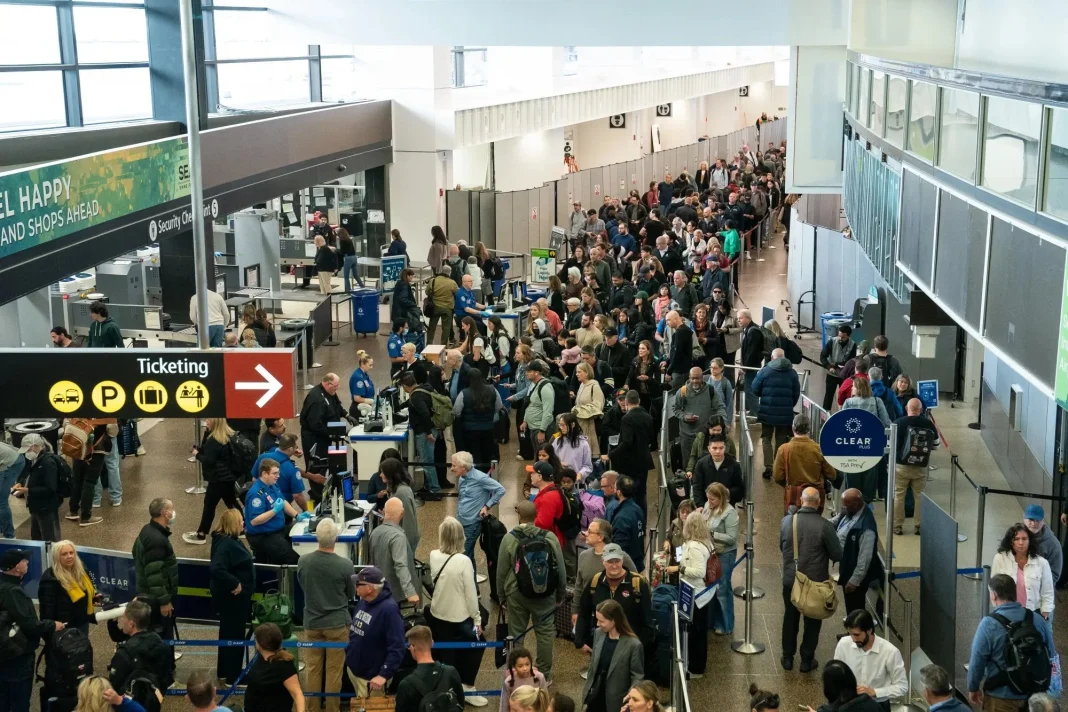

A technical failure in the UK air traffic control network triggered more than 2,000 flight cancellations across September 8 and 9, hitting Heathrow and other major airports and disrupting India-UK services. NATS, Britain’s air traffic control provider, said the fault affected its flight processing system. Although engineers restored the system on September 8, the disruption carried into the next day because aircraft and crews were left in the wrong cities.
For Indian travellers, the most specific figure came from aviation analytics firm Cirium: seven of 24 scheduled India-to-UK flights had been cancelled by 4 pm on September 9.
Key Highlights
- More than 2,000 UK flights were cancelled across two days after the NATS system failure.
- Cirium recorded seven cancellations among 24 scheduled India-to-UK flights on September 9.
- Heathrow was among the worst-hit airports, with aircraft, crews and passengers displaced across Europe.
- NATS ruled out a cyberattack, while the UK government ordered a full investigation.
What Went Wrong With UK Air Traffic Control?
The breakdown struck NATS’ flight processing system, the technology used to handle flight information across Britain’s busy airspace. NATS said safety was not compromised, but traffic restrictions were needed while engineers worked on the fault.
The scale grew quickly. Cirium data on the UK disruption showed more than 1,700 flight movements were affected on September 8, including 903 departures and 843 arrivals. More than 30% of roughly 5,800 scheduled flights were cancelled or did not operate. On September 9, another 291 flights had been cancelled by late afternoon, around 5% of the day’s schedule. A normal day is closer to 1% to 2%.
Why Did The Backlog Continue After The Fix?
Air travel cannot reset instantly after a nationwide control failure. A plane diverted to Paris or Zurich is no longer available for its planned return service from London. Crew duty limits, airport slots, baggage, passenger rebooking and overnight aircraft positioning then start affecting later flights.
That is why cancellations continued even after NATS said its system was operating normally.
Why Were 7 Of 24 India-To-UK Flights Cancelled?
India routes were caught in that knock-on effect. Air India flights from Delhi, Mumbai and Bengaluru were diverted to Paris, Vienna and Zurich on September 8. IndiGo’s Delhi-London service diverted to Paris, while its Mumbai-London flight landed in Amsterdam. Several return legs were then cancelled.
Cirium’s September 9 snapshot counted seven cancelled flights among 24 scheduled from India to the UK. Reports identified IndiGo, British Airways and Virgin Atlantic among carriers cancelling India-origin services, while Air India’s India-to-London departures were operating that day. The wider Air India network still suffered because four London-bound aircraft had been diverted the previous day.
The episode showed why a fault inside UK airspace can disrupt passengers thousands of kilometres away. Long-haul aircraft operate tightly planned rotations. Once one sector breaks, the next flight can lose its aircraft, crew or Heathrow slot.
What Should India-UK Passengers Do Now?
Heathrow’s passenger update said flights were operating again but warned of continuing knock-on disruption while airlines repositioned aircraft and crews. Travellers should check their airline’s live flight status before leaving for the airport rather than relying only on the original booking time.
NATS also posted operational updates as engineers restored the flight processing system. An official Heathrow Airport post on X separately advised passengers to check their flight before travelling to the airport.
Passengers with cancelled flights should contact the operating airline about rebooking, rerouting, meals, hotels where required, or refunds. The UK Civil Aviation Authority passenger guidance confirms that UK261 covers delayed and cancelled flights, although compensation can depend on the circumstances behind the disruption.
The disruption also revived scrutiny of NATS. Transport Secretary Heidi Alexander asked chief executive Martin Rolfe for a full report within a week. Airlines including Ryanair and Wizz Air publicly called for leadership changes. Pressure is sharper because an earlier flight-plan processing failure had already prompted scrutiny of NATS contingency planning, with airline bosses putting that outage’s industry cost above £100 million.
For now, checking flight status before departure remains the best move for India-UK passengers.
FAQs
Why did the UK aviation glitch cancel so many flights?
The flight processing failure restricted traffic, creating cancellations, diversions, crew problems and aircraft positioning delays.
Were India-to-UK flights directly affected?
Yes, seven of 24 scheduled India-to-UK flights were cancelled in Cirium’s September 9 snapshot overall.
Was the NATS failure caused by a cyberattack?
No, NATS said the disruption was a technical system issue and ruled out a cyberattack.
Are UK flights operating normally again?
Operations have resumed, but airlines may cancel flights while crews and aircraft return to position.
What should cancelled-flight passengers do first?
Check the airline’s status, keep receipts, and request rerouting, care or refunds where applicable promptly.
India’s Aviation Shift: New Routes, Safety & Travel Updates
- Could Thoise Become Ladakh’s New Gateway?
Check out how civilian flights from Thoise could open a new tourism route. - How Will Air India’s Drug Checks Work?
Find out how expanded pilot testing will strengthen aviation safety measures. - Can Easy Connect Simplify Global Travel?
Uncover how travellers can reach 27 global destinations with one Delhi stop. - Could Volcano Disrupt More Flights?
Track down how Indonesia’s eruption may affect flights across India and Southeast Asia. - What Changes With Bhogapuram Airport?
See how the new airport opening affects travellers after Visakhapatnam airport closes passenger operations.