

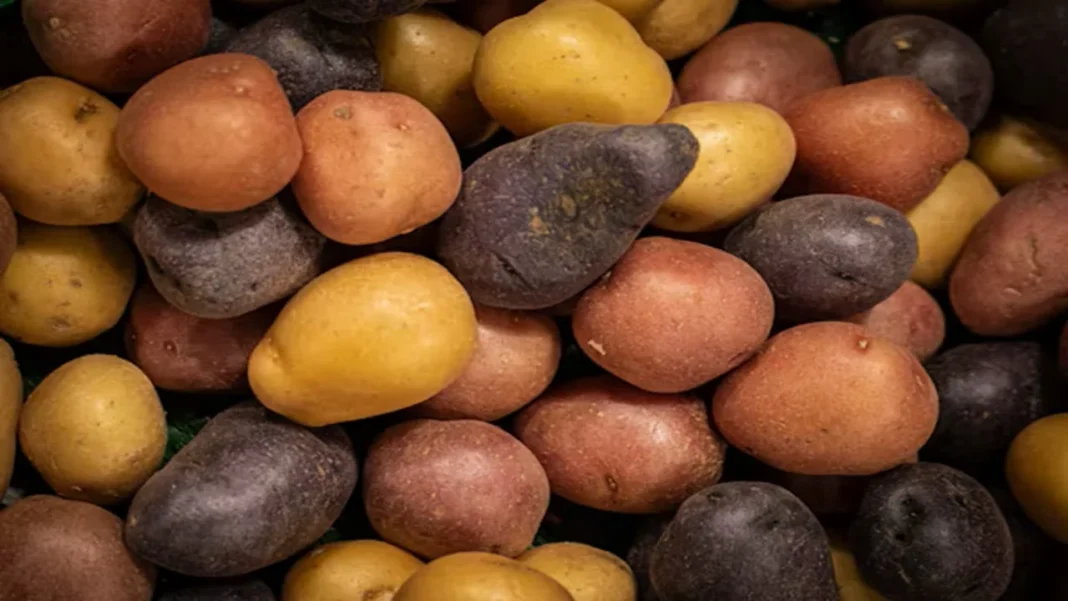

Does a purple potato offer more than colour? Purple potatoes vs regular potatoes is chiefly a comparison of pigments and variety-specific nutrients. Both remain starchy foods.
An 18 October 2026 PIB backgrounder highlighted Kufri Jamunia, the purple-fleshed potato developed by ICAR–Central Potato Research Institute, Shimla. Released in 2024, it is an existing crop receiving renewed attention.
Key Highlights
- Purple flesh contains anthocyanins, pigments with antioxidant properties.
- Kufri Jamunia has higher reported vitamin C, iron, and zinc than PIB’s common-potato comparator.
- Blood-pressure findings come from a small study; they do not establish disease prevention.
Purple Potatoes vs Regular Potatoes: Nutritional Differences
White potatoes already supply useful nutrients. Potato composition research identifies carbohydrates, vitamin C, and minerals, particularly potassium. Choosing purple adds a different pigment profile; it does not turn an otherwise empty food into a nutritious one.
PIB’s comparison gives these figures:
| Nutrient Per 100 g | Kufri Jamunia | Common Potato |
| Vitamin C | 42.75 mg | 23.15 mg |
| Zinc | 2.28 mg | 0.28 mg |
| Iron | 3.22 mg | 0.57 mg |
These figures describe the varieties in that comparison. They should not become a universal nutrition label for every purple or white potato sold in India.
Cooking also changes the comparison. Research reports vitamin C losses that vary with the variety and preparation method. A figure for an uncooked ingredient cannot automatically describe the amount reaching the dinner plate.
Colour on the outside needs a separate check. ICAR describes Kufri Neelkanth as having dark purple-black skin but cream flesh. A purple-skinned potato therefore does not necessarily have purple flesh or Kufri Jamunia’s nutrient profile.
Antioxidants and Health Benefits: What Has Been Shown?
Anthocyanins explain the most distinctive nutritional difference. USDA researchers reported substantially higher anthocyanin concentrations in the purple potatoes they tested than in yellow varieties, with none detected in their white-potato samples. That was a comparison of selected breeding lines.
More pigment does not tell us how much someone’s health will improve. Laboratory antioxidant measurements and clinical outcomes answer different questions.
A 2012 crossover study followed 18 adults with hypertension through four-week periods of eating purple potatoes or no potatoes. Diastolic blood pressure fell by 4.3% during potato consumption. Fourteen participants were already taking blood-pressure medication.
Two limits deserve attention:
- The study involved a small group over a short period, without a white-potato comparison.
- Fasting glucose, blood lipids, and HbA1c did not change significantly.
The results justify further research. They do not prove purple potatoes prevent heart attacks, treat diabetes, or outperform regular potatoes for everyone. They also provide no reason to stop prescribed medication.
Diabetes and Portion Size: Colour Does Not Remove Starch
A purple potato still belongs in the carbohydrate part of a meal. The American Diabetes Association lists potatoes among starchy vegetables and advises people counting carbohydrates to look at total carbohydrate.
For meal planning:
- Put potatoes within the carbohydrate portion rather than treating them as an unlimited vegetable side.
- Use the ADA plate framework: half non-starchy vegetables, one-quarter protein and one-quarter carbohydrate foods.
- On an Indian plate, a potato preparation needs to be considered alongside rice or roti. The relevant question is how much carbohydrate the whole meal contains, rather than whether the potato is purple.
Someone managing diabetes should fit the serving to their existing meal plan. Neither purple skin nor an “antioxidant-rich” label establishes a food’s effect on that person’s glucose.
Cooking Purple Potatoes Without Overstating Their Benefits
PIB lists curry, paratha, and raita among Kufri Jamunia’s culinary uses. Those options offer a practical starting point for households accustomed to cooking potatoes.
Try a modest serving in a vegetable dish or raita. Oil and salt remain ingredients to account for; a purple potato does not cancel them out.
There is no need to replace every regular potato. For the next shop, ask which variety is being sold and whether the flesh is purple. Choose a preparation that fits the meal, and judge health claims against the evidence rather than the colour.
FAQs
Are purple potatoes lower in carbohydrates than regular potatoes?
Purple colour alone does not establish a lower carbohydrate content. Variety, serving size and preparation differ, so use nutrition information for the specific product when available.
Do all purple-skinned potatoes have purple flesh?
No. Kufri Neelkanth, for example, has dark purple-black skin and cream flesh. Skin colour alone therefore cannot identify a purple-fleshed variety or establish its specific nutritional composition.
Do purple potatoes taste very different?
USDA consumer testing found no significant differences in flavour or overall acceptance among the coloured and white potatoes studied. Individual varieties and cooking methods still differ.
Should everyone replace regular potatoes with purple potatoes?
There is no established need for everyone to switch. Purple varieties offer additional pigments, while regular potatoes remain nutritious; cost, availability, and meal preparation also influence choices.
Is Kufri Jamunia a new release in 2026?
Kufri Jamunia was officially released in 2024. PIB’s October 2026 backgrounder highlighted its nutritional characteristics; it did not announce the variety’s first release that year in India.
Health and Nutrition Articles
Could Excess Vitamin D Damage Kidneys?
Check out the warning signs of vitamin D toxicity and possible kidney complications.
Does Ageing Increase Irregular Heartbeat Risk?
Find five important facts about AFib and age-related heart rhythm changes.
Why Is Vitamin D Deficiency Common?
Uncover common causes, symptoms and prevention tips for vitamin D deficiency in India.
Why Did FSSAI Target Three Companies?
See which food companies and products faced regulatory scrutiny.
Can Infant Formula Promise Better Immunity?
Look into FSSAI’s 2026 rules on infant formula growth and immunity claims.