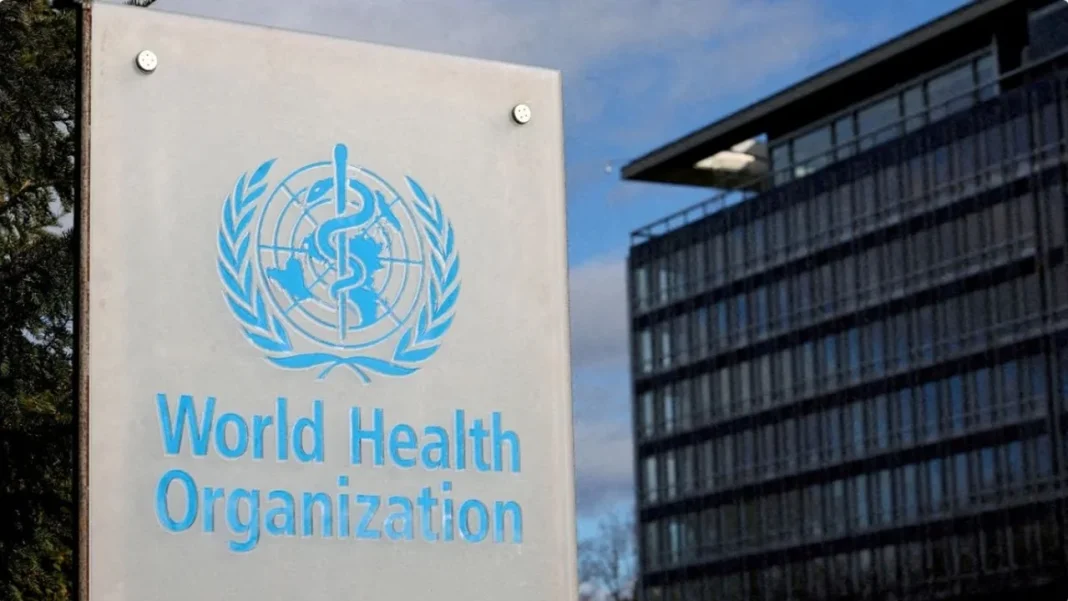

The World Health Organization has put stroke, cancer, mental health, pain, musculoskeletal disorders, metabolic diseases and reproductive health among the priority areas in its new traditional medicine research roadmap. The WHO Global Research Priorities and Agenda for Traditional, Complementary and Integrative Medicine 2025–2034, published on 16 September 2026, sets out where fresh research is needed.
The move does not mean WHO has approved traditional remedies for serious diseases. It is asking researchers to produce stronger evidence on safety, effectiveness, interactions with conventional treatment, regulation and health-system use. WHO says billions of people use traditional, complementary and integrative medicine, while the field receives less than 1% of global health research funding.
What Has WHO Put On The 10-Year Research Agenda?
WHO built the agenda after reviewing research activity and consulting specialists across all six WHO regions. Its 17 September update says the exercise examined 39,927 research grants across 40 funding schemes, 116 research institutes in 67 countries, consultations with 199 experts from 75 countries and Delphi surveys involving 235 participants.
The programme is expected to examine whether particular traditional or integrative approaches are useful, where they may be unsafe, and how they can sit alongside established medical care.
Key Highlights
- Stroke, cancer and mental health are among seven major clinical research areas.
- Older adults, children and preventive health are listed as priority population themes.
- WHO also flags antimicrobial resistance, healthy ageing, climate change and responsible artificial intelligence use.
- The roadmap runs through 2034 and is designed for governments, funders, researchers and health systems.
This follows the wider WHO Global Traditional Medicine Strategy 2025–2034, adopted by Member States at the World Health Assembly in May 2025.
Why Are Cancer, Stroke And Mental Health Being Highlighted?
WHO says noncommunicable diseases kill more than 43 million people every year, while traditional medicine is already used at a huge scale. That creates a difficult gap: people are using these approaches, but researchers do not always have enough high-quality evidence to tell patients, doctors, or regulators what works, what does not, and what could cause harm.
For cancer, the agenda can support research on symptom relief, supportive care, safety, and possible herb-drug interactions. Stroke research may examine rehabilitation or recovery approaches. Mental health research can test traditional and integrative practices under controlled methods rather than relying on claims or anecdotal results.
It is a research agenda, not a treatment guideline, and it should not replace proven medical treatment.
Why Is India Important To WHO’s Traditional Medicine Programme?
India has a central role because the WHO Global Traditional Medicine Centre is based in Jamnagar, Gujarat. WHO established the centre in 2022 with foundational support from the Government of India. India committed an estimated US$250 million towards the centre’s establishment, infrastructure and operations, including a separate US$85 million commitment over 10 years for its programme of work.
India’s role has now moved beyond hosting the centre. WHO’s September 2026 update says India is anchoring a multi-country traditional medicine research consortium. That follows the Second WHO Global Summit on Traditional Medicine in New Delhi in December 2025, where 27 Member States made time-bound research commitments.
There is also fresh political momentum. BRICS leaders meeting in New Delhi on 12 September 2026 welcomed a proposed expert working group on traditional, complementary and integrative medicine. The plan includes cooperation on research, medicinal plants, safety, regulation and evidence generation. The development was also confirmed by the Press Information Bureau.
What Happens Next For The WHO Research Programme?
The next phase is likely to be less about announcing new therapies and more about funding studies that can answer specific clinical and policy questions. Governments may use the agenda to choose research topics, universities can build trials around priority gaps, and regulators can ask for better safety reporting.
WHO is also pushing for stronger protection of Indigenous knowledge, fair benefit sharing, data sovereignty and clearer rules around artificial intelligence. These areas could become more prominent as traditional medicine databases and digital research tools expand.
The global programme will continue to have a strong India link through Jamnagar, even as activity spreads elsewhere. The Third WHO Global Summit on Traditional Medicine is already scheduled for Bangkok, Thailand, from 10–12 November 2027, after India formally passed the summit baton to Thailand in September 2026. WHO announcement for the 2027 Bangkok summit
FAQs
Does WHO now recommend traditional medicine for cancer or stroke?
No. WHO is setting research priorities, not approving traditional remedies for cancer, stroke or depression.
What role does India have in the programme?
India hosts WHO’s Global Traditional Medicine Centre in Jamnagar and anchors a multinational research consortium.
How long will the WHO research agenda run?
The agenda runs from 2025 through 2034 and guides governments, researchers, funders and health systems.
Which health areas have been prioritised?
Priority areas include stroke, mental health, pain, musculoskeletal disorders, cancer, metabolic conditions and reproductive health.
What will researchers be expected to study?
Researchers are expected to test safety, effectiveness, interactions, regulation, access and integration into healthcare systems.
Health Risks in India: What Should You Know?
Could El Niño Raise Disease Risks?
Check out how hotter, drier conditions could affect dengue risks.
Can India’s Dengue Vaccine Change Prevention?
Find out how Qdenga could shape dengue prevention from 2027.
Could HPV Vaccine Claims Affect Fertility?
Uncover the Supreme Court claim surrounding HPV vaccination and fertility.
Who Faces Greater Swine Flu Risks?
Browse Delhi’s H1N1 cases and those at risk of severe illness.
How Safe Is Railway Station Water?
See what CAG findings reveal about E. coli in station drinking water.