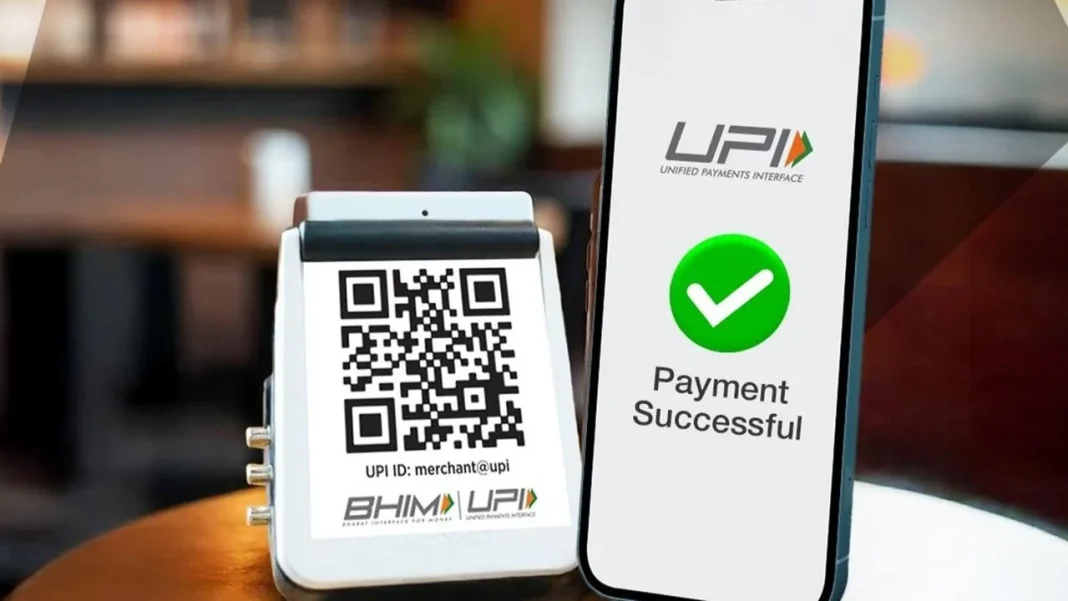

UPI remains free for ordinary person-to-person transfers, but India’s zero-MDR era for every merchant payment is ending. From 15 October 2026, a 0.4% Merchant Discount Rate, or MDR, is scheduled to apply to specified person-to-merchant UPI payments above ₹2,000. The charge sits inside the merchant-payment ecosystem, not with the customer.
The Finance Ministry’s September 15 clarification says around 96% of merchant UPI transactions will remain unaffected. Trader groups briefly planned a “No UPI Day” for October 2 before withdrawing it after meeting Finance Minister Nirmala Sitharaman.
Key Highlights
- Person-to-person UPI transfers remain free, regardless of value.
- Specified merchant payments above ₹2,000 will attract 0.4% MDR from October 15.
- Transactions of ₹75,000 or more have an MDR cap of ₹300.
- Small merchants receiving up to ₹1 lakh monthly through qualifying UPI QR payments remain under zero MDR.
- Customers are not supposed to pay the MDR or a hidden platform fee.
What Is UPI MDR And Why Has It Been Introduced?
MDR stands for Merchant Discount Rate. It is a fee for processing an eligible digital payment and is shared among banks, payment service providers and UPI application providers. It is not a tax collected by the government or NPCI.
The Finance Ministry says the framework was created under the Payment and Settlement Systems Act following deliberations by the UPI Steering Committee. The stated aim is to fund payment infrastructure and expansion while protecting individuals and smaller merchants.
The scale is enormous. According to NPCI’s latest UPI statistics, India recorded 24.51 billion UPI transactions worth roughly ₹29.82 lakh crore in August 2026. UPI now covers purchases ranging from groceries to electronics and insurance, so even a limited MDR has attracted attention.
Who Pays UPI MDR And How Much Could A Merchant Pay?
The merchant pays the MDR. The government says customers should not be charged it, and UPI apps cannot add platform fees or hidden charges to recover the MDR from users.
The arithmetic is simple:
- A ₹5,000 eligible merchant payment creates ₹20 MDR at 0.4%.
- A ₹20,000 payment creates ₹80 MDR.
- A ₹1 lakh payment is capped at ₹300 instead of ₹400.
Some sectors get a different rate. Payments above ₹2,000 for railways, telecom, insurance, fuel and agricultural inputs attract a flat ₹5 MDR. Capital-market transactions carry a 0.02% rate, capped at ₹300.
An existing 18% GST applies to the MDR service, not the customer’s entire purchase value. GST-registered businesses may claim input tax credit, subject to applicable rules. The GST Council could also examine concerns surrounding this treatment.
Does UPI MDR Affect Customers Or Change Everyday Payments?
For most users, the payment experience should stay the same. Sending ₹10,000 to a family member remains free because person-to-person transfers are outside MDR. Paying ₹800 at a shop also remains free of MDR.
Two points are especially useful:
- A merchant should not add a separate “0.4% UPI charge” merely because the customer chooses UPI.
- A bank’s daily UPI transfer limit is separate from MDR. Those limits are security controls, not charging thresholds.
The Department of Financial Services reinforced the distinction through its official X account after social-media posts suggested customers were being billed. DFS said circulated screenshots showed merchant-side settlement details rather than a fee charged to the payer.
Customers could still feel an indirect effect if businesses change discounts, prices or preferred payment methods to absorb payment costs. That would be a merchant pricing decision, not a direct UPI MDR billed to the customer.
Why UPI MDR Is Still Facing Pushback Before October 15
The fee has already reached the Supreme Court. On September 28, the Court refused an interim stay while seeking responses from the Centre, RBI and NPCI. The October 15 implementation date therefore remains in place for now.
Retailers have objected too. AIMRA and another trade body proposed a “No UPI Day” for October 2, arguing that higher-value payment costs could squeeze retail margins. The organisations later withdrew the protest following discussions with the Finance Minister, but the 0.4% framework was not cancelled.
For businesses, attention now shifts to settlement statements and billing systems. Customers have a simpler takeaway: check the final bill, question any separate MDR surcharge and follow official NPCI or Finance Ministry updates rather than forwarded messages.
FAQs
Is UPI MDR charged on every UPI payment?
No. Person-to-person transfers remain free, while most merchant payments are exempt. MDR applies only to specified merchant transactions above the ₹2,000 threshold.
Will customers pay 0.4% extra for using UPI?
No. The 0.4% MDR sits within the merchant-payment system. Government guidance says merchants should not pass that fee directly to customers.
Does a ₹3,000 UPI payment always attract MDR?
Not necessarily. Merchant category and exemption status count. Qualifying small merchants and some specified transaction categories can remain exempt or receive concessional rates.
When does the new UPI MDR start?
The current framework is scheduled to begin on 15 October 2026. The Supreme Court has not stayed it, though legal and industry challenges continue.
Can a shopkeeper refuse UPI because of MDR?
A merchant can choose accepted payment methods, but MDR rules do not permit a separate customer surcharge where the framework keeps UPI free for users.
UPI’s Next Move: Fees, Features & Global Reach
Could UPI Fees Change Merchant Payments?
Check out why payments above ₹2,000 are part of a fresh fee debate.
Is India’s Free UPI Era Changing?
Find out how potential merchant fees could reshape digital payments.
How Does UPI Work Without Internet?
Uncover how RBI’s new system enables UPI payments without internet.
Could Merchant Fees Reshape UPI Payments?
Browse the latest debate around charges on higher-value UPI transactions.
Where Can Indians Use UPI Abroad?
Explore the 12 countries where Indian travellers can now use UPI.