

India’s zero-cost UPI model may be heading towards its biggest policy shift since merchant charges were removed in 2020. The Centre has introduced legal changes that could permit a merchant discount rate, or MDR, on selected digital payments later. Reports suggest UPI transactions above ₹2,000 made to larger businesses may be the first category considered.
Nothing has changed for users yet. No fee has been notified, no start date announced, and person-to-person transfers are expected to remain outside the proposal. RBI Governor Sanjay Malhotra said on August 5, 2026, that it was “very premature” to predict the final structure, although payment infrastructure costs must be paid by someone.
- No UPI charge has taken effect.
- The reported fee range is 0.25% to 0.5%.
- Small merchants may remain protected.
- P2P transfers are likely to stay free.
- Customers may not see a direct checkout fee.
What Has The Government Actually Proposed?
The change comes through amendments to India’s payment law. The new wording would allow the Central Government to decide which electronic payment modes must remain charge-free. That is different from immediately imposing MDR on every UPI payment.
Under the current framework, banks and payment service providers cannot levy charges on notified modes such as UPI and RuPay debit cards. The amendment removes the automatic blanket protection and replaces it with a notification-based system. The government could keep everyday UPI free while allowing charges in selected commercial categories.
A Reuters report on the payment-law change said one model being discussed could apply 0.3% to 0.5% MDR on payments above ₹2,000 to merchants with annual turnover above ₹1.5 crore. Other reports place the possible rate at 0.25% to 0.4%. These remain proposals, not final rules.
Why Is The ₹2,000 Threshold Getting Attention?
The proposed floor attempts to separate routine QR payments from larger commercial purchases. Payments for tea, vegetables, auto fares and grocery bills usually fall below ₹2,000. A threshold would leave most daily transactions untouched while opening revenue from higher-value payments.
Official estimates cited in current reports indicate that transactions above ₹2,000 form roughly 5% of UPI volume but nearly 65% of its value. UPI processed about 23.7 billion transactions worth ₹29.9 lakh crore in July 2026, showing why even a narrow levy could generate substantial income.
UPI has become India’s default checkout option, while payment companies spend on cybersecurity, fraud monitoring, bank integrations, settlement systems and customer support. The government has previously used an incentive scheme for low-value BHIM-UPI merchant transactions to compensate the ecosystem without charging small merchants.
Who Would Pay If MDR Returns?
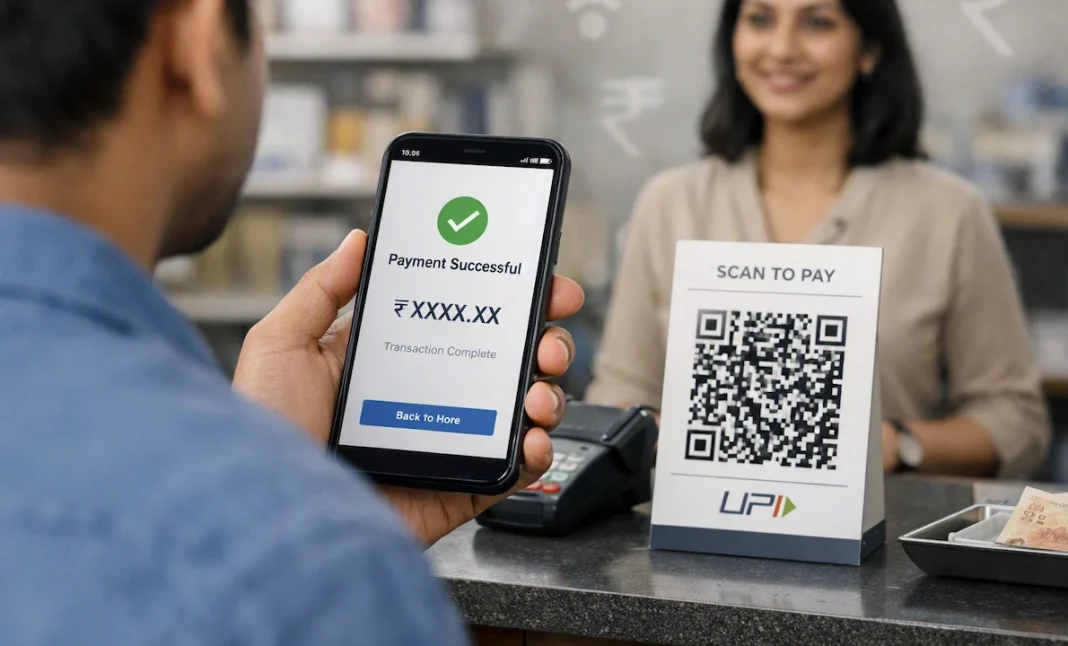
MDR is normally paid by the merchant accepting a digital transaction. It is divided among banks, payment service providers and network operators. A customer paying ₹5,000 through UPI may still see ₹5,000 at checkout, while the merchant receives slightly less after processing costs.
Large retailers may absorb the charge, negotiate lower rates or include it in product pricing. Some may offer discounts for cash or cheaper payment modes. Others could attempt to add a convenience fee, depending on the final government and RBI rules.
Small shops are unlikely to be the main target. The reported ₹1.5 crore turnover threshold would protect many local merchants, while P2P transfers between family members, friends or individual accounts are expected to stay free.
The debate was addressed during the RBI’s official post-monetary policy press conference. The central bank had announced the broadcast through its official Instagram account. Malhotra said stronger, safer public payment infrastructure requires continued investment, but backed no specific MDR formula.
Is India’s Free UPI Era Really Ending?
For ordinary users, the answer is not yet. UPI remains free under present rules, and the NPCI’s official UPI platform continues without a newly announced user fee. The proposed law merely gives the government room to draw narrower exemptions later.
The bigger shift is philosophical. India may be moving from “all UPI merchant payments must be free” to “basic and low-value UPI should stay free, while selected commercial payments help fund the network.” That could improve revenue for banks and payment businesses, but it risks confusing users who have treated QR payments as costless for years.
Any final policy will need plain language, visible merchant classification and a cap preventing excessive fees. Until an official notification and RBI guidelines arrive, claims that every payment above ₹2,000 has become chargeable are incorrect.
Frequently Asked Questions
Will customers pay MDR directly on UPI payments?
Not currently. The proposal targets eligible merchants, though businesses could adjust prices to recover costs.
Are UPI payments above ₹2,000 already chargeable?
No. The government has not notified a fee, final rate, merchant category or implementation date.
Will person-to-person UPI transfers attract MDR?
Current reports indicate P2P transfers will remain exempt, even when the transferred amount exceeds ₹2,000.
Could small shopkeepers face the new merchant fee?
They may remain exempt if the final policy uses the reported ₹1.5 crore turnover threshold.
licy uses the reported ₹1.5 crore turnover threshold.
Continue using UPI and rely on RBI, NPCI or government notifications before believing forwarded claims.