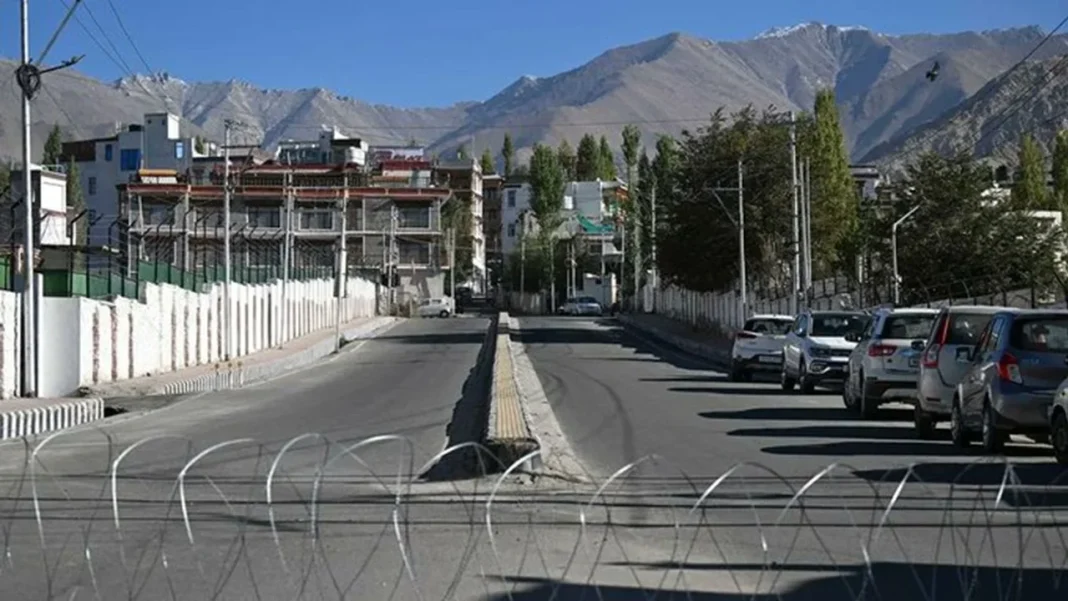

Ladakh is seeking greater control over land, jobs and administration. Yet mid-October 2026 talks on a proposed Article 371K ended without agreement. The dispute concerns how much authority Ladakh’s elected representatives would actually hold.
Article 371 already provides special arrangements for states, but Article 371K has not been enacted. Talks resume in New Delhi on 22 October.
Key Highlights
- Article 371 and Articles 371A–371J provide state-specific constitutional arrangements.
- Ladakh has demanded statehood and inclusion under the Sixth Schedule.
- The proposed Article 371K would require a constitutional amendment; it has not taken effect.
- Disagreement over the proposed elected body’s powers has delayed an agreement.
What Does Article 371 of the Indian Constitution Provide?
Article 371 is in Part XXI of the Constitution. It addresses regional development and funding arrangements in Maharashtra and Gujarat. Related provisions cover other states, but grant different rights.
The distinctions are easier to see through examples:
- Article 371A, Nagaland: Parliamentary laws concerning Naga customary practices and ownership or transfer of land and resources need the state Assembly’s approval to apply.
- Article 371G, Mizoram: Comparable safeguards concern Mizo religious and social practices, customary law and ownership and transfer of land.
- Article 371J, Karnataka: Provides special arrangements for the Hyderabad-Karnataka region, now commonly called Kalyana Karnataka, including education and employment opportunities.
Articles 371B and 371C deal with assembly committees in Assam and Manipur, while Article 371F includes special arrangements for Sikkim. Each provision has distinct conditions. The exact wording of any Ladakh amendment would determine its protections.
These arrangements are detailed in the Ministry of Home Affairs’ explanation of Article 371.
Why Is Ladakh Demanding Special Constitutional Safeguards?
Under the Jammu and Kashmir Reorganisation Act, Ladakh became a Union Territory without a legislature on 31 October 2019. Its hill development councils do not form a territory-wide legislature.
The Leh Apex Body and Kargil Democratic Alliance have campaigned for statehood, Sixth Schedule coverage and stronger representation. Their concerns extend to local recruitment, land ownership and protection of the region’s cultural identity. Leaders have also sought a separate public service commission and additional parliamentary representation. These demands cannot all be settled merely by naming a new constitutional article.
A July 2026 parliamentary reply placed Ladakh’s Scheduled Tribe population at 2,18,193, using the 2011 Census. It is not a current count.
The Centre points to steps already taken. In September 2025, the Ministry of Home Affairs said Scheduled Tribe reservation in Ladakh had risen from 45% to 84%, with one-third reservation for women in hill councils and recognition of Bhoti and Purgi as official languages.
Those steps do not settle control over laws, budgets or administration.
Article 371K vs Sixth Schedule: How Would They Differ?
The Sixth Schedule gives autonomous district councils in specified tribal areas of Assam, Meghalaya, Tripura and Mizoram powers over local subjects, including land and customary practices.
A proposed Article 371K, by contrast, is being discussed as a framework for a directly elected body covering Ladakh as a whole, with powers yet to be agreed.
Three questions remain:
- Legislation: Which subjects, including land and natural resources, could the elected body make laws about?
- Administration: Would elected representatives control officials and government departments, or would important decisions remain elsewhere?
- Finance: Could the body approve and direct spending, rather than merely recommend projects?
Neither arrangement automatically grants statehood. An elected body may still lack state Assembly powers; the final wording will decide.
What Happened in the October 2026 Talks?
In May 2026, Ladakh representatives reported preliminary agreement on safeguards and an elected body. By September, talks focused on Article 371K.
At the 15 October Leh meeting, Home Ministry representatives presented a 15–20-page draft, according to Leh Apex Body chairman Chering Dorjay Lakrook. Ladakh’s delegation submitted another. No agreement emerged on the elected body’s powers.
A central question is whether elected representatives could direct departments and senior officials, including the chief secretary. Without those details, promises of a legislature offer little clarity about everyday governance.
On 17 October, activist Sonam Wangchuk alleged that the Centre had stepped back from assurances made earlier in the year. That is his assessment of the negotiations, not a settled finding.
The next talks are scheduled for 22 October in New Delhi. Without an agreed text and constitutional amendment, Article 371K remains a proposal. Follow official parliamentary records for any final decision.
FAQS
What Is Article 371 in Simple Terms?
It is a constitutional provision for special arrangements in certain states. Related Articles 371A to 371J contain different protections, so their powers and conditions are not identical.
Does Article 371 Currently Apply to Ladakh?
No new Article 371K for Ladakh has been enacted as of 17 October 2026. The Centre and regional representatives are still discussing its proposed content.
Is Article 371 the Same as Article 370?
No. Article 370 concerned the former state of Jammu and Kashmir. Article 371 and its related provisions establish distinct, individually specified arrangements for several other Indian states.
What Does the Sixth Schedule Protect?
It creates autonomous councils in designated tribal areas of four northeastern states, with defined powers over subjects such as land, local administration, and customary practices.
When Will Ladakh Get Article 371K Safeguards?
There is no confirmed implementation date. Discussions are scheduled for 22 October 2026, and any new constitutional provision would require a formal constitutional amendment and legislative approval.
India’s Constitutional Changes, Ladakh Developments and Political Updates
1. Why Is Election Reform Report Delayed?
2. Could Those Airport Transform Ladakh Tourism?
3. What Happened During India-China Border Talks?
4. What Sparked Concern Over Kashmir’s Map?
Find out why changes involving Kashmir’s representation on a UN map have raised concerns in India.
5. How Did Modi Mark Article 370?