

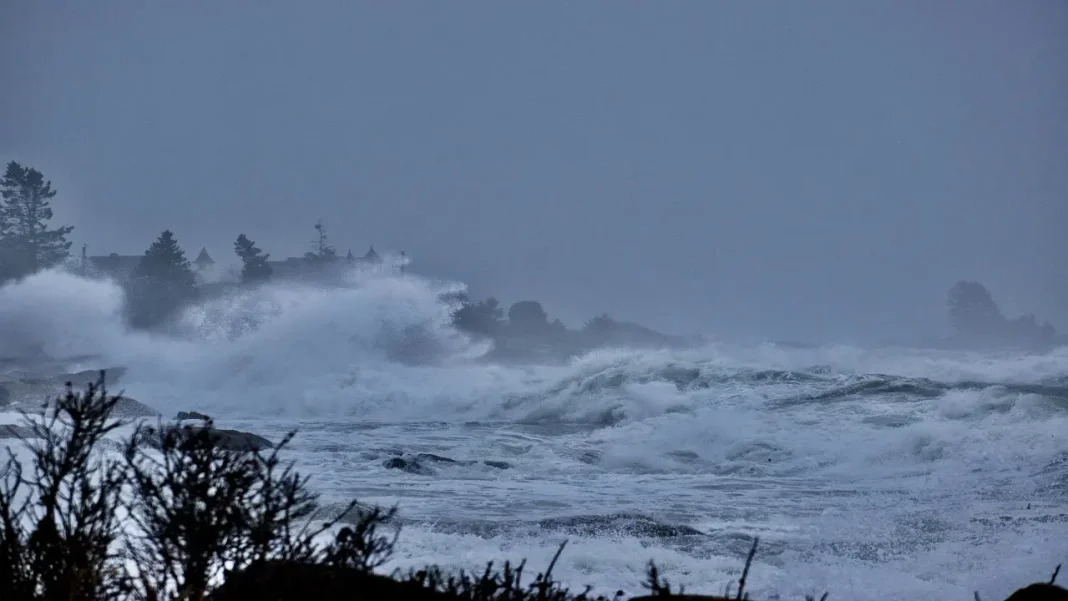

A weather system developing over the Bay of Bengal could become Cyclone Arnab by October 26, 2026. It has not yet earned that name. In its October 24 coastal bulletin, the India Meteorological Department (IMD) described the system as a well-marked low-pressure area and forecast further strengthening before it approaches the Andhra Pradesh coast around October 28.
Arnab, meaning “ocean”, was proposed by Bangladesh. The name will become official only if winds strengthen enough for the disturbance to be classified as a cyclonic storm. Calling it an existing cyclone would be premature.
Key Highlights
- IMD expects a cyclonic storm over the west-central Bay of Bengal by October 26.
- Arnab is the next unused name on the regional cyclone list; Bangladesh proposed it.
- A system gets a name at sustained winds of at least 62 kmph.
- Coastal Andhra Pradesh and Odisha face significant rainfall warnings for October 27–29.
Has Cyclone Arnab Formed, and Where Could It Go?
At 8:30 am on October 24, IMD located the well-marked low over the east-central and adjoining southeast Bay of Bengal. The system is forecast to travel west-northwestwards and strengthen.
The IMD’s October 24 coastal bulletin lays out the projected sequence:
| Date | Forecast Stage |
| October 24 | Depression may develop |
| October 25 | Deep depression likely |
| October 26 morning | Cyclonic storm possible; name Arnab would apply |
| October 28 morning | System could be near the Andhra Pradesh coast |
The final row is not a confirmed landfall forecast. Its eventual crossing point, timing, and strength remain uncertain.
Who Selected Arnab, and How Does India’s Cyclone Naming System Work?
Bangladesh proposed the name in advance. Its pronunciation appears as “Ornab” in the World Meteorological Organization’s official roster. The 2020 list contains 169 names supplied by 13 countries participating in the WMO/ESCAP Panel on Tropical Cyclones.
The sequence covers both the Bay of Bengal and the Arabian Sea; individual states do not have their own cyclone-name lists.
The system follows clear rules:
- Each member supplied 13 names for the shared list, including India, Bangladesh and Sri Lanka.
- The names are used in their prescribed sequence, column by column, rather than chosen for a particular coastline.
- IMD’s Regional Specialised Meteorological Centre in New Delhi assigns the next eligible name once a storm meets the intensity requirement.
- Once used, a name from this North Indian Ocean list is not used again.
Regional cyclone naming began in 2004. The 2020 list replaced one exhausted by Amphan. Names distinguish storms but do not convey their destructive potential.
At What Wind Speed Does IMD Officially Name a Cyclone?
IMD classifies systems by their maximum sustained wind speed. Its cyclone warning procedures use these thresholds:
| Classification | Sustained Wind Speed |
| Depression | 31–49 kmph |
| Deep depression | 50–61 kmph |
| Cyclonic storm | 62–88 kmph |
| Severe cyclonic storm | 89–117 kmph |
The change from deep depression to cyclonic storm is the naming point. Once the threshold is reached, the current Bay of Bengal system would be called Arnab. If it never reaches that strength, it will not be named Arnab simply because the forecast mentioned it. Rain, flooding and rough seas can still occur without a named cyclone.
What Do the Latest Warnings Mean for Coastal Residents?
In its October 24 state warnings, IMD flagged extremely heavy rainfall for coastal Andhra Pradesh on October 27 and 28, and for Odisha on October 28. Warnings can change with the track. The Andhra Pradesh warnings and Odisha warnings should be checked for updates.
For people in vulnerable coastal areas, the practical priorities are straightforward:
- Fishermen should follow the current marine bulletin and avoid sailing into areas under warning.
- Residents near flood-prone roads and low-lying neighbourhoods should monitor district advisories and evacuation notices.
- Keep medicines, documents and a charged phone accessible if local authorities advise preparing to move.
An October 24 IMD coastal notice also advised small vessels to avoid affected nearshore waters around the Andaman Islands because of hazardous swell. No exact landfall point or peak wind speed was established. Follow IMD’s official forecasts rather than treating a viral cyclone map as a confirmed track.
FAQs
Has Cyclone Arnab Officially Formed as of October 24, 2026?
No. IMD still described the system as a well-marked low-pressure area on October 24. The cyclone name applies only if it reaches the required intensity.
Which Country Gave the Name Arnab?
Bangladesh submitted Arnab to the regional naming list. The name means ocean and will be assigned by IMD when the next qualifying North Indian Ocean cyclone forms.
Who Names Cyclones in the Bay of Bengal?
The Regional Specialised Meteorological Centre in New Delhi, operated by IMD, assigns names from a list approved by 13 countries under the WMO/ESCAP regional process.
Does a Cyclone Name Tell Us How Dangerous It Is?
No. Names identify individual storms; they do not indicate intensity. Check the latest wind forecast, rainfall warning, possible storm surge, and official evacuation instructions instead.
Where Can People Track Cyclone Arnab Updates?
IMD publishes coastal, marine and district warnings on mausam.imd.gov.in. Local disaster-management authorities issue practical instructions, including evacuation directions, for communities potentially affected along the forecast path.
Storm Alerts, Space Discoveries & Weather Stories You Shouldn’t Miss!
1. How Quickly Can EOS-05 Detect Disasters?
Check out how EOS-05 aims to track natural disasters at five-minute intervals.
2. What Makes ISRO’s EOS-05 Mission Different?
Explore India’s geosynchronous satellite mission and its disaster monitoring capabilities.
3. Where Could Heavy Monsoon Rain Strike?
Find India’s August 11–16 rainfall forecast and areas facing flash flood risks.
4. Why Is North India’s Monsoon Shifting?
Uncover changing rainfall patterns and their impact across northern India.
5. Why Is Monsoon Rainfall So Low?
See India’s 2026 monsoon rainfall trends and the regions facing shortages.