

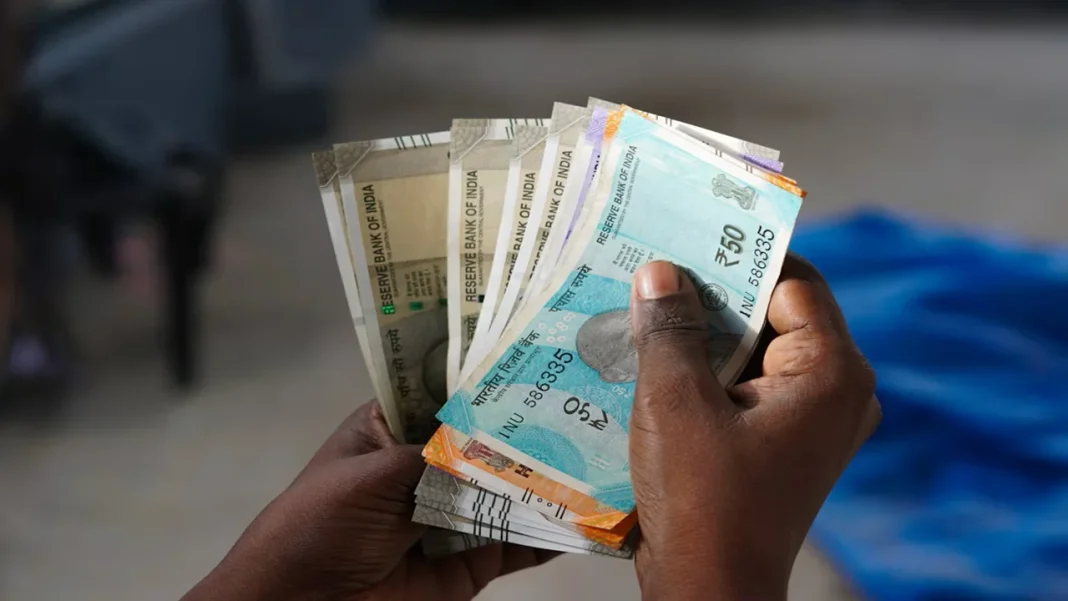

The Union Cabinet approved a DA and DR increase on 28 October 2026, raising both rates to 63%, with retrospective effect from 1 July 2026. For households awaiting the revision, the next question concerns the money: how much extra accrues each month, and when will the arrears arrive?
Key Highlights
- DA and DR rise from 60% to 63% of basic pay and basic pension, respectively
- The Cabinet announcement does not specify a payment date
Who Receives the Revised DA and DR?
The Finance Ministry’s announcement dated 28 October 2026 puts coverage at 48.54 lakh Central Government employees and 68.71 lakh pensioners. It estimates the additional annual expenditure at ₹10,016.10 crore.
Employees receive Dearness Allowance; pensioners receive Dearness Relief. Although headlines often group everyone under “DA”, a pensioner’s calculation starts with basic pension rather than the total bank credit. The Prime Minister’s Office confirmation identifies both payments separately.
The earlier Cabinet decision of 18 April 2026 had raised the rate from 58% to 60%, effective from January. The July revision adds 3 percentage points to that rate. It does not add 63% afresh to an income already carrying the earlier allowance.
How Much Extra Will the 7th Pay Commission DA Hike Add?
For every ₹10,000 of basic pay or basic pension, the monthly increase works out to ₹300. Use the basic amount on the relevant statement, rather than gross salary or the final amount reaching the bank.
The calculation is basic amount × 3 ÷ 100. These illustrations assume an unchanged basic amount.
| Basic Pay or Pension | At 60% | At 63% | Extra Per Month |
| ₹18,000 | ₹10,800 | ₹11,340 | ₹540 |
| ₹29,200 | ₹17,520 | ₹18,396 | ₹876 |
| ₹44,900 | ₹26,940 | ₹28,287 | ₹1,347 |
| ₹56,100 | ₹33,660 | ₹35,343 | ₹1,683 |
These figures describe the DA or DR component alone. For example, ₹11,340 in the first row represents the revised allowance on ₹18,000 basic pay, rather than the employee’s entire monthly salary.
For a full 12 months at the same basic amount, that ₹540 monthly difference totals ₹6,480. That annual figure is separate from arrears, which cover only the months awaiting adjustment; adding both as arrears would double-count income.
There is also a difference between a 3-percentage-point rate increase and a 3% increase in the previous allowance. Applying 3% to the old ₹10,800 allowance would produce ₹324, which understates the actual ₹540 monthly increase.
July 2026 Arrears: Calculation and Payment Timing
Approval in October does not move the effective date forward. Any eligible period already paid at the earlier rate needs an adjustment from July. However, the Cabinet release gives no date for that adjustment to reach individual accounts.
At an unchanged basic pay of ₹18,000, the monthly difference is ₹540:
- July to September would produce ₹1,620 in arrears
- July to October would produce ₹2,160 if all 4 months originally carried the lower rate
The second figure is a conditional illustration, not a confirmed payout schedule. If October already includes the revised allowance, counting October again would overstate the outstanding amount.
An increment during the arrears period also changes the calculation. Apply the difference to each month’s applicable basic pay instead of multiplying the latest month’s increase across the entire period.
What to Look For in the Revised Statement
A larger bank credit alone will not reveal whether the calculation covers every outstanding month. The statement needs to show the recurring increase separately from any adjustment for previous months.
- Match the regular allowance against the applicable basic amount
- Match the arrears entry against the months still awaiting adjustment
Keep the earlier statements alongside the revised one. If the figures disagree, a query identifying the month and basic amount gives the payroll office or pension-disbursing authority something specific to examine.
Use the table to estimate the increase, then reconcile it with the actual statement once payment arrives.
FAQs
Does the 63% rate increase basic pay itself?
The approval revises the allowance rate applied to basic pay. It does not announce a replacement pay matrix or turn the allowance into basic salary.
Will every beneficiary receive the same arrears?
No. The applicable basic amount and months awaiting adjustment determine arrears. Different basic amounts produce different totals even where beneficiaries share the same effective date.
Can I calculate arrears from my bank credit?
Use the basic pay or pension figure from your statement. A bank credit alone does not identify the amount on which the revised allowance applies.
What happens if my basic pay changed after July?
Calculate each month separately using its applicable basic pay. Multiplying the latest monthly increase across earlier months could produce an incorrect estimate of outstanding arrears.
What happens if my basic pay changed after July?
Calculate each month separately using its applicable basic pay. Multiplying the latest monthly increase across earlier months could produce an incorrect estimate of outstanding arrears.
Has the government guaranteed a November payment?
The Cabinet release does not give a November payment date. Treat the effective date and actual credit date separately, and follow your disbursing authority’s instructions.
Don’t Miss These Latest Salary and Government Updates!
1. Why Was the DA Announcement Delayed?
Check out the latest developments surrounding the 2026 DA and DR announcement.
2. What’s New With June’s DA Hike?
Find the key updates on dearness allowance and government employee benefits.
3. What Happens After Pay Commission Submissions?
Uncover the latest developments surrounding the 8th Pay Commission data submission deadline.
4. Could Minimum Salaries Reach ₹72,000 Soon?
See the latest discussion surrounding the proposed ₹72,000 minimum government salary.
5. What Do MTS Government Jobs Offer?
Explore MTS job salaries, eligibility requirements and everyday responsibilities.