

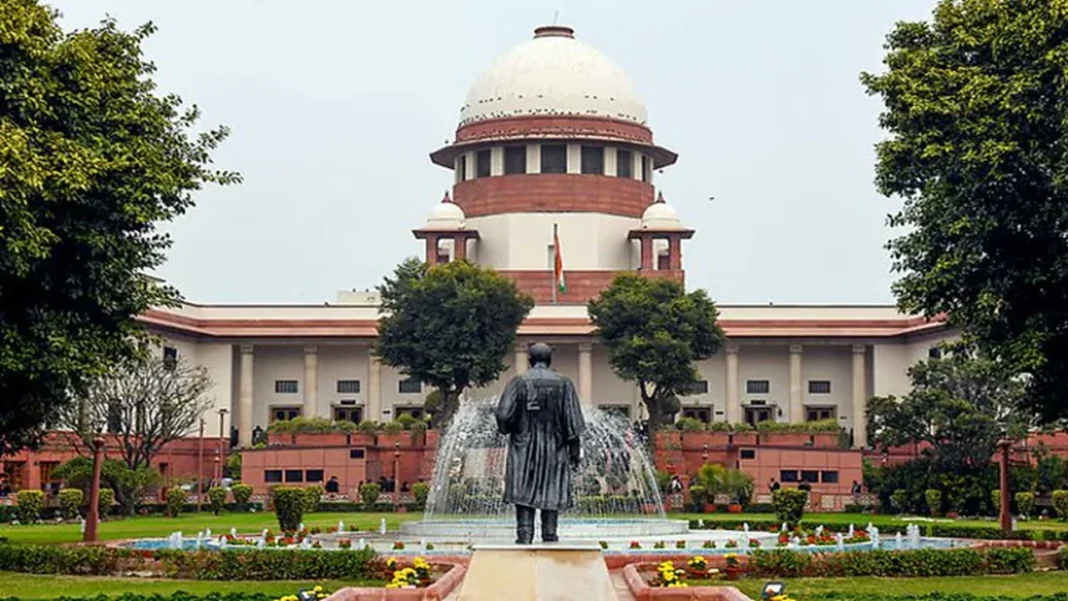

The Centre wanted UPSC to complete its CSE 2025 service allocations using the creamy layer criteria applied before March 11, 2026. The Supreme Court refused that request on November 6, directing officials to follow its March ruling instead. Parents’ salaries alone cannot be used to reject an applicant’s non-creamy layer claim without examining the applicable service-category rules.
But earlier completed appointments will not be reopened. That limit is important for candidates awaiting services.
Key Highlights
- The November 6 order applies the March 11, 2026 ruling to pending CSE 2025 service allocations.
- UPSC declared CSE 2025 results on March 6, recommending 958 candidates.
- Parental employment categories and their classification against government posts form part of the creamy layer assessment.
- Completed selections and settled seniority are not automatically reopened.
- The Centre received two more months to comply with the earlier judgment.
What Did the Supreme Court Clarify on November 6?
Justices P S Narasimha and R Mahadevan heard the Centre’s request for clarification in Union of India v. Rohith Nathan. The Centre sought time to compare PSU, bank and other jobs with government posts.
The Court refused to delay the March interpretation for CSE 2025, but protected concluded selections, appointments and seniority from general retrospective review.
The legal principle laid down in March applies to relevant future decisions. Individual relief under that judgment, however, was directed at the parties and intervenors involved in those proceedings. It does not automatically extend to every candidate whose earlier claim was rejected.
How Are OBC Creamy Layer Rules Applied to Parents’ Income?
The dispute began when candidates whose parents worked in PSUs, banks or private organisations were denied OBC non-creamy layer benefits after officials counted parental salary income. They challenged unequal treatment compared with government employees’ children.
In its March 11 judgment, the Supreme Court examined the September 8, 1993 Office Memorandum and an October 14, 2004 clarification. It did not exempt every child of a well-paid employee.
One example reaches back to CSE 2012. Rohith Nathan ranked 174 and was allocated the IPS against an unreserved vacancy. He sought the Indian Foreign Service using OBC reservation, but his father’s private-sector salary had been used to deny non-creamy layer status.
For such claims, officials must examine the employment category rather than rely on salary figures alone.
- Parent’s post: The employment classification and whether the position corresponds to an equivalent government post.
- Income test: Whether the prescribed income and wealth rules apply to the family’s circumstances, rather than treating salary alone as decisive.
A PSU employee’s salary above a threshold therefore does not, by itself, settle the child’s reservation status. Nor does an OBC certificate alone settle every requirement for service allocation. Individual records still require examination.
What Changes for UPSC CSE 2025 Service Allocation?
March 6, 2026, was the date UPSC announced its CSE 2025 final results, with 958 candidates recommended for appointment. The official government result release confirms the figure. Their service allocation process had yet to conclude when the Supreme Court considered the Centre’s request.
The March ruling will therefore apply when authorities assess creamy layer eligibility for OBC candidates in the pending allocation process. The recommended list includes candidates from several reservation categories, so the decision does not affect all 958 in the same way. It also does not guarantee an applicant’s preferred service. Allocation still depends on rank, vacancies, reservation rules and other conditions.
The Department of Personnel and Training must apply the clarified creamy layer test. The ruling does not announce an individual allotment list or confirm a Foundation Course date.
Compliance time was extended by two months from November 6. No separate deadline was set for determining post equivalence.
Will Earlier Candidates Get Their Selections Reopened?
Candidates from previous recruitment years cannot seek automatic reallocation solely because of the March judgment. In its November 6 clarification, the Supreme Court protected completed selections made before March 11, 2026. Existing seniority must remain unaffected when successful litigants receive relief under the judgment.
The treatment of earlier claims differs between the original parties and applicants whose cases remain pending.
- Original litigants and intervenors: Relief directed by the Court remains available to these parties, provided they meet the remaining eligibility conditions. Additional posts may be used where necessary.
- Other pending cases: Where an individual claim is already before a court, tribunal or competent authority, it may be examined using the Supreme Court’s interpretation and the facts of that case.
Past applicants with a closed case do not receive automatic reallocation. Pending claimants need their rejection order, parental post details and OBC-NCL documents.
Follow the Supreme Court judgment record and official UPSC or DoPT notices.
FAQs
Does the Supreme Court ruling apply to UPSC CSE 2025?
Yes. CSE 2025 service allocations were unfinished when the Court issued its November 6, 2026 order. The March 11 interpretation will now govern creamy layer eligibility for selected OBC applicants.
Does a parent’s salary above ₹8 Lakh automatically mean creamy layer?
Not on salary alone. Salary alone is not decisive in the disputed employment categories. Relevant service-status criteria and the prescribed income test still require individual examination under applicable rules.
Will UPSC CSE 2025 candidates receive new ranks?
The Court did not direct UPSC to revise its rankings or conduct another examination. Its ruling concerns the creamy layer test for pending service allocations. Individual allotments continue to depend on rank and existing selection requirements.
Can candidates from older UPSC batches claim benefits?
Completed selections will not automatically reopen. Candidates with pending proceedings may have their claims examined individually, while specific relief for original litigants follows the March judgment.
Has the Supreme Court fixed a service allocation date?
No separate service allocation date was announced. The Court allowed two additional months for compliance, while leaving wider post-equivalence policy decisions and their timing to the government.
Explore More Supreme Court Rulings, UPSC Updates and Exam News!
1. Can CBSE Evaluation Errors Be Challenged?
Check out the Supreme Court’s observations on CBSE’s on-screen marking and evaluation errors.
2. Who Must Meet the TET Deadline?
Find which teachers face TET qualification deadlines and what eligibility requirements apply.
3. How Has UPSC Changed Since 1926?
Uncover key milestones from 100 years of UPSC and India’s civil services examination history.
4. When Are UPSC 2027 Exams Scheduled?
See the UPSC CSE, NDA and CDS 2027 exam dates and important schedules.
5. Why Do UPSC Admit Cards Fail?
Explore common UPSC CSE 2026 admit card download errors and possible solutions.