
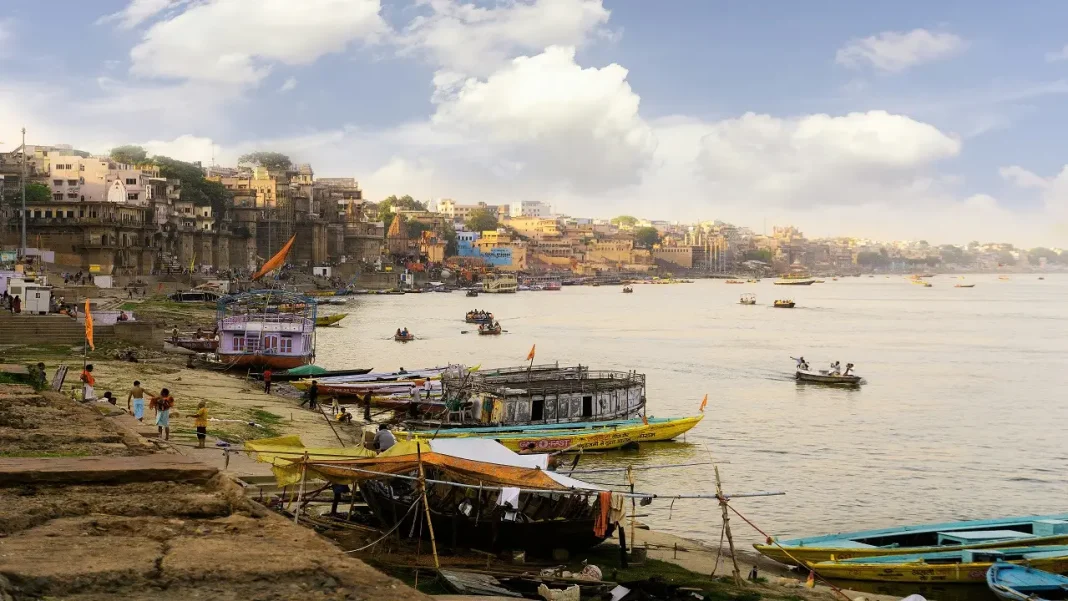

Videos circulating after Haridwar’s annual Ganga cleanup have renewed questions about waste entering the water. Reports describe plastic bags and discarded clothes floating near the banks, shortly after images of clear water attracted widespread attention. However, the date and location of the contrasting footage remain unverified, preventing a firm conclusion about how quickly litter returned.
The cleanup itself is documented. The Indian Express reported that workers and volunteers removed approximately 150 metric tonnes of waste during the Upper Ganga Canal’s annual closure. The Haridwar Ganga pollution debate now concerns how that work will be maintained once normal activity resumes.
Key Highlights
- The reported cleanup covered approximately 10 kilometres.
- Canal closure gave workers access to normally submerged waste.
- Floating barriers are proposed ahead of the 2027 Ardh Kumbh.
- Clear-looking water does not establish its suitability for bathing or drinking.
What The Haridwar Ganga Cleanup Achieved
During the roughly 18-day closure, sanitation teams worked along the stretch from Khadkhadi to Jwalapur, including Har Ki Pauri and neighbouring ghats. The Indian Express’s ground report describes workers separating rubbish from accumulated silt before vehicles carried it away.
Water returned to Har Ki Pauri at midnight on November 7, the report states. The operation removed material that would otherwise have remained beneath the surface.
Two figures need careful attribution:
- Approximately 150 metric tonnes: Reported by The Indian Express and The New Indian Express for the cleanup.
- More than 100 metric tonnes: Cited by PTI from the Haridwar district administration.
These figures describe the same broad operation at different levels of precision. Neither provides a measured total for rubbish subsequently seen in viral footage.
The New Indian Express reported that the collected material included silt alongside plastic, clothes and religious offerings. Calling the entire load “150 tonnes of plastic” would therefore misrepresent what workers removed. Its report also describes visible fish and riverbed features after flow resumed, without treating those images as laboratory evidence.
What The Fresh Videos Do And Do Not Establish
Odisha TV’s November 14 report describes contrasting clips of clear water and floating rubbish. It explicitly states that the newer footage’s exact date and location were not independently confirmed, including whether it shows Har Ki Pauri after the recent cleanup.
That leaves the “before and after” claim incomplete. A recent upload is not necessarily a recent recording. Establishing the sequence requires the original footage, identifiable landmarks and confirmation of when it was filmed.
The distinction does not dismiss the waste problem. It prevents an unverified comparison from becoming a precise claim that the cleanup failed within five or fifteen days.
Clear Water And Tested Water Are Different
Government bathing-water criteria assess parameters that a phone camera cannot measure.
| Indicator | Bathing-Water Criterion |
| Dissolved oxygen | At least 5 mg/L |
| Biochemical oxygen demand | No more than 3 mg/L |
| Faecal coliform | 500 MPN/100 ml desirable; 2,500 maximum permissible |
These are reference criteria, not test results from the viral-video locations. Without dated samples, neither clear water nor visible litter establishes the full pollution profile.
There is also evidence of longer-term improvement. An August 2026 Ministry of Jal Shakti reply says the Haridwar–Sultanpur stretch, listed as polluted in 2018, was absent from CPCB’s 2025 polluted-stretch assessment. That finding does not certify every ghat’s condition on every subsequent day.
Waste Barriers Planned Ahead Of Ardh Kumbh
Haridwar Municipal Commissioner Nandan Kumar told PTI that a tender had been floated for trash-boom interceptors, expected to operate before the 2027 Ardh Kumbh. The proposed locations are Amrapur Ghat and Jatwara Ghat. These remain reported plans, not confirmation that installation is complete.
A floating barrier would direct debris towards a bank, where a conveyor would collect it. This creates a way to remove floating rubbish while water continues flowing.
The operating arrangements deserve as much attention as installation:
- Regular removal: Collected debris needs scheduled clearance and transport to disposal facilities.
- Separate pollution controls: Floating barriers cannot remove dissolved pollutants; drainage and sewage treatment require their own systems.
Kumar made the same limitation clear in The Indian Express, noting that effectiveness depends on regular clearance and disposal.
The district administration has asked people to leave unwanted clothes and other waste at designated collection points. That instruction addresses waste before it enters the water, reducing the burden on downstream collection equipment.
Frequently Asked Questions
Was the entire Ganga stopped for cleaning?
No. The operation involved the seasonal closure of the Upper Ganga Canal, exposing stretches around Haridwar’s ghats. It did not stop the entire river across India.
Does the footage prove pollution returned within five days?
The exact filming date and location of the contrasting rubbish footage remain unverified. Its circulation after the cleanup does not establish a five-day timeline of renewed pollution.
Was all the collected waste plastic?
No. Reports describe a mixture of silt, discarded clothes, footwear, plastic and religious offerings. The reported 150-tonne figure should not be presented as plastic waste alone.
Will the proposed barriers clean sewage from the water?
The barriers target floating solid waste by directing it towards collection equipment. They do not treat sewage or remove dissolved pollutants, which require separate pollution-control measures.
Where should visitors leave clothes and ritual waste?
The district administration has requested disposal at designated collection points. Visitors should follow local instructions and avoid leaving clothes, packaging or other materials in the water.
Explore the latest developments in river safety, environmental protection, infrastructure and climate action across India and beyond!
Where Will Ganga Expressway Exits Lead?
Find the Ganga Expressway route, toll details and major exits across Uttar Pradesh.
Why Are Bhutan’s Glacial Lakes Dangerous?
Uncover the risks of glacial lake outburst floods and the latest Bhutan flood alerts.
What Triggered Chitrakoot’s Mandakini River Floods?
See how heavy rainfall affected the Mandakini River and surrounding areas in Chitrakoot.
Can Visakhapatnam’s Nirmal Sagar Reduce Litter?
Explore the Nirmal Sagar pilot initiative to tackle marine litter in Visakhapatnam.
How Is Mumbai Tackling Climate Threats?
Discover Mumbai’s climate action plans addressing floods, extreme heat and pollution.