

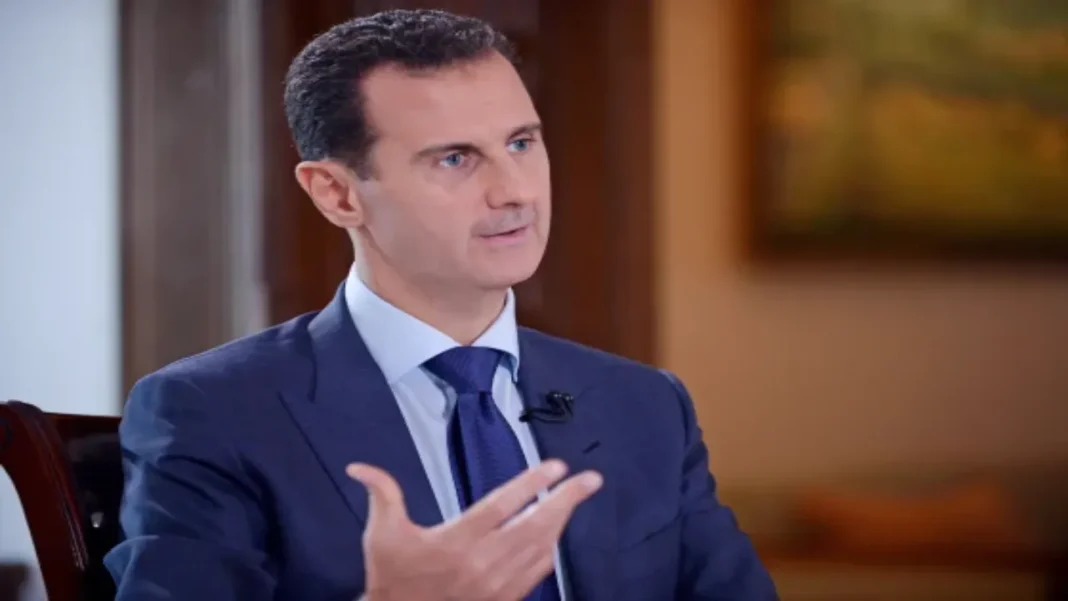

Former Syrian President Bashar Assad has been sentenced to death in absentia by a Damascus court, nearly two years after he fled Syria for Russia. The August 11, 2026 ruling is the first Syrian conviction against Assad since his government collapsed in December 2024. Yet the headline leaves a harder question: what can Syria actually do if Assad never comes back?
The short answer is that the sentence remains a major legal and political marker, but Syria cannot enforce it while Assad stays outside its custody. Bringing him home would depend largely on Russia agreeing to surrender him, something that currently appears unlikely.
What Did The Damascus Court Decide In The Bashar Assad Case?
Syria’s Fourth Criminal Court sentenced Assad, his brother Maher Assad, former security chief Atef Najib and several other former officials to death. According to SANA’s report on the verdict, the court convicted Bashar Assad of intentional murder, killing children, torture, unlawful deprivation of liberty, crimes against humanity, and war crimes.
Najib was in Syrian custody and appeared before the court. Bashar and Maher Assad were tried as fugitives.
The major points from the ruling are:
- Assad was tried and sentenced while absent from Syria.
- Existing arrest warrants against the fugitives remain active.
- Syrian authorities were directed to pursue international legal measures.
- The court ordered restrictions and seizures concerning defendants’ assets.
- The in-absentia judgment may be annulled if a fugitive is arrested or voluntarily surrenders.
That final provision changes what the death sentence means in practice. If Assad eventually enters Syrian custody, the existing judgment is not necessarily the last courtroom step. The case could return to the judicial process rather than move straight to execution.
What Happens If Bashar Assad Never Returns To Syria?
If Assad remains in Russia indefinitely, Syria cannot physically enforce the death penalty against him. A domestic court judgment does not allow Syrian authorities to enter another country, arrest a protected exile, and bring him back.
Assad and his family received asylum in Russia after leaving Damascus in December 2024. Reuters reported that extradition remains unlikely, while the capital sentence could make attempts to secure his handover more difficult.
Syria can keep domestic warrants active, pursue international legal cooperation and seek action against assets under its jurisdiction. Travel outside Russia may also carry added risk because Assad already faces a French arrest warrant connected to the 2012 bombing of a press centre in Homs.
If he never returns, the likeliest outcome is prolonged exile. The Syrian sentence stays on the record, but there is no automatic mechanism that turns it into an execution abroad. Official social post: Reuters reported the verdict on X.
Can Syria Force Russia To Extradite Assad After The Death Sentence?
No. Damascus can request Assad’s handover, but it cannot compel Moscow to approve extradition simply because a Syrian court has convicted him. Russia granted Assad asylum, and Reuters reported after the verdict that his extradition remains unlikely.
The death penalty may make the extradition push harder. Anwar al-Bunni, head of the Syrian Centre for Legal Studies and Research, argued that capital punishment could discourage states from handing suspects to Syria. Human-rights groups have also criticised the death penalty and raised fair-trial concerns around the proceedings.
At the same time, Damascus and Moscow are still reshaping a broader relationship. On the same day as Assad’s sentence, Reuters reported a new Russia-Syria agreement covering the future of Russian military facilities at Tartous and Hmeimim. The agreement was not publicly tied to Assad’s fate, but it shows why extradition sits inside a much larger diplomatic relationship.
Why The Assad Death Sentence Still Carries Weight For Syria
The ruling is symbolic, but that does not make it meaningless. For families of people killed, tortured or disappeared under the former government, a Syrian court has now formally attached criminal responsibility to the former president. Crowds gathered in Damascus and Daraa after the judgment.
The case is also a test for Syria’s post-Assad justice system. Associated Press coverage reported that Human Rights Watch opposed the death penalty and that the Syria Justice and Accountability Center identified weaknesses in Najib’s trial, including concerns about speed, evidence and defence quality.
That debate will continue even if Assad stays in Moscow. Syria now has a conviction, warrants and a formal basis to pursue him. What it does not have is custody.
FAQs
Where is Bashar Assad now?
Assad is living in Russia, where he received asylum after fleeing Syria in December 2024.
Can Syria execute Assad while he remains in Russia?
No, Syria would need physical custody before any sentence could be enforced against Assad personally.
Could Russia extradite Bashar Assad later?
Yes, but extradition would require a Russian decision, and current reporting suggests approval remains unlikely.
Would Assad face another trial if captured?
The Syrian ruling says an in-absentia judgment may be annulled after arrest or voluntary surrender.
Why is the death sentence controversial?
Critics say capital punishment may hinder extradition and deepen concerns about fair transitional justice procedures.
Explore more stories shaping Syria’s post-Assad political and legal future.
India’s First Education Minister Never Attended School: How He Shaped IITs, UGC And The AIIMS Story
US Plans Permanent Visa Bonds For Travellers From Dozens Of Countries: Who Could Be Affected?
Total Solar Eclipse To Turn Day Into Darkness Next Week: Where Will The Best Views Be?