

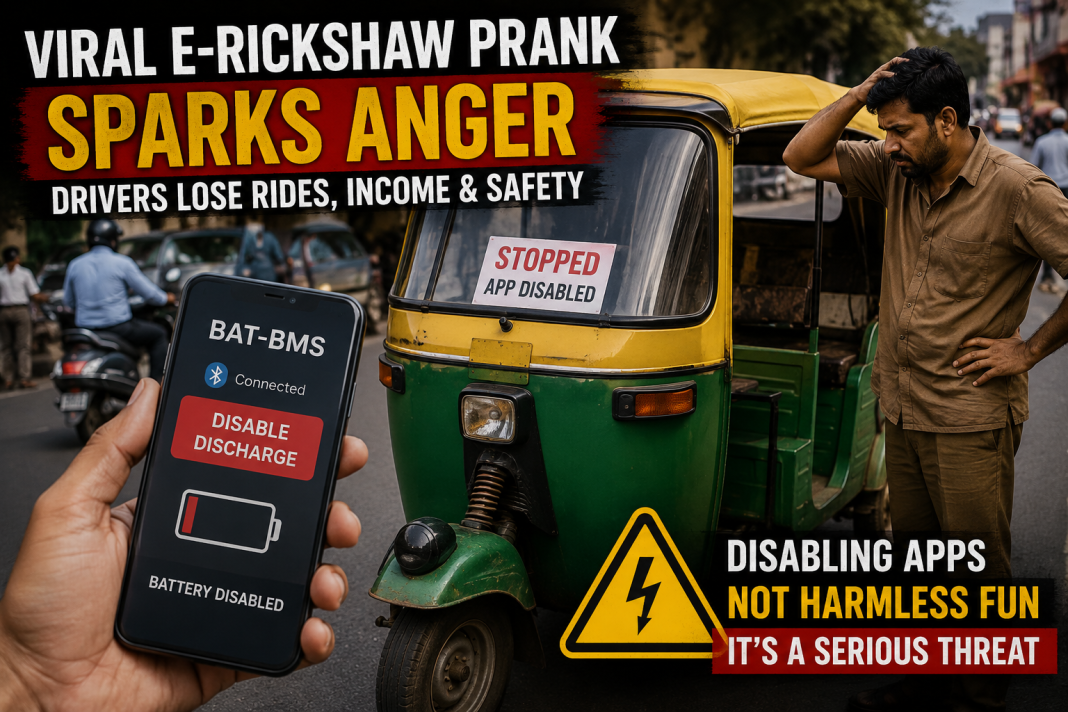

A viral e-rickshaw prank has triggered sharp anger across India after videos showed people using battery management apps to shut down compatible vehicles mid-route, then filming drivers’ reactions for views. What looked like a cheap social media stunt quickly turned into a public safety issue, a wage-loss issue, and now a government issue, too. Reports on July 1 to July 3, 2026, said authorities began probing the BAT-BMS app and linked tools after clips spread online showing e-rickshaws being disabled through Bluetooth access. By July 3, the Centre had ordered the removal of BAT-BMS and Epoch Li-ion from app stores, while Delhi also began examining the claims and risks.
How The Viral E-Rickshaw Prank Works
The app at the center of the row is BAT-BMS, a battery management tool reportedly designed to monitor lithium battery systems in some electric vehicles. News reports said pranksters were opening the app within Bluetooth range, connecting to nearby e-rickshaw battery systems, and switching off discharge functions, leaving vehicles stranded in traffic. India Today Tech and The Economic Times both reported that only some vehicles appear vulnerable, especially where battery systems are left exposed to unsecured Bluetooth pairing.
That is why the prank is drawing such strong reactions. It does not just annoy a driver for a few seconds. It can stop a moving vehicle, delay passengers, block roads, and leave a daily-wage worker without rides during busy hours. The Print reported that clips of this so-called “tirri control” trend spread across Instagram, YouTube, Reddit, and X, turning working drivers into unwilling props for viral content.
Key Highlights
- Viral videos showed pranksters using battery apps to stop some e-rickshaws mid-route.
- Reports said drivers were left confused, stranded, and in some cases unable to earn normally.
- Delhi began checking the app claims, while the Centre later ordered app-store removal.
- IT Secretary S Krishnan said the linked apps were identified and removed from stores.
Why This Is Bigger Than A Social Media Joke
Calling it a prank softens what is actually happening. When someone remotely disables an e-rickshaw, the target is usually a driver already working on thin daily margins. A stopped vehicle can mean missed trips, angry passengers, lost earnings, roadside arguments, and safety risks in moving traffic.
What Drivers Lose When A Vehicle Is Forced To Stop
The highest cost is often invisible. An e-rickshaw driver does not lose only a few minutes. They can lose a peak-hour run, a school pickup, a station drop, or a full chain of short rides that make the day viable. If passengers climb out and hire another vehicle, the damage goes beyond the battery restart. Trust goes with it. The driver still has to explain what happened, push the vehicle if required, and hope the battery reconnects. Reports describing drivers stranded in traffic show why viewers online have reacted with anger rather than laughter.
What The Government Did After The Videos Spread
The official response moved fast once the story blew up. NDTV reported on July 3 that the Centre ordered BAT-BMS and Epoch Li-ion removed from both Android and Apple app stores after reports of misuse in Delhi surfaced. The Times of India and Economic Times separately reported that the apps came under the government scanner, while Delhi’s transport side began verifying the viral claims. Later reports said the apps had been identified and removed, with officials stressing that app stores must do stronger checks before hosting risky tools.
That does not mean the problem is fully solved. Once a flaw or exploit becomes public, copycat behavior often travels faster than regulation. Battery makers, fleet operators, and drivers may now face pressure to tighten Bluetooth access, change default settings, and secure pairing systems better. India Today Tech’s explainer made that part plain: this was not only a viral trend story, but also an EV security warning.
Why The Viral E-Rickshaw Prank Should Worry Everyone
The backlash is not only about one app. It is about a growing habit of turning ordinary workers into online content without consent. Today it is an e-rickshaw. Tomorrow it could be another connected vehicle, shop device, or home gadget with weak digital safeguards. When people test those limits for laughs, the person paying the price is rarely the one holding the phone.
FAQs
1. What is the viral e-rickshaw prank?
It involves misusing battery apps to remotely switch off some e-rickshaws and record driver reactions.
2. Which app was linked to the controversy?
Reports most frequently named BAT-BMS, with Epoch Li-ion also mentioned in government removal action.
3. Why are people angry about it?
Because drivers can lose rides, income, passenger trust, and face danger on busy roads.
4. Did the government take action?
Yes. Reports said the Centre ordered app-store removal after the shutdown videos spread widely.
5. Is this only about one viral trend?
No. It also exposed weak Bluetooth security in some connected battery systems and vehicles.