
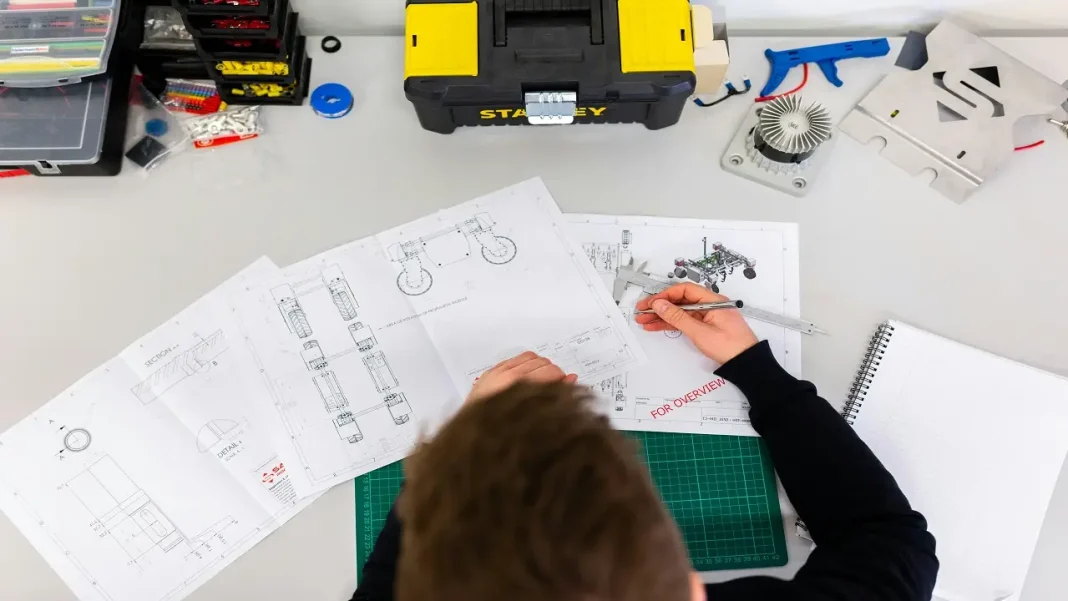

The James Dyson Award looks for engineering ideas that solve a problem, not necessarily factory-ready products. It is run by the James Dyson Foundation.
The 2026 application window closed on July 15. India’s voice-operated Braille printer RUDHRA has reached the global Top 20, with winners due November 4. No 2027 entry date has been announced.
Key Highlights
- The award invites engineering and design inventions from eligible students and recent graduates.
- Individuals and teams of up to 10 may enter under the stated rules.
- National winners receive £5,000; international and sustainability winners each receive £30,000.
- India’s RUDHRA reached the 2026 global Top 20 shortlist.
What Is the James Dyson Award and Who Is Eligible?
Started in 2005, the award has supported more than 400 inventors and distributed over £1.5 million, Dyson reports. It is not an examination-based scholarship.
The official eligibility rules require applicants to be at least 18 when they enter. Solo entrants must be studying engineering, design or a related subject at undergraduate or postgraduate level, having completed at least one semester, or have graduated within the previous four years. The qualifying institution must be in India.
Teams may have up to 10 members. At least one must meet the qualifying engineering or design criteria; others may come from different disciplines if they satisfy the university-study or recent-graduate rules. A team without a qualifying design or engineering member is ineligible.
India’s RUDHRA Reaches the 2026 Global Top 20
A question raised during a visit to a school for visually impaired students shaped RUDHRA. Lingampalli Himaja of Shri Vishnu Engineering College for Women developed a voice-enabled Braille printer that converts speech into embossed text, reducing the need for manual reverse-pattern writing.
According to its project description, speech is converted into text, a Raspberry Pi generates reverse Braille patterns, and motors drive the embossing mechanism. The design was revised after feedback from visually impaired students.
It won India’s national award in September and entered the global Top 20 announced on October 14. India’s runners-up were ViabilityX, designed for organ transport, and Trike 2π, an electric patrol vehicle. Commercial availability is not a requirement.
The 2026 competition covered 28 countries and regions. National panels selected 28 winners and 56 runners-up before Dyson engineers reduced the international field to 20. James Dyson will choose the global winners on November 4. The international prize is £30,000; the national prize is £5,000.
How Can Indian Students Apply When Entries Reopen?
Applications go through the James Dyson Award website. Entrants register and upload proof of student or recent-graduate status.
The official entry guide sets out the material expected:
- Describe the problem, how the invention works, its development, differences from existing designs, and next steps.
- Upload up to five supporting images, each no larger than 3MB. The main image should measure at least 1440 × 810 pixels.
- Write the entry in English. A demonstration video under three minutes is optional and can show the prototype operating.
A manufactured product is unnecessary. Sketches and early prototypes are accepted; test results and revisions explain how an idea developed.
The 2027 deadline has not been published.
What Do Judges Examine, and Who Owns the Invention?
Judges examine the design process, intended users, and manufacturing feasibility. Claims of affordability need some indication of production costs.
- National stage: Local judges choose one winner and two runners-up per participating region.
- International stage: Dyson engineers select 20 finalists; James Dyson chooses the overall and sustainability winners.
Entrants retain their intellectual property, but submitted designs and images become publicly visible. The award FAQ advises seeking patent advice before disclosure when necessary. Winning does not guarantee employment at Dyson.
FAQs
Is the James Dyson Award 2026 still open in India?
No. Applications opened on March 11 and closed on July 15, 2026. The global winners will be announced on November 4; 2027 dates remain unconfirmed.
Can First-Year Engineering Students Apply for the James Dyson Award?
Yes, provided they are at least 18 and have completed one semester in an eligible course when applying. Their university must also be in India.
How Much Prize Money Does the James Dyson Award Offer?
National winners receive £5,000. International runners-up also receive £5,000, while the overall international winner and sustainability winner each receive £30,000 under the published rules.
Must Indian Applicants Have a Working Prototype?
No. Prototypes are encouraged but not mandatory. Clear drawings may be submitted, although photographs, testing and a short demonstration can explain whether the proposed invention works.
Can a Student Submit an Invention With Friends?
Yes. Teams can include up to 10 members, with at least one eligible engineering or design student or recent graduate. Other teammates must also meet education requirements.
Explore fresh ideas, career changes and innovations shaping tomorrow.
1. Why Are Tech Workers Chasing Luck?
Uncover why luck maxxing is gaining attention among tech professionals leaving their jobs.
2. Why Is CSE Still In Demand?
Find out what is driving interest in computer science engineering admissions.
3. What’s Happening At Semicon India 2026?
Explore the event’s 500 exhibitors and India’s growing focus on chip manufacturing.
4. Which Entrance Exams Follow Class 12?
Browse entrance examination options for Indian students planning their next academic move.
5. What’s New In MG’s EV Technology?
Discover MG’s newly revealed vehicle platform and its plans for new-energy models.