

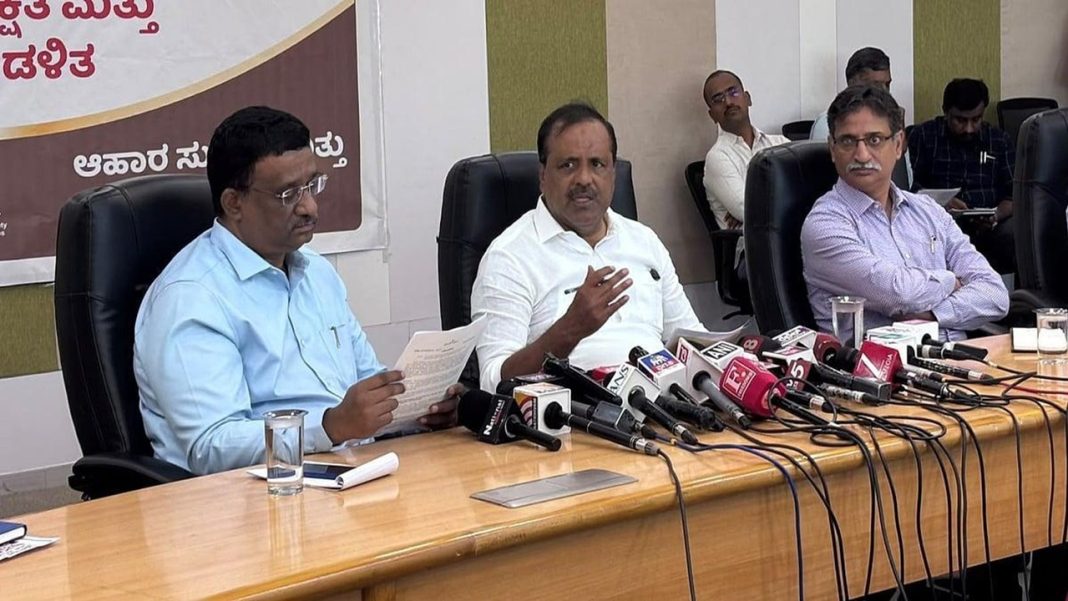

Karnataka’s food safety crackdown has moved deep into Bengaluru’s online grocery and warehouse network. On September 8, 2026, the Karnataka Food Safety and Drugs Administration said it had seized expired, near-expiry and incorrectly labelled food worth ₹1.38 crore during a special operation. Medicines worth another ₹4.02 lakh were found stored without required licences, taking the total seized value to about ₹1.43 crore. The checks covered Amazon storage facilities, a Swiggy Instamart dark store and smaller food businesses after documents linked to a cancelled “peptide party” led officials back through the supply chain.
What Did Karnataka Officials Seize In The ₹1.38 Crore Operation?
The department’s consolidated figures show ₹33 lakh of food was seized for incorrect or inadequate labelling, while expired and near-expiry products accounted for ₹1.05 crore. Officials checked manufacturing dates, expiry dates, shelf life, mandatory labels and storage conditions for goods supplied through online and e-commerce channels.
The Food Safety and Standards Act, 2006 gives authorities the framework to regulate food manufacture, storage, distribution and sale. FSSAI’s Labelling and Display Regulations also require pre-packaged food labels to be clear and prohibit false, misleading or deceptive presentation.
Key findings from the operation included:
- Amazon BLR6, Devanahalli: ₹14 lakh of improperly labelled food, ₹10 lakh of expired food and ₹2.45 lakh of unlicensed medicines.
- Amazon BLR7, Madiwala: ₹19 lakh of mislabelled food, ₹13 lakh of expired stock and ₹1.57 lakh of unlicensed medicines.
- Swiggy Instamart, Hoskote: ₹42 lakh of expired food seized; the facility was shut over alleged hygiene and food-law violations.
- Saptha Bazaar, HBR Layout: About ₹10,000 of expired biscuits, flour, paneer, patties, nuts, eggs and other items seized.
- Leo 7 Enterprises, Lingarajapuram: Expired and near-expiry nutrition products, drinks, chocolates, sweets, ghee, nuts and seeds were found; the premises was shut.
Which Online And Storage Units Failed The Safety Checks?
The most significant online-linked seizures came from Amazon’s BLR6 and BLR7 facilities and the Instamart dark store in Hoskote. The Indian Express reported that the probe began after officials traced items connected to the cancelled peptide event to an Amazon dark store.
Health Minister U T Khader said Leo 7 Enterprises was operating from a shed and allegedly bought expired products before changing expiry information. Reporting placed the stock there at roughly ₹56-57 lakh. At Hoskote, the department said the ongoing investigation had identified suspected expired and mislabelled stock worth around ₹1 crore, although ₹42 lakh had been seized at that stage.
The ₹1.38 crore number relates to the department’s consolidated seizure disclosed on September 8. The Indian Express separately reported that about ₹3 crore of mislabelled and expired food had been seized across Bengaluru in a broader one-week crackdown.
How Does This Fit Into Karnataka’s Wider Food Safety Drive?
The latest action did not begin in isolation. Karnataka has been widening checks across warehouses, hotels, PG accommodation, canteens, restaurants and food manufacturers.
On August 17, statewide enforcement figures showed 236 e-commerce warehouses and facilities had been inspected, with legal proceedings started against 44 and eight fined ₹1.97 lakh for poor hygiene. Earlier, a Zepto warehouse run at a Nippon Express facility in Hoskote was sealed after alleged storage, labelling and hygiene violations.
The campaign then spread further. Officials inspected 64 Bengaluru PGs in early September and issued notices to 23. Chairman’s Club in Sahakaranagar was also sealed after inspectors reported expired chilli, labelling problems, unauthorised colours and poor kitchen conditions. Separate raids targeted sweet-making units, premium hotels and restaurants.
Why Dark Stores Are Now Under Closer Scrutiny
Quick-commerce warehouses move food through a fast, high-volume chain. That makes expiry control, stock rotation, cold storage and accurate labels especially important. A failure inside a dark store can affect many orders before a customer ever sees the shelf or storage room.
What Happens Next And What Should Consumers Check?
The Karnataka department said investigation and legal action are continuing. Khader also said the state would approach the law department and Centre over stronger criminal provisions for deliberate expiry-date tampering.
Consumers ordering groceries online should still check the package when it arrives. The expiry or use-by date, seal, FSSAI licence details, storage instructions and visible damage can be checked before consumption. Suspicious products can be reported to the seller and food-safety authorities with photographs and order details.
FAQs
1: How Much Food Did Karnataka Seize?
Officials reported ₹1.38 crore in expired, near-expiry and improperly labelled food during the specific operation.
2: Which Major Online Facilities Were Inspected?
Amazon BLR6, Amazon BLR7 and a Swiggy Instamart dark store were among named facilities inspected.
3: How Much Expired Food Was Seized At Hoskote?
Officials seized expired food worth ₹42 lakh from the Hoskote Instamart facility during the inspection.
4: Why Did The Karnataka Food Safety Probe Begin?
Documents connected to a cancelled peptide party led officials towards food suppliers and storage units.
5: What Should Online Grocery Buyers Check?
Buyers should inspect expiry dates, seals, labels, storage instructions and package condition immediately after delivery.