

Road transport pollution was linked to about 90,000 premature deaths in India during 2024, equal to one death every six minutes. An India-focused analysis released on July 29, 2026, based on the International Council on Clean Transportation’s Health Benefits of Zero-Emission Transport Through 2050 report, also estimated 15,300 new childhood asthma cases, or one every 34 minutes.
Delhi-NCR carried a far larger share than its population suggests. The region recorded an estimated 8,100 premature deaths and 3,500 new paediatric asthma cases linked to road transport emissions in 2024. That was 9% of India’s deaths and 23% of its childhood asthma cases, although NCR has about 5% of the country’s population.
Key Highlights
- India accounted for 13% of global premature deaths attributed to road transport pollution in 2024.
- Delhi recorded an estimated 2,800 premature deaths and 1,500 new childhood asthma cases.
- Trucks and buses produced 79% of tailpipe nitrogen oxides and 64% of tailpipe PM2.5 emissions.
- Faster electrification could help India avoid 1.7 million premature deaths between 2025 and 2050.
What Did The New Transport Pollution Study Find?
The figures come from modelling, not death certificates naming traffic exhaust. Researchers combined vehicle emissions, population exposure and health-risk data to estimate how pollution changes the likelihood of early death and paediatric asthma. The India analysis used health information connected to the Global Burden of Disease 2021 work and emissions data from The Real Urban Emissions Initiative.
The study tracks fine particulate matter, or PM2.5, and nitrogen oxides. PM2.5 can travel deep into the lungs and enter the bloodstream. Long exposure is associated with heart disease, stroke, lung disease and respiratory illness. Nitrogen dioxide can inflame airways and aggravate asthma.
The official Down To Earth post on X highlighted the projection that zero-emission transport could save 1.7 million lives in India by 2050.
Why Is Delhi-NCR Carrying A Heavier Health Burden?
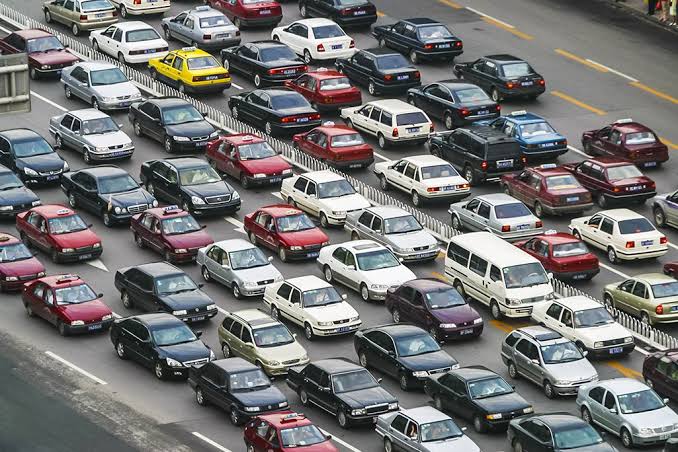
Delhi-NCR combines dense settlement, heavy traffic, long commutes, freight movement and pollution flowing across state borders. People live, study or work close to busy roads. This raises daily exposure even when traffic pollution is not the only source of dirty air. Premature deaths linked to road emissions were also found to be concentrated along the Indo-Gangetic Plain.
The study estimated Delhi’s population-weighted exposure to road transport-related PM2.5 at 13 micrograms per cubic metre in 2024. Traffic alone produced more than 2.5 times the World Health Organization’s annual PM2.5 guideline of 5 micrograms per cubic metre for pollution from all sources.
Heavy vehicles deepen the problem. A separate 2026 freight study reported that nearly 16,900 heavy-duty trucks enter Delhi daily and generate about 23% of transport emissions, rising sharply at night. Diesel trucks travel long distances, remain in service for years and release pollution near homes, markets and roadside workplaces.
Why Are Children More Exposed?
Children breathe faster than adults, spend time outdoors and often travel near congested roads in school buses, autos or on foot. Their lungs are still developing. The NCR’s 3,500 estimated new paediatric asthma cases show why traffic planning is also a public-health issue.
Can Delhi’s New EV Push Reduce The Damage?
Delhi’s Electric Vehicle Policy 2026, notified from July 1, set a target for electric vehicles to form 95% of new registrations by 2027. The policy pushes cleaner two-wheelers, three-wheelers, buses and commercial fleets while supporting charging and battery-swapping facilities.
This direction fits the ICCT findings because electric vehicles have no tailpipe emissions. Yet replacing private cars alone will not solve congestion, road dust or pollution from tyre and brake wear. Electricity generation, battery disposal and charging access also need planning.
The quickest health gains may come from cleaning vehicles that run the most. Buses, delivery fleets, taxis and freight trucks cover high daily distances. Electrifying them can remove more tailpipe pollution per vehicle than replacing a lightly used household car.
What Must India Change Next?
India needs a national clean-transport plan joining tighter emission checks, retirement of old polluting vehicles, reliable buses, safer walking routes and faster zero-emission fleet adoption. Delhi-NCR also needs coordinated rules across Delhi, Haryana, Uttar Pradesh and Rajasthan because traffic and air cross administrative borders.
Authorities should treat the estimates as a warning, while stating clearly that they are modelled health outcomes. Better roadside monitoring, open emissions data and updated source studies can show which corridors and vehicle classes need action first. Cleaner freight, stronger public transport and fewer unnecessary car trips can cut exposure before the 2050 benefits arrive.
Frequently Asked Questions
What Does One Premature Death Every Six Minutes Mean?
Models linked about 90,000 early deaths to road transport pollution across the country in 2024.
How Many Premature Deaths Were Estimated In Delhi-NCR?
The study estimated 8,100 premature deaths across NCR, including 2,800 within Delhi during 2024 alone.
Why Are Trucks And Buses Major Polluters?
They travel farther, burn more fuel and produce most tailpipe nitrogen oxide and PM2.5 emissions.
Can Electric Vehicles End Delhi’s Air Pollution?
They remove tailpipe exhaust, but dust, industry, waste burning and power emissions still need action.
What Could Faster Electrification Achieve By 2050?
The pathway could prevent 1.7 million premature deaths across India between 2025 and 2050 alone.