
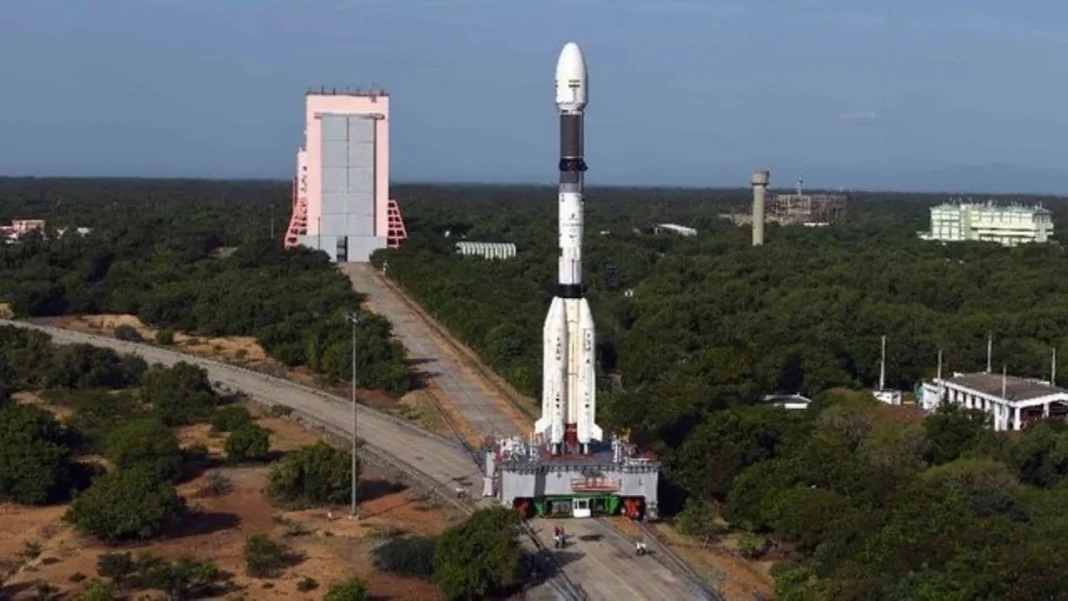

India’s first private-built PSLV is now targeting a January–March 2027 debut, with payload coordination and launch scheduling holding up the maiden flight of the PSLV-N1.
ISRO Chairman V Narayanan gave the revised target at the India International Space Conclave in New Delhi on 24 November. The rocket is the first of five ordered under a ₹860 crore manufacturing contract awarded to a consortium of Hindustan Aeronautics Limited (HAL) and Larsen & Toubro (L&T). The first vehicle was due to roll out in 2024. That earlier deadline was for production, while the latest target is for liftoff.
Key Highlights
- ISRO is targeting the first quarter of 2027 for PSLV-N1.
- L&T cited payload coordination and the availability of a launch window.
- The ₹860 crore contract covers five PSLV-XL vehicles.
Why the PSLV-N1 Launch Has Slipped Again
At the conclave, L&T senior vice-president A T Ramchandani pointed to payload coordination and the availability of a suitable launch window, The Indian Express reported. The vehicle was reported ready, while Narayanan said preparations were continuing. The distinction is important for the schedule. A completed rocket still needs a satellite ready to fly and a launch slot that fits the mission.
The Indian Express identified ISRO’s Earth observation satellite EOS-10 as the payload previously planned for the debut. Narayanan gave a quarter for the launch. A formal mission announcement would establish whether EOS-10 is still on board and give a more precise date.
Watch ANI’s 24 November video of Narayanan announcing the target at the conclave.
What the ₹860 Crore PSLV Contract Covers
NewSpace India Limited (NSIL) signed the manufacturing contract with HAL, the consortium’s lead member, on 5 September 2022. NSIL gave the consortium 24 months to roll out the first PSLV-XL, with deliveries of the other four at six-month intervals. HAL disclosed the ₹860 crore figure in its investor presentation.
| Milestone | What the Record Shows |
| September 2022 | NSIL signs the order for five PSLV-XL vehicles. |
| September 2024 | The first production rollout was due under the original timetable. |
| December 2025 | Stacking of the first industry-produced stage begins at Sriharikota. |
| January–March 2026 | The Department of Space lists this launch target in its January Rajya Sabha reply. |
| January–March 2027 | Narayanan gives the revised maiden-flight target at the November conclave. |
The two first-quarter targets are a year apart. The 2024 date tracks a different milestone, so measuring from that date to the proposed liftoff would combine the time spent on production with the time spent preparing and scheduling the flight.
What Two PSLV Failures Mean for the Debut
The broader PSLV programme is working through two successive unsuccessful missions. Both had problems during the third stage, though Narayanan told The Indian Express the causes differed.
- PSLV-C61: The mission carrying EOS-09 on 18 May 2025 ended after a third-stage problem.
- PSLV-C62: The 12 January 2026 flight carrying EOS-N1 also encountered a third-stage anomaly.
ISRO reported a successful ground test of the updated third stage at Sriharikota on 12 November 2026 and said further tests were planned. The Indian Express, citing sources, reported that ISRO may fly its own PSLV successfully before clearing PSLV-N1. The reported flight order remains unconfirmed.
What to Watch Before India’s First Industry-Built PSLV Flies
The PSLV design has already carried Chandrayaan-1 and the Mars Orbiter Mission. The new test is whether an Indian industrial consortium can manufacture an established ISRO design to a regular schedule. HAL, a state-owned company, leads the consortium alongside private-sector L&T.
- Mission notice: Look for the confirmed payload, launch date and liftoff time.
- Delivery schedule: Revised dates for the remaining four vehicles would show whether the consortium is moving towards the original six-month delivery interval.
A successful first flight would establish a flight record for the consortium’s vehicle. Regular deliveries would answer the commercial question of whether the manufacturing model can support a steady launch schedule.
FAQs
What does PSLV-XL mean?
PSLV-XL is a version of the Polar Satellite Launch Vehicle that uses six extended strap-on boosters. It is the configuration NSIL ordered from the HAL–L&T consortium.
Is PSLV-N1 the same as EOS-N1?
PSLV-N1 is the industry-built rocket awaiting its debut. EOS-N1 was the Earth observation satellite aboard the unsuccessful PSLV-C62 mission, which lifted off from Sriharikota in January 2026.
Was PSLV-N1 India’s first privately developed rocket?
That milestone belongs to Skyroot Aerospace’s Vikram-S, which flew in November 2022. PSLV-N1 is the first industry-built example of the PSLV that ISRO originally developed.
Does the ₹860 crore figure show a cost overrun?
The figure is the disclosed value of the original five-vehicle order. A cost overrun would require evidence that spending or the contract price rose above the agreed amount.
Where will PSLV-N1 launch from?
Preparations have taken place at the Satish Dhawan Space Centre in Sriharikota, Andhra Pradesh. The mission announcement is the place to look for the launch pad and liftoff time.
Discover India’s Next Big Space Missions
Why Is ISRO Privatizing Rocket Manufacturing?
Discover how private companies are reshaping India’s space sector.
What Makes EOS-05’s Launch Significant?
Uncover the satellite’s Earth observation capabilities.
How Will NVS Satellites Improve Navigation?
Find out how India is strengthening its NavIC network.
Why Is ISRO’s GISAT-1A Mission Important?
Explore the satellite’s objectives and strategic significance.
What Are ISRO’s Next Major Missions?