
UAE humanitarian aid in May 2026 is carrying a bigger global story than one country sending relief abroad. It shows how the Emirates is keeping medical supplies, food support, field care, and UN-backed aid moving at a time when many emergency routes are under pressure.
From Afghanistan to Sudan, and from Chad to South Sudan, UAE-backed support is reaching people caught between conflict, displacement, weak health systems, and rising relief costs. This work is unfolding while the Red Sea crisis, Strait of Hormuz tensions, higher freight prices, and supply chain delays continue to disturb global movement.
This is not a distant aid story. Afghanistan affects regional health security. Sudan affects migration and food pressure. African refugee movements affect border economies. Shipping disruption affects prices and delivery timelines across continents.
Afghanistan Medical Aid Shows Dubai’s Fast Relief Network
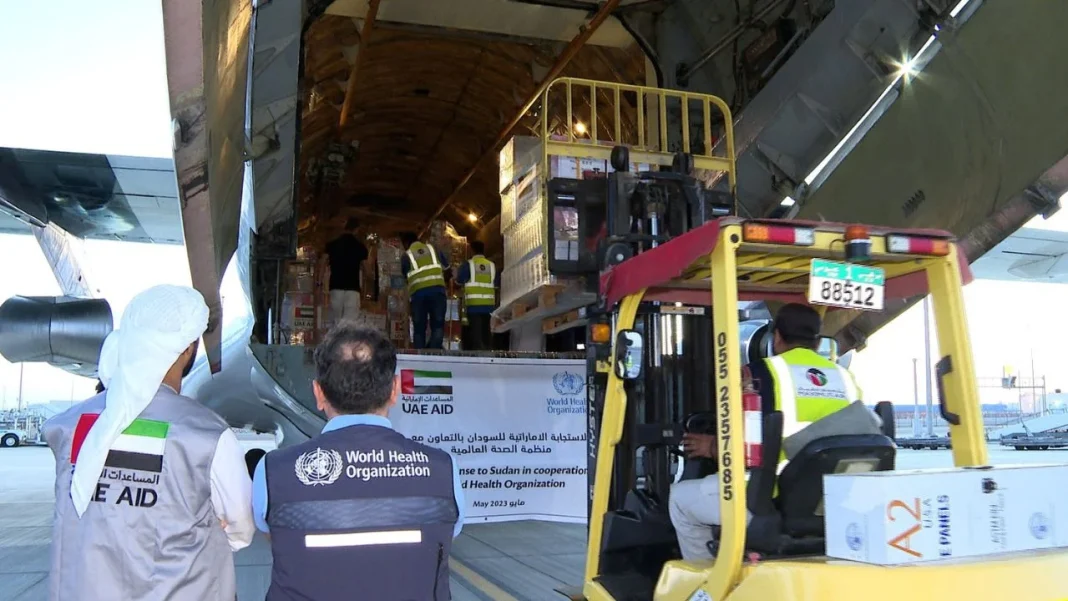
Dubai Humanitarian recently helped move 96 metric tonnes of life-saving medical supplies to Kabul. The airlift included supplies from WHO, MSF, and UNICEF and is expected to support more than 250,000 people for three months. The shipment moved through Dubai World Central, one of the world’s busiest emergency logistics points.
For Afghanistan, the delivery came at a critical time. Many hospitals and clinics continue to face shortages of medicine, equipment, and basic supplies. The Kabul airlift gave health teams fresh stock for patients who need treatment now, not weeks later.
Dubai Media Office’s official X post on the Afghanistan airlift mentions the 96-tonne shipment and the expected health support for 250,000 people.
Sudan Relief Funding Keeps Emergency Work Going
Sudan remains one of the world’s toughest humanitarian crises. Families have been pushed from homes, food systems have collapsed in many areas, and aid groups continue working under severe pressure.
The UAE has kept funding Sudan relief through UN-linked channels. OCHA’s Financial Tracking Service records a 2026 UAE paid contribution to the Sudan Humanitarian Fund, helping responders deliver support inside Sudan and in nearby refugee zones.
The UAE had also allocated 70% of its USD 100 million pledge to UN agencies and humanitarian groups working on Sudan. That support has gone toward food, health, children, refugees, and protection services.
This funding gives aid workers more room to deliver help where ordinary families are paying the price of war.
Africa Field Hospitals Bring Treatment Closer To Refugees
The UAE’s response across Africa shows the human side of its relief network. In Chad, the UAE built a field hospital in Amdjarass to support Sudanese refugees and local communities. In its first month, the hospital treated 3,509 cases, including 1,897 adults and 1,612 children, and carried out 24 surgeries.
In South Sudan, the UAE opened Madhol Field Hospital, a 100-bed facility serving host communities, returnees from Sudan, and Sudanese refugees in Northern Bahr el Ghazal state.
Uganda also remains part of the wider refugee support route, with UNHCR-linked records showing UAE-backed help for South Sudanese refugee operations.
These examples show relief beyond speeches. They show beds, doctors, medicines, food support, and direct care near people who have already lost too much.
UAE Logistics Strength Keeps Aid Moving
The strongest May 2026 angle is delivery. Aid promises mean little if supplies cannot move. The region is facing difficult transport conditions, including Red Sea shipping disruption and security fears around the Strait of Hormuz.
WFP has warned that Middle East supply chain shocks have affected large volumes of food aid, increasing pressure on humanitarian pipelines. UNCTAD has also warned that disruption around the Strait of Hormuz can hit energy, maritime transport, and global supply chains.
Against this backdrop, Dubai’s warehouses, air cargo links, and emergency coordination give aid agencies a faster route. When sea lanes slow down or costs rise, pre-positioned supplies and airlifts help keep relief alive.
Track The Latest India-UAE Partnership Developments
Why Is Piyush Goyal Visiting UAE?
Explore the purpose behind the 13th high-level investment task force meeting.
How Is India-UAE Partnership Growing Stronger?
Discover how recent visits are deepening bilateral cooperation between nations.
What Is India-UAE Trade Vision 2030?
Explore future goals shaping trade relations between India and the UAE.
How UAE Celebrates Indian Community Today?
Discover how Dubai honors and supports its vibrant Indian population.
Why UAE Leads Global Economic Stability?
Check how the UAE is outperforming others amid global uncertainty.
UAE’s UN Commitment Gives The Story Global Reach
The UAE’s humanitarian role also runs through the UN system. OCHA’s 2026 funding data places UAE contributions inside the wider global relief effort, while Dubai Humanitarian continues supporting UN agencies and NGOs with storage, transport, and emergency dispatch capacity.
That is why UAE humanitarian aid in May 2026 deserves global coverage. It connects Afghan hospitals, Sudanese families, African refugee camps, UN emergency funds, and disrupted shipping routes into one clear story: the Emirates is keeping relief moving when the world is harder to reach.
FAQs
1. What Did The UAE Send To Afghanistan?
It sent 96 tonnes of medical supplies for more than 250,000 people.
2. How Is The UAE Helping Sudan?
It funds UN relief, food aid, healthcare, refugee support, and protection work.
3. Which African Countries Are Covered?
Chad, Uganda, and South Sudan are linked through refugee and medical support.
4. Why Is Dubai Important For Relief?
Dubai offers warehouses, air cargo access, and fast emergency aid movement.
5. Why Is This Story Global?
It connects aid, refugees, health crises, shipping disruption, and UN funding.