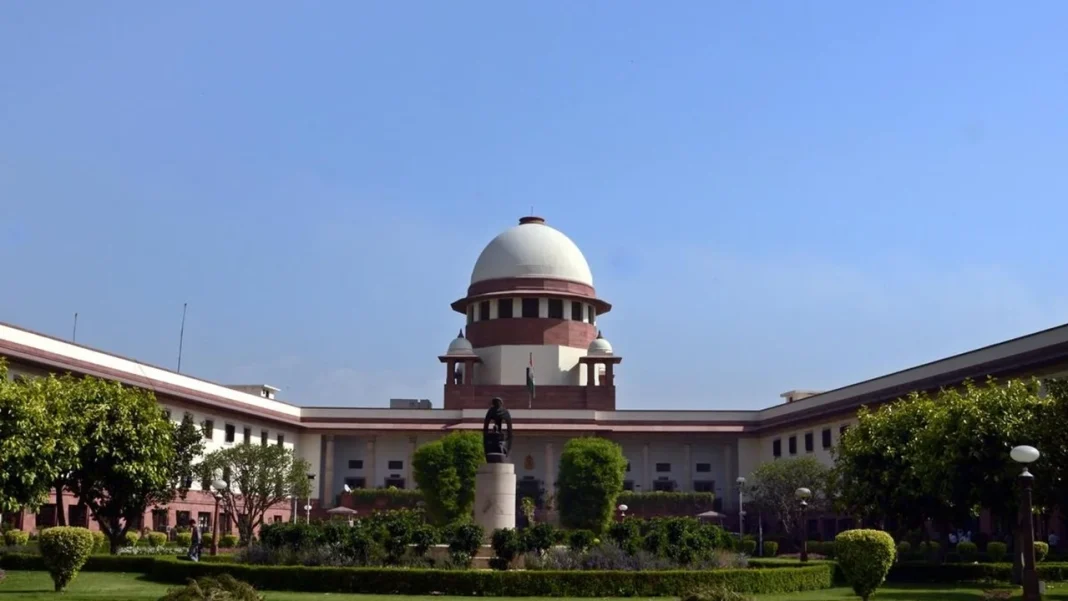

Can a cancer medicine reach a retailer for ₹2,700 and still carry an MRP of ₹27,000? That was the question before the Supreme Court on 22 September 2026. A Bench of Justices Vikram Nath and Sandeep Mehta questioned wide gaps between the price to retailer, or PTR, and the printed maximum retail price of essential medicines.
The hearing has reopened debate over cancer drug pricing, especially medicines outside direct ceiling-price control. The Court has not said every ₹27,000 sale is illegal. It is examining whether current rules leave room for patients and taxpayer-funded schemes to face excessive mark-ups.
Key Highlights
- The Court was told of an essential cancer drug with a ₹2,700 PTR and a ₹27,000 MRP.
- The printed MRP was 10 times the retailer price, leaving a ₹24,300 spread.
- The petitions cover drug pricing, generic medicines, medical devices and prescription practices.
- The Center is expected to make submissions on 29 September 2026.
What Did The Supreme Court Flag In Cancer Drug Prices?
The Bench was hearing petitions filed by Kishan Chand Jain and Dr Sanjay Kulshresthra. During arguments, it questioned why a medicine supplied to a retailer at only 10% of its printed MRP could carry such a high final ceiling.
LiveLaw reported another example placed before the Court: a medicine printed at ₹4,196 but available for ₹980. Petitioners also argued that some hospital pharmacies leave patients little freedom to buy medicines elsewhere, making the printed MRP more important.
The Court also raised the effect on public money. Justice Mehta noted that when medicines are reimbursed through government-funded schemes, inflated billing can fall on taxpayers. Manufacturers, represented by senior advocate Kapil Sibal, argued that retailers, rather than manufacturers, were earning the profits.
LiveLaw also posted the hearing update through its official X account.
Why Can A ₹2,700 Medicine Carry A ₹27,000 MRP?
MRP is the maximum legal retail price, not necessarily what every buyer pays. Medicines may sell below MRP because of procurement discounts, retailer margins or competition.
The larger issue is how the initial MRP is set, particularly for non-scheduled drugs. Under the Drugs (Prices Control) Order, 2013, medicines in Schedule I face NPPA ceiling prices. For non-scheduled formulations, manufacturers generally cannot raise MRP by more than 10% over the preceding 12 months.
The Gap The Court Is Examining
That annual cap limits later increases, but does not automatically make the first printed MRP close to the manufacturer’s selling price. A March 2026 government reply said scheduled-drug ceilings are based on market data, while the cost-to-MRP gap is not considered when fixing those ceilings.
A large PTR-MRP gap therefore does not by itself prove a legal ceiling was breached. The Court is asking whether such differences can still expose patients to excessive margins.
What Cancer Drug Price Controls Already Exist In India?
India regulates medicine prices through the National Pharmaceutical Pricing Authority. The Department of Pharmaceuticals said 131 anti-cancer drugs had effective ceiling prices as of 9 March 2026. Those ceilings were around 21% lower than comparable prices fixed under NLEM 2015, with estimated annual patient savings of about ₹294 crore.
NPPA has also applied trade-margin rationalisation to 42 selected non-scheduled anti-cancer medicines. The government said this reduced prices across more than 500 brands by roughly 50% on average.
By 23 July 2026, NPPA had ceiling prices for 935 scheduled formulations overall. The government says Janaushadhi medicines are typically 50% to 80% cheaper than branded medicines, while AMRIT pharmacies offer average discounts of up to 50% on market rates.
What Happens Next For Patients And Drug Pricing?
The Centre told the Court it does not view the proceedings as adversarial and is expected to make submissions on 29 September. The next hearing could bring closer scrutiny of MRPs, hospital pharmacy billing and controls on non-scheduled medicines.
Patients can check notified prices through NPPA’s Pharma Sahi Daam platform. In June 2026, NPPA integrated Pharma Sahi Daam with Pharma Jan Samadhan, allowing users to verify prices and lodge pricing complaints through one system.
For now, the ₹2,700-versus-₹27,000 example does not prove every cancer patient pays ten times the retailer price. It does explain why the Supreme Court wants regulators to justify such a wide gap for a life-saving medicine.
FAQs
Why did the Supreme Court question cancer drug prices?
It saw a ten-fold PTR-to-MRP gap and questioned whether existing regulation protects vulnerable cancer patients.
Is selling a medicine below MRP allowed in India?
Yes, sellers may charge below MRP, but they cannot charge consumers above applicable controlled prices.
Are all cancer medicines under direct price control?
No, scheduled medicines face ceiling prices, while non-scheduled medicines follow different MRP-increase and monitoring rules.
How can patients check the approved price of medicines?
Patients can use NPPA’s Pharma Sahi Daam platform to compare prices and report suspected overcharging.
When will the Supreme Court hear the case again?
The Centre is expected to make submissions when the matter returns on 29 September 2026.
Health & Pharma: What’s Changing in India?
Could US Tariffs Hit Indian Pharma?
Check out how proposed tariffs could affect Indian drug companies.
Why Is Cancer Drug Access Under Review?
Find out why affordable access to cancer medicines is being examined.
Which Medicines Failed August Quality Checks?
Uncover the drug samples found substandard during recent quality checks.
Why Does India Matter To WHO?
Explore India’s role in the WHO traditional medicine research agenda.
Will Chemists’ Strikes Disrupt Medicine Access?
Track down updates on emergency outlets and online medicine delivery.