

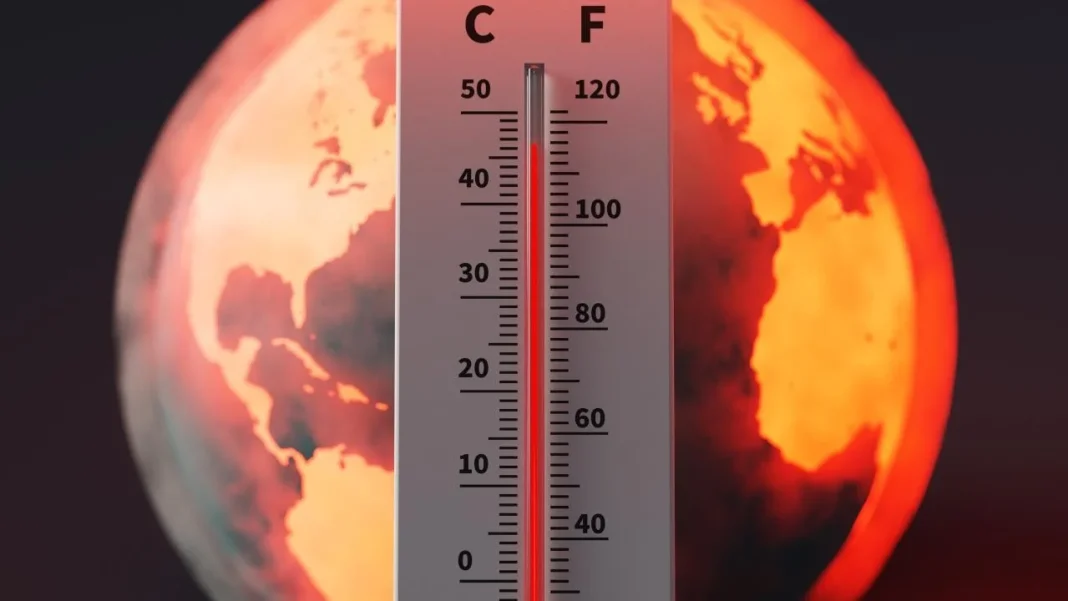

Could an ocean-warming event thousands of kilometers from India raise the country’s death toll within months? A new Climate Impact Lab assessment says it could. The University of Chicago-linked research group estimates that India may see about 15,800 additional heat-related deaths between September 2026 and February 2027 as an unusually powerful El Niño pushes temperatures above normal.
This is a projection, not a count of deaths already recorded. Researchers compared expected mortality during the event with a 1996–2025 baseline, using seasonal temperature forecasts and locally estimated links between heat and mortality.
What The New El Niño Study Actually Projects
The Climate Impact Lab says global land temperatures during the event could run about 1.2°C above normal, while extremely hot days may be 44% more frequent than during a typical year. India’s projected toll is 15,800 additional heat-related deaths, with an uncertainty range of roughly ±1,600.
Researchers also estimate around 239,000 additional heat-related deaths worldwide from September 2026 through February 2027. When the wider El Niño period beginning in June is included, the projected global toll reaches about 451,000.
Key findings include:
- India could record about 7,400 additional heat-related deaths from December through February.
- Nigeria, Indonesia and Sudan are projected to record larger national tolls than India.
- Africa’s Sahel region could see roughly 66,800 additional deaths during the six-month forecast.
- Researchers warn India’s heat-related toll could continue climbing into the summer of 2027.
The researchers estimate temperature-related mortality relationships separately across more than 24,000 regions worldwide, allowing vulnerability and local adaptation to vary geographically.
Why India Faces A Serious Climate-Health Risk
India’s exposure comes from the overlap of high temperatures, dense populations, outdoor employment and unequal access to cooling. Extreme heat can worsen dehydration, heat exhaustion and heatstroke while placing additional strain on cardiovascular and respiratory health.
The terminology needs one important clarification. The Ministry of Earth Sciences told Parliament in July that “Super El Niño” is not an officially defined IMD or WMO category. India generally classifies El Niño events as weak, moderate, strong or very strong.
According to the government, El Niño conditions were weak in June 2026 and became moderate in July. They could strengthen further during October–December and potentially reach the very strong category.
That means the 15,800 figure should be treated as a risk estimate, not a predetermined outcome.
Heat Is Not The Only Health Threat Linked To El Niño
The concern goes beyond direct heat illness. A separate IITM-led study, published in GeoHealth on September 16, found that El Niño-like conditions can increase dengue risk in Kerala by encouraging warmer and drier pre-monsoon weather.
Researchers identified temperature, rainfall, humidity and ENSO conditions as important dengue predictors. The study also found that Pacific Ocean conditions could provide roughly three months of potential warning before changes in dengue incidence.
This creates a broader climate-health challenge. El Niño can change rainfall, increase heat exposure, affect water availability and alter conditions suitable for disease-carrying mosquitoes. The impacts will differ across Indian states, but several pressures may emerge during the same climate episode.
IMD already provides impact-based forecasts and daily risk warnings valid for up to seven days for governments and disaster-management authorities.
What India Can Do Before The Risk Peaks
The Climate Impact Lab points towards early heat alerts, cooling centres, hydration stations, worker protection, outreach to vulnerable groups and additional healthcare capacity as measures that could reduce mortality.
For India, preparation before temperatures peak could be crucial. Cities can change outdoor work timings, hospitals can prepare heat-illness protocols, schools can alter schedules during dangerous conditions, and local bodies can identify neighbourhoods with limited water, shade or cooling.
The larger warning is that extreme heat is moving from an occasional emergency towards a recurring health challenge. Better forecasting helps, but the outcome will depend heavily on how quickly warnings reach people and turn into action.
FAQs
Is 15,800 a confirmed death toll?
No. It is a modelled estimate of additional heat deaths compared with a normal-year baseline.
What does Super El Niño mean?
It describes an exceptionally strong El Niño, but IMD and WMO do not use it.
When could India face the highest near-term risk?
The study projects a share of India’s additional deaths between December 2026 and February 2027.
Can El Niño also affect diseases such as dengue?
Yes. Kerala research links El Niño conditions with weather patterns that can raise dengue risk.
Monsoon Under Pressure: What Could El Niño Change?
Could El Niño Worsen India’s Drought Divide?
Check out how uneven rainfall could create drought-like conditions across districts.
Could El Niño Raise India’s Health Risks?
Find out how hotter, drier conditions could affect disease risks.
Will Super El Niño Bring Extreme Rainfall?
Uncover how erratic monsoons could bring less rain and heavier downpours.
Could El Niño Disrupt August Monsoon Rainfall?
Browse how below-normal August rainfall could affect India’s monsoon season.
Will Super El Niño Crush India’s Monsoon?
Dive into whether the 2026 monsoon could face another major El Niño impact.