

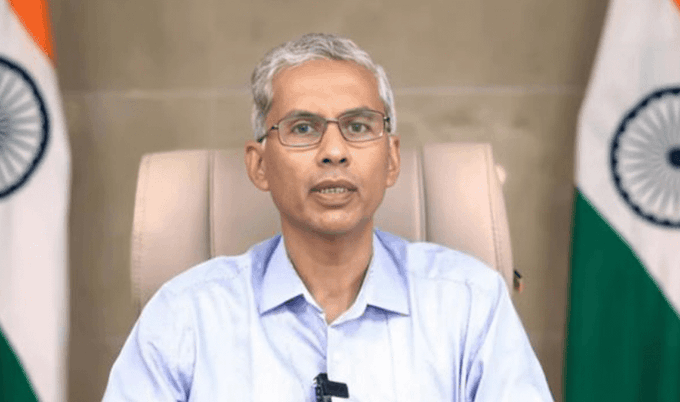

India’s top policy think tank is entering another leadership phase. The Appointments Committee of the Cabinet approved Anurag Jain as Chief Executive Officer of NITI Aayog on July 22, 2026. The 1989-batch Madhya Pradesh cadre IAS officer will serve for two years from the date he assumes charge, or until further orders, whichever comes earlier.
Jain moves to the post from Madhya Pradesh, where he has served as Chief Secretary since October 2024. Nidhi Chhibber had been handling the CEO role on an additional-charge basis after BVR Subrahmanyam’s extended tenure ended on February 24, 2026. The appointment was also confirmed through ANI’s official X post.
NITI Aayog is working across artificial intelligence, digital infrastructure, semiconductors, state investment rankings, bioeconomy and India’s 2047 development plans. Jain’s record suggests greater weight on delivery, state coordination and cross-ministry projects.
Who Is Anurag Jain And Why Does His Record Stand Out?
Jain has worked in both the Union government and Madhya Pradesh administration. Before becoming Chief Secretary, he served as Secretary in the Ministry of Road Transport and Highways and as Secretary in the Department for Promotion of Industry and Internal Trade. He was also Joint Secretary in the Prime Minister’s Office from 2011 to 2015.
His DPIIT years are especially relevant. Jain was closely associated with PM GatiShakti, which brought infrastructure data from different departments onto a shared planning platform. He argued for integrated planning, shorter project delays and tighter coordination between the Centre and states. That experience fits NITI Aayog’s coordinating role.
He also brings district-level and state-level administrative exposure. Jain served as collector in Mandla, Mandsaur and Bhopal earlier in his career. This background may help when national policy proposals reach state departments, district offices and local implementation teams, where delays become visible.
What Could Change At NITI Aayog Under Anurag Jain?
A new CEO cannot rewrite NITI Aayog’s mandate overnight. Still, leadership can speed up files and push reports towards measurable action. Jain’s previous assignments point towards a stronger execution focus.
The areas most likely to receive close attention include:
- Faster movement from policy reports to time-bound implementation plans
- Deeper use of geospatial data for infrastructure and industrial planning
- More direct coordination with Chief Secretaries and state planning departments
- Regular monitoring of investment, logistics, manufacturing and employment targets
- Stronger links between digital platforms, district needs and public service delivery
Early Signals To Watch
The first signal will be the kind of reviews Jain chairs. Frequent meetings on project bottlenecks, state performance and cross-ministry deadlines would show an execution-heavy approach. Another clue will come from whether NITI Aayog publishes follow-up dashboards after launching major reports.
Its recent DPI@2047 roadmap calls for district-led adoption, wider AI use, trusted data flows and digital systems that improve productivity. Jain’s GatiShakti background could help connect that roadmap with transport, industry, agriculture, health and education programmes.
Why States, Investment And Technology May Move Higher
The Centre-state relationship will probably be central to Jain’s tenure. NITI Aayog’s State Support Mission helps states create long-term development roadmaps, improve monitoring systems and strengthen state planning institutions. A former Chief Secretary arrives with direct knowledge of how states respond to central targets, funding conditions and reporting demands.
This comes soon after the 11th NITI Aayog Governing Council meeting, where all 28 Chief Ministers participated. The meeting focused on youth, MSMEs, artificial intelligence, investment, water conservation, agriculture and district-level monitoring. Jain may now be expected to turn those broad priorities into sharper work plans.
Investment competition between states could also become more visible. NITI Aayog released its Investment Friendliness Index in July 2026, while its latest reports cover semiconductors, tourism, bioeconomy, research, cities and school education. Under Jain, such rankings and sector roadmaps may be linked more closely with state reforms and tracked outcomes.
What Does The Appointment Mean For NITI Aayog’s Next Phase?
Anurag Jain’s appointment brings a full-time administrator back to the CEO’s office at a busy point in India’s policy calendar. He inherits ambitious reports, a newly reconstituted leadership team and growing pressure to show results before 2047 goals move further down the timeline.
The likely shift is not towards dramatic policy announcements. It is towards follow-through. If Jain applies the same integrated planning approach seen during his infrastructure assignments, NITI Aayog could become more active in fixing coordination gaps between ministries and states. The first few months will reveal whether that promise reaches project reviews, dashboards and district action.
FAQs
Who appointed Anurag Jain as NITI Aayog CEO?
The Appointments Committee of the Cabinet approved his appointment for an overall two-year tenure period.
Which IAS batch does Anurag Jain belong to?
He is a 1989-batch IAS officer from the Madhya Pradesh cadre, with state and central experience.
Who handled the CEO role before Anurag Jain?
Nidhi Chhibber held additional charge after BVR Subrahmanyam completed his extended tenure in February 2026.
What is NITI Aayog’s main role?
It provides policy direction, research and coordination support to the Union government and states nationwide.
What could be Jain’s biggest priority at NITI Aayog?
Turning policy roadmaps into monitored action across states, ministries, districts and major economic sectors nationwide.