
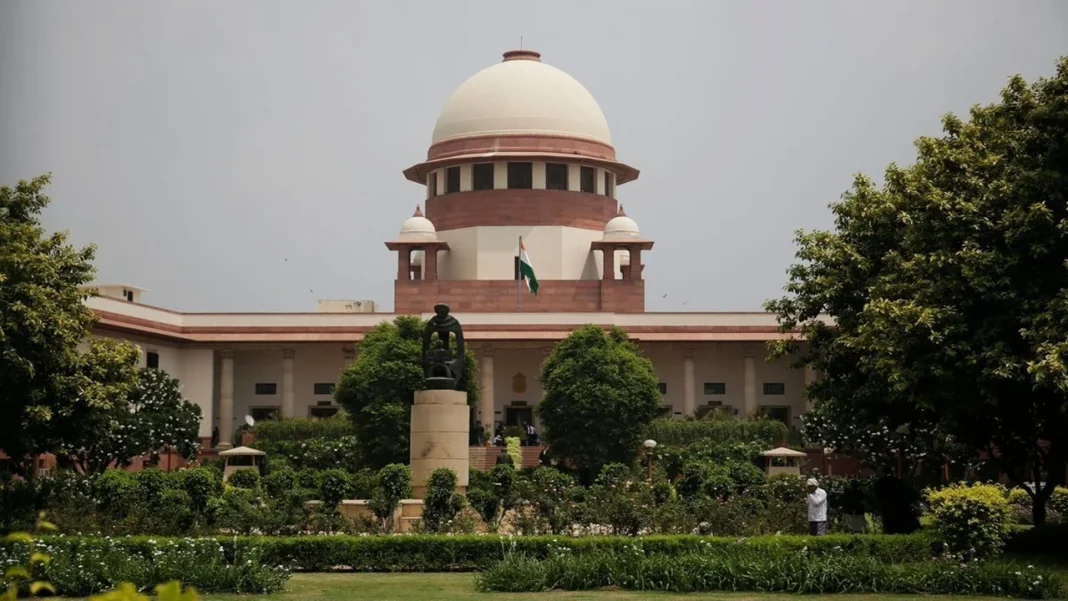

Indian cricket may be heading towards another institutional reset. On September 8, 2026, the Supreme Court asked the BCCI and state cricket associations why they should not be governed by the National Sports Governance Act, 2025. The bench led by Chief Justice Surya Kant, with Justices Joymalya Bagchi and V Mohana, also sought instructions on whether the service conditions of cricket office-bearers should come under the new law.
This is bigger than another courtroom exchange over administration. BCCI already operates under a constitution shaped by Supreme Court intervention and the Justice R M Lodha reforms. The latest question asks whether cricket should continue with its own court-supervised framework when Parliament has created a statutory governance system for Indian sport.
Why The Supreme Court’s Question Could Shift The Debate
Proceedings involving BCCI governance have travelled through the Supreme Court since 2014, producing reforms on tenure, elections, conflict of interest and state-association structures. In 2018, the court approved a new BCCI constitution, while in 2022 it allowed changes to the cooling-off framework.
The National Sports Governance Act, 2025 received presidential assent on August 18, 2025, and selected provisions came into force from January 1, 2026.
That raises an awkward question. If national sports bodies are moving towards one statutory structure, why should the organisation controlling India’s biggest sport remain governed mainly through a separate constitutional arrangement and continuing litigation?
The latest developments can be read in four parts:
- The Supreme Court has asked BCCI and state associations to explain why the 2025 Act should not govern them.
- The court has also raised service terms of office-bearers, putting tenure rules directly in focus.
- BCCI reportedly told the Orissa High Court in August that cricket had not been notified as a “designated sport” under the Act.
- The Indian Olympic Association is also preparing constitutional changes aligned with the Act before December elections.
What The New Law Could Change Inside Indian Cricket
If the Act eventually applies to BCCI, the impact could reach well beyond a fresh constitutional clause. The law and 2026 rules provide for a National Sports Board, governance requirements, election procedures, athlete participation and a National Sports Tribunal. The government has described the Board as the authority responsible for recognition and governance standards across national sports bodies.
The National Sports Governance rules notified in January 2026 provide for at least four sportspersons of outstanding merit in the general body, with half those places for women. The wider framework also requires at least four women on the executive committee of a national sports body. That could reopen discussion about who gets a formal voice in cricket administration.
There may also be friction over tenure. The Supreme Court’s 2022 BCCI judgment permitted an office-bearer to serve two consecutive three-year terms at a state association and two consecutive three-year terms at BCCI before cooling-off becomes necessary. The sports law uses a different architecture, including four-year executive terms and separate age and eligibility rules.
Cricket therefore needs one legally coherent route, not overlapping rulebooks.
Cricket’s Autonomy Is Valuable, But It Cannot Become A Permanent Exception
There is a respectable case for BCCI autonomy. Cricket is tied to the International Cricket Council, earns much of its own revenue and has developed an administrative model unlike many grant-dependent federations. The Supreme Court itself described BCCI as an autonomous sports body in its 2022 judgment.
Yet autonomy should not mean permanent insulation from national governance standards. BCCI selects teams representing India, controls domestic pathways to the national side and oversees an ecosystem affecting players, state units, leagues, selectors, officials and commercial partners.
The better test is whether standards on elections, athlete representation, ethics, dispute resolution and office-bearer eligibility can apply without interfering with sporting decisions or ICC obligations. The Act itself recognises international charters and sporting autonomy, leaving room for BCCI to retain operational independence while accepting common safeguards.
A Governance Overhaul Should Reduce Litigation, Not Create Another Layer
The worst outcome would be a hybrid system where BCCI follows one constitution, state associations interpret another framework and courts repeatedly settle collisions. The Odisha Cricket Association dispute has already shown how uncertainty over the Act can affect election timelines and cooling-off questions.
A better route would require the Centre, BCCI and state associations to settle cricket’s legal status first. If cricket enters the Act, transitional rules should specify which BCCI provisions survive, which are replaced and how pending association elections are treated. The National Sports Board and Sports Tribunal should complement, rather than duplicate, internal cricket mechanisms.
It needs rules that can survive changes in office-bearers without sending every internal dispute back to constitutional courts.
The Supreme Court’s question may become a useful turning point. The real test is not whether BCCI loses autonomy. It is whether Indian cricket can finally move from repeated judicial repairs to a stable framework that keeps accountability high and administration independent.
FAQs
Does The National Sports Governance Act Currently Apply To BCCI?
The Supreme Court is examining that issue after seeking responses from BCCI and state associations.
Why Is BCCI’s Cooling-Off Rule Important Again?
Because the sports law and BCCI constitution follow different tenure, eligibility, and cooling-off structures today.
Could The National Sports Board Control Cricket Selections?
The present debate concerns governance oversight, not routine team selection or on-field cricketing decisions directly.
Would State Cricket Associations Also Face Changes?
Yes, covered affiliate units could need constitutional, election, and compliance changes under the statutory framework.
Could This Lead To Another BCCI Constitution Rewrite?
Potentially, depending on legal coverage, transition provisions, BCCI responses, and future Supreme Court directions thereafter.
Supreme Court Watch: Five Cases Shaping India
- Could New CBSE Rules Prevent Errors?
Check out how on-screen marking reforms could reduce digital evaluation mistakes. - What Will The Sansad Footage Reveal?
Find out what the inquiry panel will examine in the July 20 footage. - Can Ministers Serve Without Elections?
Uncover why the Supreme Court questioned Bihar’s government over ministerial eligibility. - Can Parents Refuse APAAR Data Sharing?
Explore the Supreme Court’s examination of parental consent for children’s academic data. - Why Is Cancer Drug Access Under Review?
Reveal why the Supreme Court is examining affordable access to life-saving cancer medicines.