
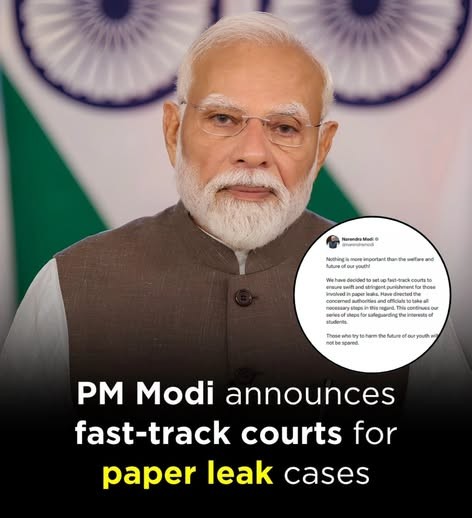

On July 23, 2026, Prime Minister Narendra Modi made a fast-track court announcement, promising swift punishment in paper-leak cases. The move followed the NEET-UG 2026 re-examination, nationwide student anger and a debate that reached Parliament. Speedier trials are welcome. But they begin after the paper has travelled, the exam has collapsed and months of preparation have been wasted.
India’s exam-leak crisis is not mainly a courtroom-delay problem. It is a failure of exam design, contracting, custody, intelligence and official accountability. A fast verdict may punish a broker. It cannot return a lost attempt, repair a delayed recruitment cycle or explain why the same weak points keep appearing.
Fast-Track Courts Address The Crime, Not The System
The government’s decision should not be dismissed. The Public Examinations Act summary covers leaks, tampering, organised cheating, fake examinations and collusion. It allows prison terms, heavy fines, property attachment and action against service providers. Yet a tough statute only works when investigators preserve evidence, identify the full chain and prosecute more than the easiest person to arrest.
That is where the record becomes uncomfortable. A June 2026 investigation into 45 major paper-leak cases from 2002 to 2025 examined cases involving at least one lakh candidates each. Only two had produced convictions. In many cases, senior officials escaped serious consequences. Fast-track courts may shorten the final stage, but they cannot rescue a weak charge sheet or an investigation that stops with middlemen.
The Prime Minister’s official X post on fast-track courts deserves to be read beside that record, not instead of it.
The Crisis Extends Far Beyond NEET
NEET dominates the headlines because medical admission carries enormous pressure. The 2026 exam was conducted again on June 21 after the May 3 test was scrapped, affecting more than two million candidates. The official NEET 2026 updates show that the disruption brought fee refunds, new admit cards, tighter biometric checks and another wait for results.
But the pattern has damaged university eligibility tests and public recruitment too. The UGC-NET June 2024 examination was cancelled after cybercrime inputs indicated its integrity may have been compromised. Uttar Pradesh ordered the police constable recruitment examination cancelled following leak allegations. Bihar also cancelled the TRE 3.0 teacher recruitment test after investigators reported prior access to the paper.
These were gateways to lectureships, police jobs and teaching posts. An earlier investigation into recruitment-exam leaks documented 41 cases across 15 states in five years, disrupting schedules for 1.4 crore applicants competing for just over one lakh posts. That ratio explains the fury. A leaked paper does not merely cancel an exam. It redistributes scarce opportunity toward organised fraud.
What Systemic Exam Reform Must Change
India already knows where to look. In June 2024, the Education Ministry formed a high-level examination reform committee to examine testing processes, data security and the National Testing Agency’s structure. The question is no longer whether vulnerabilities exist. It is whether governments will publish measurable fixes and accept responsibility when safeguards fail.
A credible national exam-security framework should require:
- Independent audits of printers, logistics firms, testing vendors and examination centres before every major test.
- Encrypted, time-locked question delivery with access logs and rapid alerts for unusual downloads or printing.
- Public disclosure of vendors, subcontractors, breaches, cancellations, arrests, chargesheets and trial progress.
- Fixed compensation covering fees, travel and documented losses when authorities order a full re-examination.
- Personal accountability for officials who ignored warnings, bypassed protocols or approved unfit vendors.
Technology will help, but “computer-based” is not another word for secure. Servers can be compromised, insiders can sell access and poorly supervised centres can manipulate sessions. Reform must follow the whole chain, from question creation to final merit list.
Justice Must Begin Before The Next Admit Card
The most damaging official habit is treating every leak as an isolated conspiracy. It is convenient. Blame a gang, announce arrests, schedule another test and move on. The institution then returns unchanged, often with opaque vendors and no public account of what failed.
Fast-track courts should be part of the response, not its centrepiece. India needs an independent examination integrity authority empowered to audit national and state testing bodies, publish breach reports and order corrective action. Parliament should demand annual data on leaks, prosecutions, convictions, cancellations, affected candidates and compensation.
Students are not asking for impossible perfection. They are asking the state to protect the years, money and effort invested in preparation. Punishment after a leak may provide justice. Preventing the next one is the reform that will restore credibility.
Frequently Asked Questions
Why are fast-track courts insufficient for exam leaks?
They accelerate trials but cannot repair weak security, failed oversight, delayed careers or institutional negligence.
Which examinations show the crisis extends beyond NEET?
UGC-NET, police recruitment and teacher-selection cancellations show leaks damaging education and government hiring across states.
What should an independent examination integrity authority do?
It should audit vendors, inspect protocols, publish breach findings and enforce time-bound corrective measures nationwide.
Can computer-based testing eliminate paper leaks?
No, digital tests face insider access, compromised centres, server attacks and weak vendor supervision risks.
Should candidates receive compensation after cancelled examinations?
Yes, authorities should refund fees, travel costs and documented losses through fixed, automatic compensation rules.