

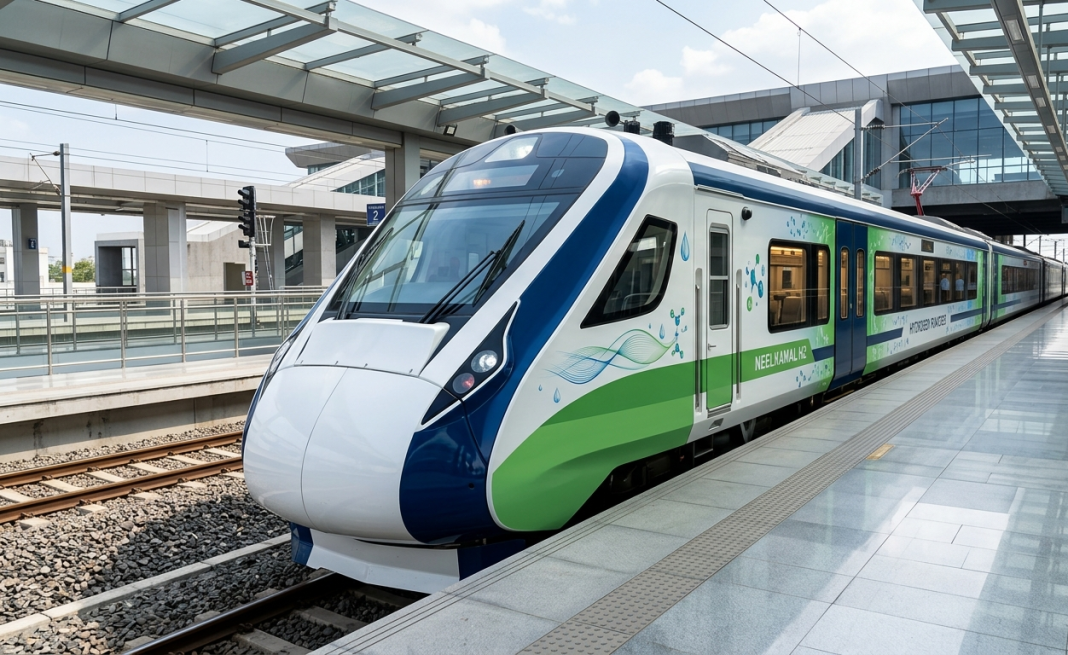

Mumbai’s local railway is preparing for a major signalling upgrade, but commuters may have to wait longer than first expected. Central Railway CPRO Dr Swapnil Nila confirmed on July 27, 2026 that Kavach 5.0 is still under development and will be introduced on Mumbai’s suburban network once ready, according to the latest Indian Express update. The system is being built for dense operations where trains run only minutes apart.
Central and Western Railway together operate 3,234 suburban services daily. That scale makes the safety question bigger than a standard technology rollout. Kavach 5.0 for Mumbai local trains is expected to reduce collision risk, cut signal-related errors and eventually allow more frequent services. It cannot remove every danger commuters face.
What Is Kavach 5.0 And Why Does Mumbai Need It?
Kavach is India’s indigenous Automatic Train Protection system. It monitors train speed and signal conditions and can apply brakes when the driver does not respond in time. The Railway Ministry’s Kavach safety backgrounder says the system offers train protection and collision-prevention capability, while also helping trains operate during poor visibility.
Mumbai needs a tougher version because suburban operations are unusually tight. Railway Minister Ashwini Vaishnaw announced the Mumbai-focused Kavach 5.0 plan in April 2025. The official PIB Mumbai announcement said it would reduce inter-train headway and support more services. Vaishnaw also spoke of cutting the existing 180-second gap by roughly 30%, bringing trains close to a two-minute interval.
Key Points:
- Kavach 5.0 remains under development as of July 27, 2026.
- Mumbai currently runs 3,234 suburban services across Central and Western Railway.
- Western Railway runs 1,414 services, while Central Railway runs 1,820.
- The system targets safer braking, signal compliance and shorter train headways.
- Railways had projected capacity for roughly 30% more suburban services.
Can Kavach 5.0 Actually Prevent Mumbai Local Train Collisions?
For specific collision scenarios, yes. Kavach is designed to intervene when a train exceeds permitted speed or approaches a danger situation linked to signalling. Automatic brake application reduces dependence on a motorman reacting perfectly within a very small time window. That becomes useful on a network where trains follow each other closely during peak periods.
The wider Kavach programme is already expanding. A July 22 Railway Ministry safety update said Kavach 4.0 had been commissioned on 2,490 route kilometres, while implementation was under way on 21,937 route kilometres. Work had also been taken up for 7,435 locomotives and 1,200 EMU/MEMU trains. More than 94,000 railway staff had received Kavach training.
Still, Kavach is not a guarantee against every railway accident. Track defects, equipment failures, maintenance problems and passenger behaviour can create risks outside an ATP system’s direct job. It is a strong safety layer, not a replacement for track upkeep, signalling discipline, crowd control or safe coach design.
Why A Two-Minute Local Could Change Mumbai’s Daily Commute
The passenger impact may come from frequency. Mumbai’s suburban lines already operate close to signalling capacity, and adding trains becomes difficult when safe separation cannot be reduced. Kavach 5.0 is being developed to make that separation more precise.
The April 2025 Railway Ministry plan linked Kavach 5.0 with nearly ₹17,000 crore of suburban infrastructure projects covering more than 300 kilometres of new lines. It also announced 238 new air-conditioned suburban rakes. The plan was not simply faster signalling, but more track capacity, more trains and less pressure on existing services.
There is also a delay worth noting. In April 2025, Vaishnaw said development was expected by the end of December 2025. By July 27, 2026, Central Railway was still describing Kavach 5.0 as under development. No fresh commissioning date was confirmed in the latest update. The two-minute local therefore remains a target, not a timetable promise.
What Kavach 5.0 Cannot Fix On Its Own
Mumbai’s biggest safety problem is broader than train-to-train collision risk. Government data released in August 2025 showed that unnatural deaths on the suburban network included falls from trains, trespassing, pole hits and other causes. GRP data later reported 2,287 commuter deaths during 2025.
The June 2025 Mumbra tragedy showed that gap clearly. Five commuters died after passengers fell from overcrowded trains near Mumbra. Following the incident, Railways moved towards automatic door-closing systems for new suburban rakes, as reported in the Mumbra safety revamp update. Kavach could help control train movement, but it would not by itself stop passengers falling from crowded footboards.
Mumbai’s safety upgrade needs several pieces working together: Kavach 5.0, better tracks, automatic doors, additional rakes, station improvements and crowd management. If deployed properly, Kavach can reduce the risk of signal-related collisions. It is not a magic shield for every hazard on the city’s railway.
FAQs
1. What is Kavach 5.0 for Mumbai local trains?
It is an advanced train protection system designed for dense suburban railway operations across Mumbai.
2. Can Kavach 5.0 stop train collisions automatically?
It can apply brakes during defined danger situations, reducing collision risks caused by signalling errors.
3. Will Mumbai locals run every two minutes?
Railways aims to reduce headway to two minutes, but no final rollout date is confirmed.
4. How many Mumbai local services run daily?
Central and Western Railway operate 3,234 suburban train services each day across the Mumbai network.
5. Can Kavach prevent passengers from falling from trains?
No. Falls need separate measures, including automatic doors, crowd control, safer stations and additional trains.