
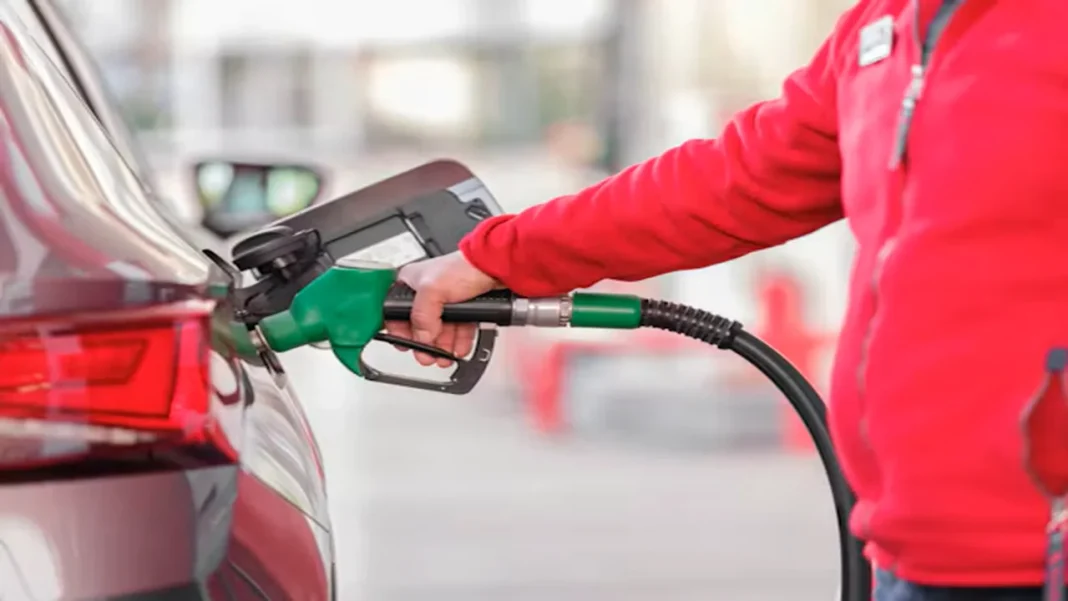

An E20 sticker on your car does not permit you to fill it with E85 or E100. India’s latest ethanol fuel amendment applies to vehicles specifically designed and certified for those higher blends.
The Ministry of Road Transport and Highways explained the change on 26 October 2026. For motorists comparing E20 vs E85 vs E100, two questions decide the practical outcome: what fuel the manufacturer permits, and how much each kilometre costs.
Key Highlights
- E100 joins E85 in specified emission-certification provisions.
- Existing owners face no compulsory conversion.
- E20 approval does not establish E85 or E100 compatibility.
What India’s New Ethanol Fuel Rules Change
Notification G.S.R. 911(E), dated 23 October and published on 26 October 2026, updates the Central Motor Vehicles Rules, 1989. It adds E100 alongside E85 in specified emission-related provisions and expressly limits their use to manufacturer-designed flex-fuel vehicles.
That gives manufacturers a certification route for eligible vehicles. It does not authorise a driver to put a higher ethanol blend into an ordinary petrol car.
Fuel distribution is developing separately. The petroleum ministry’s 5 June 2026 announcement recorded:
- An initial E85 rollout across 48 public-sector oil-company outlets.
- Expansion targets of 500 outlets by December 2026 and about 5,000 by December 2027.
Those are announced targets, not a verified count of operational pumps today. A nearby petrol station may therefore have no suitable higher-blend dispenser.
ET NOW’s 26 October report on X also covers the distinction between permission for E100 and vehicle compatibility.
E20 vs E85 vs E100: Which Fuel Can Your Vehicle Use?
The number after E identifies ethanol content. These labels describe fuel composition, not an upgrade ladder for every petrol engine.
| Fuel | Ethanol Content | Vehicle Requirement |
| E20 | 20% by volume | Manufacturer approval for E20 |
| E85 | Up to 85%; India’s rollout specifies 80–85% | Flex-fuel certification covering E85 |
| E100 | Predominantly ethanol, commonly described as nearly pure ethanol | Explicit approval covering E100 |
India’s E85 announcement describes a commercial blend containing 80–85% ethanol and 14–19% petrol. E100 should not be read as ordinary petrol with an additive.
In a flex-fuel vehicle, compatible fuel-system materials and engine controls accommodate the approved blends. The controls adjust operation to fuel composition; the permitted range still depends on the particular vehicle.
A buyer offered a “flex-fuel” model should therefore ask for its declared fuel range. Certification ending at E85 cannot be assumed to cover E100.
Mileage, Fuel Prices And Checks Before Refuelling
A cheaper litre can still produce a higher running cost. Ethanol contains less energy per unit of volume than petrol, while engine design affects how efficiently that energy is used.
In July 2026, the petroleum ministry put the fuel-economy reduction in certain E10-designed vehicles using E20 at about 3–5%. That statement does not establish a universal mileage loss for every car, motorcycle or higher ethanol blend.
Nor should E20 figures be applied to E85 or E100. The US Department of Energy explains that ethanol content and engine optimisation influence fuel economy.
At India’s June E85 launch, the government said it was priced nearly ₹20 per litre below conventional petrol. That launch statement is not a current price guarantee.
For an illustrative calculation, ₹100 per litre at 15 km/l costs ₹6.67/km. An alternative costing ₹80 per litre at 12 km/l also costs ₹6.67/km. Both prices and mileages are hypothetical; a 20% pump-price discount merely offsets a 20% mileage reduction.
At the forecourt:
- Match the dispenser label with the vehicle’s compatibility sticker and owner’s manual.
- If either leaves the permitted blend unclear, obtain model-specific manufacturer guidance before filling.
Use the actual local price and measured mileage to compare running costs before changing an approved fuel.
FAQs
Does the amendment require me to replace my petrol car?
No. The transport ministry says existing owners are not required to switch to E85 or modify their vehicles, either now or in the future under this notification.
Is E85 replacing E20 at every petrol pump?
The petroleum ministry distinguishes E85 for certified flex-fuel vehicles from the nationwide base petrol blend. Its introduction does not itself raise that base blending level beyond 20%.
Can an E100-compatible vehicle also run on E20?
The permitted range depends on the model’s certification. Obtain the manufacturer’s declared minimum and maximum ethanol blends rather than assuming every E100-approved vehicle accepts the same fuels.
Will E100 deliver better mileage because its number is higher?
The number describes ethanol content, not kilometres per litre. Fuel economy depends on the blend and engine design; higher ethanol content alone does not promise better mileage.
Fuel Prices, Mileage & Rules: Discover What Matters!
1. Does E20 Petrol Affect Your Mileage?
Check out how ethanol-blended petrol affects vehicle mileage.
2. Which Vehicles Can Use E85 Fuel?
Find E85 compatibility requirements and important vehicle restrictions.
3. Could Ethanol Petrol Change Your Bills?
Uncover how ethanol fuel tax changes could affect expenses.
4. How Do Fuel Export Taxes Matter?
Explore how export taxes relate to petrol and diesel prices.
5. Can Missing PUC Stop Fuel Purchases?