

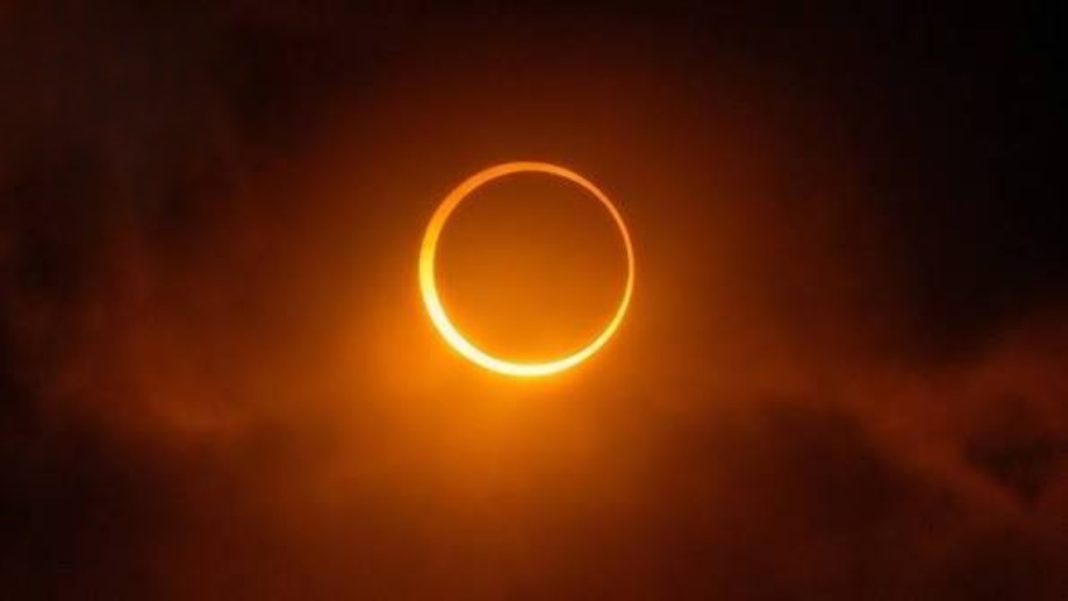

Europe is preparing for one of 2026’s biggest sky events as the August 12 total solar eclipse sweeps across the North Atlantic and reaches parts of the continent this evening. It is the first total solar eclipse visible from mainland Western Europe since August 1999, ending a 27-year wait for many eclipse watchers.
The Moon’s central shadow will cross northern Russia, Greenland, western Iceland, the Atlantic, northern Spain and a very small section of northeastern Portugal. Outside that narrow band, millions across Europe will still see a deep partial eclipse. NASA’s official eclipse guide shows the full path and local viewing details.
Where Will Totality Be Visible Across Europe Today?
The best European locations sit directly inside the path of totality. Western Iceland sees the event first, followed by Spain and the Portuguese border area. The eclipse reaches Spain close to sunset, creating an unusually low, darkened Sun above the western horizon.
Key locations and timings include:
- Reykjavík, Iceland: totality begins around 5:48 p.m. local time and lasts about one minute.
- Snæfellsnes, Iceland: some locations receive roughly 1 minute 48 seconds of totality.
- A Coruña, Spain: maximum eclipse arrives near 8:28 p.m. CEST, with about 1 minute 17 seconds of totality.
- Zaragoza, Spain: totality lasts roughly 1 minute 24 seconds around 8:29 p.m. CEST.
- Palma, Mallorca: viewers can get about 1 minute 36 seconds of darkness close to sunset.
- Valencia, Spain: totality arrives around 8:32 p.m. CEST and lasts approximately one minute.
The maximum eclipse lasts about 2 minutes 18 seconds over the North Atlantic, west of Iceland. People outside the central line still have a strong show. NASA lists roughly 91% solar coverage in London, 92% in Paris, 94% in Dublin and 99% in Madrid and Barcelona.
Why Is The August 12 Eclipse Such A Big Event For Europe?
The rarity is driving the attention. Western Europe has not seen a comparable mainland total eclipse since August 11, 1999. Spain’s mainland last experienced totality in 1905, making today especially significant for Spanish observers.
It has also become a major travel story. Reuters reports that Spain expects millions of people to move toward viewing areas, while Iceland is receiving tens of thousands of eclipse visitors. Hotels, campsites and viewing locations have faced heavy demand, and special eclipse flights have been organised to give passengers a view above possible cloud cover.
Spain is also entering what astronomers have called an “Iberian eclipse trio.” Another total solar eclipse crosses parts of Spain on August 2, 2027, followed by an annular eclipse on January 26, 2028. ESA’s European eclipse page tracks all three events.
The timing adds another attraction. The Perseid meteor shower is near its annual peak, and the New Moon responsible for the eclipse means naturally dark skies later tonight. That combination has turned August 12 into an unusually busy date for astronomy fans.
How Can People Watch The Eclipse Safely And Live Online?
Eye protection remains essential through every partial phase. Ordinary sunglasses are not enough. NASA recommends certified solar viewers meeting the ISO 12312-2 standard. Cameras, binoculars and telescopes require properly mounted solar filters on the front of the optics.
Only during complete totality, when the bright solar surface is entirely covered, can viewers briefly remove eclipse glasses. Protection must go back on as soon as any bright part of the Sun reappears. People outside the totality path should keep approved filters on throughout.
NASA will broadcast the eclipse live from 1:15 p.m. EDT, or 17:15 UTC, with views from the eclipse track and expert commentary. ESA is also carrying a live programme from the Observatorio Astrofísico de Javalambre in Teruel, Spain, from 19:30 CEST.
ESA has promoted the event through its official X account, inviting viewers to its León programme and livestream.
NASA researchers are using the eclipse for more than public viewing. A WB-57 high-altitude aircraft will chase the Moon’s shadow to study the solar corona, while student teams in Iceland and Spain are launching balloons to examine atmospheric changes during the sudden darkness.
What Should Viewers Know Before Totality Begins?
Observers should arrive early because the partial phase starts well before totality. In Spain, the low evening Sun also means buildings, hills or trees can block the view, so an open western horizon is particularly useful.
The event will not be visible from India. Much of Europe, northwestern Africa, Canada and parts of the northern United States will see partial phases instead.
FAQS
1. When Is The Europe Total Solar Eclipse In 2026?
The solar eclipse occurs August 12, 2026, crossing Iceland and Spain during the evening hours.
2. How Long Will The Longest Totality Last?
Maximum totality lasts about two minutes and eighteen seconds over the North Atlantic near Iceland.
3. Will London See A Total Solar Eclipse Today?
London remains outside totality but should see approximately ninety-one percent of the Sun covered today.
4. Can People Watch Totality Without Eclipse Glasses?
Yes, but only during totality; approved eye protection is required before and immediately afterward again.
5. Is The August 12 Solar Eclipse Visible From India?
No, the eclipse is not visible from India, though NASA and ESA livestreams remain available.
Discover more fascinating stories about eclipses, space, and the night sky.
Total Solar Eclipse To Turn Day Into Darkness Next Week: Where Will The Best Views Be?
NASA Invites ISRO To Join Moon Base Programme After Bengaluru Space Talks