
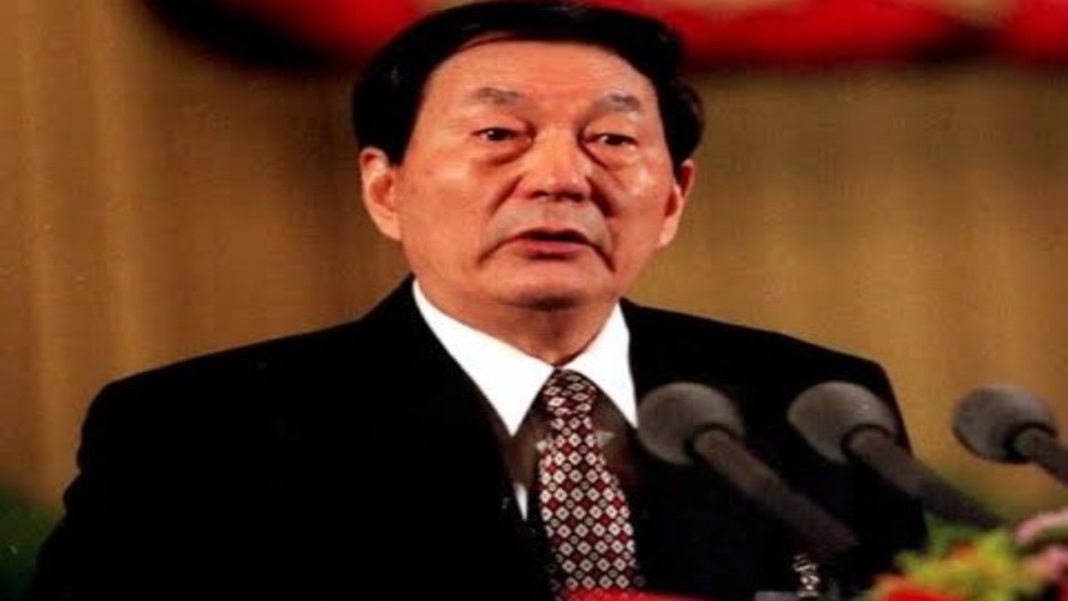

Former Chinese Premier Zhu Rongji, one of the strongest economic reformers of China’s post-Mao era, died in Beijing on August 12, 2026, aged 97, after an illness, according to reports citing state news agency Xinhua. Zhu served as premier from 1998 to 2003, after years as vice premier and a senior economic policymaker. His death has brought renewed attention to a period when China closed weak state firms, tightened financial discipline, opened more sectors to competition, and pushed through negotiations that ended with membership of the World Trade Organization. Reuters reported his death, while the Associated Press highlighted his role in China’s economic transformation.
Who Was Zhu Rongji And What Happened?
Zhu was born in Hunan in 1928 and trained as an electrical engineer at Tsinghua University. His political career included major reversals. He was labelled a “rightist” during the Mao era, later rehabilitated, and eventually rose through economic planning posts. As mayor of Shanghai and later vice premier, he earned a reputation for blunt language, administrative discipline and a willingness to take politically difficult decisions.
His time at the centre of economic policy coincided with inflation pressure, inefficient state enterprises, weak banks and China’s push for deeper participation in global trade. By 1998, he had become premier, succeeding Li Peng.
Key points from Zhu’s career include:
- Premier of China from 1998 to 2003; earlier vice premier, Shanghai mayor and central-bank governor.
- Oversaw restructuring of state-owned companies and major changes to government administration.
- Backed banking clean-up, fiscal reform and stronger financial supervision during a volatile decade.
- Helped steer China through the 1997 Asian financial crisis without devaluing the yuan.
- Played a central political role in negotiations that brought China into the WTO in 2001.
How Did Zhu Rongji Change State Firms, Banks And Government?
The hardest part of Zhu’s programme was the state sector. Many state-owned enterprises carried excess workers, debt and social obligations while producing weak returns. His government pushed mergers, closures, restructuring and the principle often described as retaining stronger large firms while releasing smaller ones. The process improved pressure for commercial performance, but it also brought painful layoffs and insecurity for millions of workers. An IMF review of China’s state-enterprise reforms records the ambitious three-year programme Zhu announced for large and medium-sized SOEs.
Finance changed alongside industry. Policymakers tried to strengthen banks, contain bad loans and separate commercial lending from automatic support for failing enterprises. Zhu had also served as governor of the People’s Bank of China from 1993 to 1995, giving him direct experience with inflation and financial instability.
Government itself was cut back. At a 2001 press conference, Zhu said central government staffing had fallen from about 33,000 to 16,000 under reforms launched in 1998. The archived People’s Daily account of that press conference also records his argument that government functions still needed to adapt to a socialist market economy.
Why Was China’s WTO Entry Such A Big Part Of His Legacy?
China became the WTO’s 143rd member on December 11, 2001, after 15 years of accession negotiations. The World Trade Organization’s official China page confirms the accession date, while a later WTO review described membership as a catalyst for domestic reform and deeper integration into world trade.
For Zhu, WTO entry was not simply a diplomatic trophy. The commitments required China to reduce barriers, rewrite rules and expose more domestic businesses to international competition. That made accession a lever for reforms that faced resistance at home. It also accelerated China’s connection with global manufacturing, investment and export markets.
His premiership also coincided with the 1998 urban housing overhaul, which helped shift many city residents away from employer-allocated housing toward private home ownership. That supported a new property market and construction boom, although China’s later dependence on property created risks that became far more visible decades afterward.
Why Is Zhu Rongji Back In Focus In 2026?
His death comes as China again debates the balance between state direction, private-sector confidence, domestic demand and structural reform. Official data show China’s economy grew 4.7% in the first half of 2026, with second-quarter growth at 4.3%, according to the National Bureau of Statistics. Beijing has also continued efforts to stabilise a long-running property downturn.
Zhu’s record does not offer a simple template for today. His policies produced losers as well as winners, and state ownership remained central to China’s model. Still, his era stands out for the scale and speed of institutional change. A Brookings profile of Zhu described him as a major force in moving China away from a planned system toward a more market-based economy.
Frequently Asked Questions
When did Zhu Rongji die?
Zhu Rongji died in Beijing on August 12, 2026, aged 97, after illness, reports said.
When was Zhu Rongji China’s premier?
He served as China’s premier from 1998 until 2003, following years as vice premier beforehand.
What was Zhu Rongji best known for economically?
He was known for state-enterprise restructuring, banking reform, fiscal discipline and pushing China toward trade.
What role did Zhu Rongji play in WTO membership?
Zhu backed accession negotiations that culminated in China joining the World Trade Organization in 2001.
Why is Zhu Rongji’s legacy still debated?
His reforms strengthened competitiveness and growth, but restructuring caused layoffs and painful social disruption nationwide.
Explore more stories about China’s leaders, reforms, and economic transformation.
Jharkhand Student Protest Intensifies As Barricades Fall, Water Cannons Used In Ranchi