
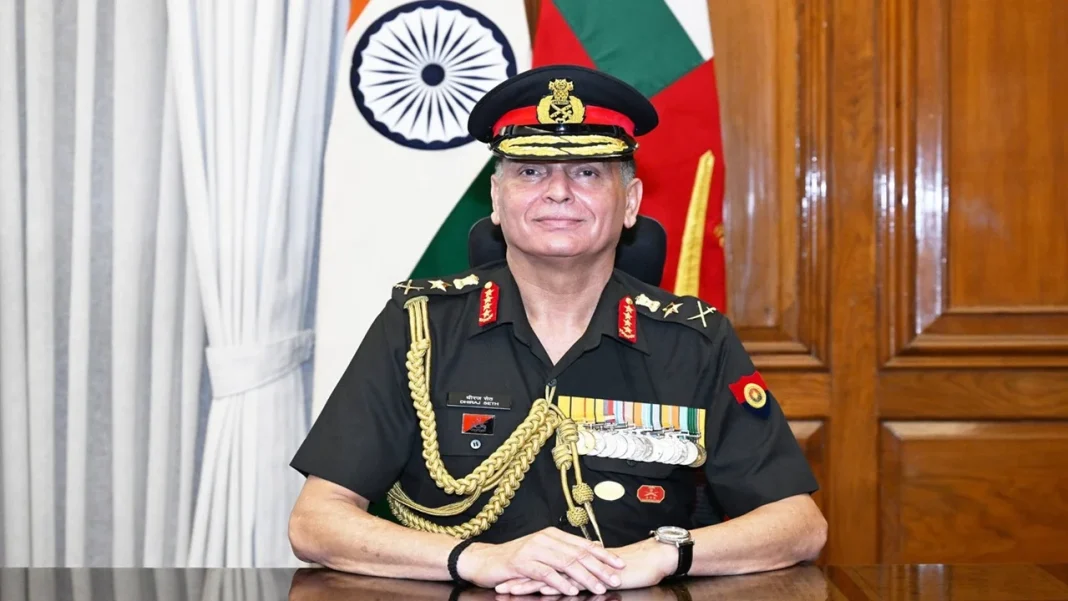

India’s Army Chief, General Dhiraj Seth, began a three-day official visit to Russia on September 16, 2026, opening the highest-level Army-to-Army engagement of its kind in nearly eight years. The trip runs until September 18 and comes as New Delhi and Moscow review defence cooperation, military training, equipment support and future industrial partnerships. General Bipin Rawat was the last serving Indian Army chief to visit Russia, in October 2018.
Why General Dhiraj Seth’s Russia Visit Is Drawing Attention
According to the Ministry of Defence’s official release, the visit is aimed at strengthening the long-standing India-Russia defence partnership and military-to-military cooperation. In Moscow, General Seth is scheduled to hold talks with Colonel General Andrei Nikolayevich Mordvichev, Commander-in-Chief of the Russian Land Forces. Their agenda includes professional military cooperation, training and current military developments.
General Seth will also visit Russia’s National Defence Control Centre and meet Deputy Defence Minister Vasily Sergeyevich Osmakov, whose responsibilities include defence industry and procurement. That meeting gives the trip an industrial angle alongside its military one. He will later travel to Saint Petersburg and visit the Mikhailovskaya Military Artillery Academy, an institution also visited by General Rawat during his 2018 tour.
The timing is notable. Prime Minister Narendra Modi and Russian President Vladimir Putin met in New Delhi on September 11 during the BRICS Summit and reviewed cooperation across defence, energy, trade and other areas. General Seth’s trip follows only days later, although the government has not formally described the Army visit as a follow-up to those talks.
What India And Russia Are Expected To Discuss
The government’s public statement focuses on cooperation and military exchanges, but defence reporting points to a second layer: keeping Russian-origin equipment in Indian service operational while examining newer systems. ThePrint reported that upgrades, spare parts and supplies for existing platforms are expected to feature in discussions.
Key areas in focus include:
- Availability of spares and maintenance support for Russian-origin Army platforms.
- Upgrades for equipment serving with armoured, mechanised and air-defence formations.
- Professional military training and exchanges between the two armies.
- Possible future air-defence and mechanised platforms under wider procurement discussions.
- Greater joint production and local support as India pushes domestic defence manufacturing.
Russian-origin systems have played a major role in India’s armoured and mechanised forces for decades. Current discussions reported around the relationship include the Pantsir-S1M air-defence system, Russia’s BMP-3 infantry fighting vehicle offer and possible cooperation around future tank requirements. These remain proposals or reported discussion areas, not confirmed purchases.
Official Indian material also lists BrahMos missiles, T-90 tanks, Su-30MKI aircraft, S-400 systems and AK-203 rifles among major examples of India-Russia defence cooperation and production links.
Why The 2018 Gap Makes This Visit More Significant
General Rawat’s October 2018 Russia visit lasted six days and included meetings with senior Russian military leaders, the Mikhailovskaya Artillery Academy and other military establishments. The return of an Indian Army chief after almost eight years therefore restores a senior land-forces channel that had not seen a comparable visit for a long period. The 2018 PIB record of Rawat’s visit confirms the earlier engagement.
The relationship itself did not stop during that gap. Indian Armed Forces personnel travelled to Russia for Exercise Zapad 2025, while the two countries also continued the INDRA exercise series. These drills kept operational exchanges active even without an Army chief visiting Moscow.
India, meanwhile, has expanded indigenous defence production and widened military partnerships with other countries. That gives the 2026 trip a different backdrop. Discussions now sit alongside New Delhi’s effort to manufacture more equipment at home while maintaining platforms already in service.
What Happens Next After The Army Chief’s Russia Visit
The immediate outcome may emerge through follow-up military exchanges, training plans and progress on equipment support rather than one dramatic announcement. Any procurement decision would still move through India’s formal defence acquisition procedures.
The trip also carries ceremonial weight. A Guard of Honour in Moscow, tribute at the Tomb of the Unknown Soldier and institutional visits across Moscow and Saint Petersburg reinforce military diplomacy alongside the technical talks.
FAQs
Why is General Dhiraj Seth visiting Russia?
He is strengthening Army cooperation, training exchanges, defence-industry contacts and military support discussions between countries.
When is the Army Chief’s Russia visit taking place?
General Dhiraj Seth is visiting Russia from September 16 through September 18, 2026, for engagements.
Who was the last Indian Army chief to visit Russia?
Bipin Rawat visited Russia in October 2018; Seth is the first Army chief since then.
Will India discuss Russian military equipment during the visit?
Reports indicate spares, upgrades and future Russian-origin platforms may feature, though official statements remain broader.
Which Russian military institutions will General Seth visit?
He will visit Moscow’s National Defence Control Centre and Saint Petersburg’s Mikhailovskaya Military Artillery Academy.
What’s Making Headlines Across India?
Who Is Dinesh Sharma, Andaman’s New LG?
Check out his background and new role as Lieutenant Governor.
Who Is Sanjukta Parasor Leading CoBRA?
Find out about the first woman chosen to lead CRPF’s elite CoBRA unit.
Will Special Trains Ease Festival Rush?
Uncover Indian Railways’ plans for 100 special festival trains.
Can India Witness Venus Hide Tonight?
See how the rare lunar occultation may appear from India.
Could Glacial Lakes Threaten Himalayan Communities?
Dive into the report’s warning about high-risk glacial lakes.