

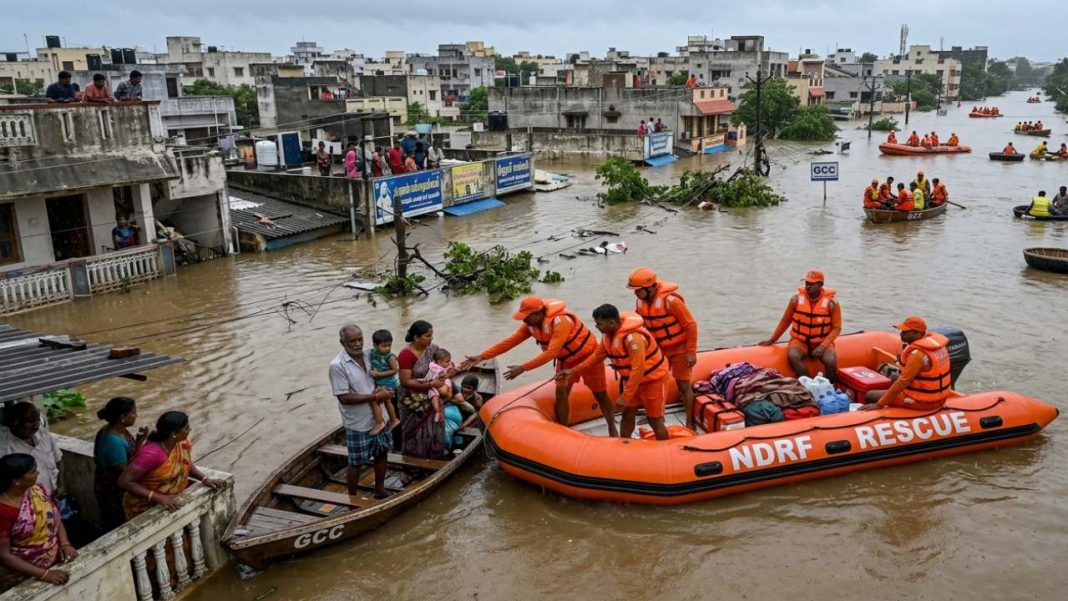

Chitrakoot is cleaning mud from homes, shops and streets after the Mandakini River surged through the pilgrimage town following hours of relentless rain across eastern Madhya Pradesh. The flood damaged bridges, entered houses and commercial areas around Ramghat, stranded residents and pilgrims, and forced large-scale rescue operations in Satna district and neighbouring Uttar Pradesh.
The scale is unusually severe. Reports on August 30 said the Mandakini climbed about 13 metres above the danger mark, higher than the major 2003 flood, while nearly 1,000 people had been rescued across both states. Madhya Pradesh Chief Minister Mohan Yadav visited Chitrakoot, reviewed relief work and asked officials to accelerate surveys, food distribution, drinking-water supply and restoration. With more rain forecast, the immediate crisis has eased only partly.
What Happened As The Mandakini River Rose In Chitrakoot?
The river rose sharply after 14 to 15 hours of intense rainfall in the upper reaches of Satna district. Water spread through low-lying portions of Chitrakoot, including Ramghat, where hotels, temples, dharamshalas, houses and rows of shops were inundated. Residents described grain, household belongings, books and livestock being swept away or ruined.
A major section of the nearly 300-metre bridge connecting Ramghat with Hanuman Dhara was also damaged. As water receded, lanes were left coated with thick silt and sludge, leaving shopkeepers and families to begin a difficult cleanup.
Key developments include:
- Nearly 1,000 people were reported rescued across the Madhya Pradesh and Uttar Pradesh sides.
- Around 700 rescues were reported from the Madhya Pradesh side during the worst phase.
- SDRF, NDRF and helicopter teams were deployed for evacuations and surveillance.
- Food, drinking water and temporary shelter were arranged for displaced residents and pilgrims.
- Satna schools were reported closed until September 1 as a precaution.
Why Did The Chitrakoot Flood Turn So Severe So Quickly?
Chitrakoot sits along a river system that responds quickly when heavy rain falls over the rocky and hilly catchments feeding the Mandakini. This time, a long spell of concentrated rainfall sent a sudden volume of water downstream. The effect was amplified in tightly built riverfront areas where shops, temples, roads and homes stand close to the channel.
Satna recorded 116.2 mm of rain in the 24 hours ending on the morning of August 29, according to IMD data. The latest IMD Chitrakoot weather forecast also warned of heavy to very heavy rainfall on August 31, followed by further heavy-rain warnings into early September.
The administration had already begun moving people from vulnerable locations. Collector Satna’s official X update said more than 350 people had been rescued across the district during an earlier stage of the operation, while another official advisory urged residents in threatened areas to shift to temporary shelters before water rose further.
Is Madhya Pradesh Facing Another Major Monsoon Emergency?
For Chitrakoot and parts of eastern Madhya Pradesh, the answer is clearly yes at the regional level. Calling it a statewide emergency would go further than the available official information, but the pattern is worrying because this is not the first major flood episode in the state this month.
On August 21, DD India reported on flooding across eastern Madhya Pradesh, where more than 4,000 people had been rescued in Rewa after heavy rain affected Rewa, Satna, Panna, Dindori and Chhatarpur. Thousands were accommodated in relief camps. Barely a week later, Chitrakoot faced a record-breaking Mandakini surge, while flooding and infrastructure damage were also reported from parts of Singrauli, Panna and Tikamgarh.
That sequence is what makes the current episode significant. Repeated spells of heavy rain are leaving smaller recovery windows for roads, bridges, farms and households. Each fresh downpour can also complicate damage surveys and delay the return of displaced families.
What Happens Next For Chitrakoot Residents And Relief Teams?
The next concern is not only the river level. Mud removal, safe drinking water, electricity, road access, damaged homes, lost livestock and spoiled food stocks can keep families under pressure after visible floodwater disappears.
Mohan Yadav has directed officials to remain in Chitrakoot, complete house-to-house loss assessments and examine whether encroachments or construction around vulnerable stretches worsened the flooding. State teams have also been asked to restore basic services and support affected families. Satna’s official disaster helpline is 1077.
The weather remains the biggest variable. If repeated heavy rain continues over the Mandakini catchment, fresh rises are possible even after temporary recession. For residents near ghats, bridges and low riverbanks, local evacuation orders should take priority over attempts to protect property.
FAQs On The Chitrakoot Floods
Why did the Mandakini River flood Chitrakoot?
The Mandakini rose after prolonged heavy rain across Satna’s upper catchments pushed water rapidly downstream.
How many people were rescued from the Chitrakoot floods?
Nearly 1,000 people were rescued across Madhya Pradesh and Uttar Pradesh during the peak flooding.
Which areas suffered major damage in Chitrakoot?
Ramghat, nearby homes, shops, temples, roads and the Hanuman Dhara bridge suffered serious flood damage.
Is more rain expected in Chitrakoot?
IMD warned of heavy to very heavy rainfall in Chitrakoot on August 31, prolonging risks.
What should residents do during renewed flooding?
Residents should follow district advisories, avoid riverbanks, use shelters, and call disaster helpline 1077 promptly.