

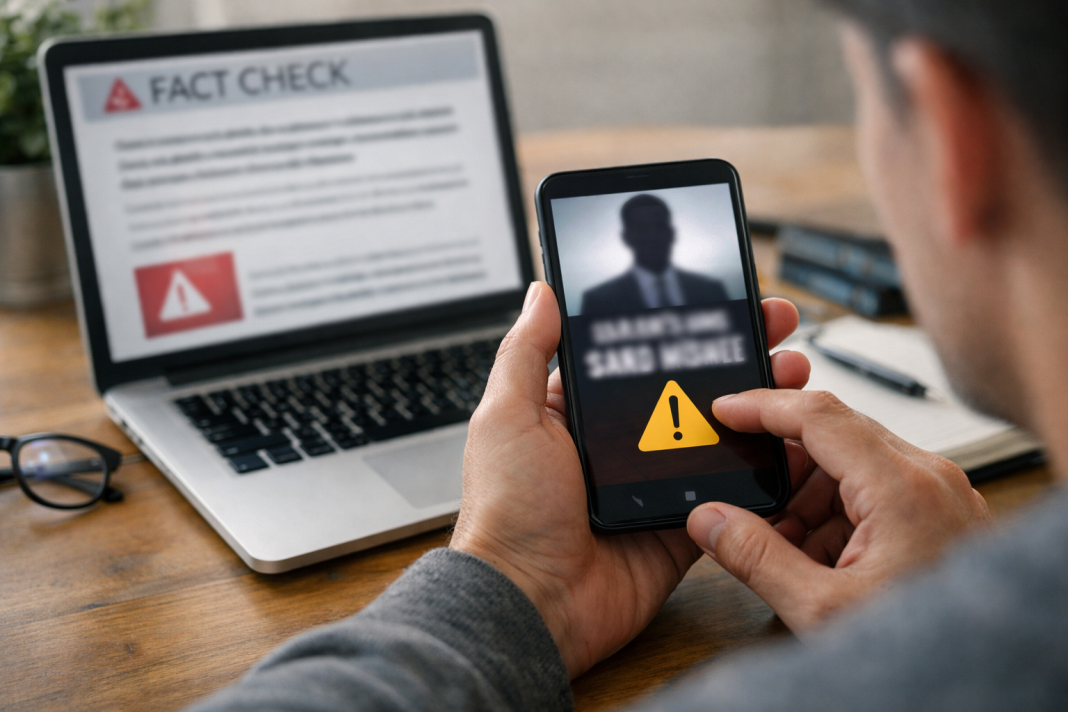

A video showing Prime Minister Narendra Modi promoting an investment platform has been exposed as an AI-generated fraud. The clip promises citizens ₹25 lakh every month after an initial payment of ₹22,000. It borrows the Prime Minister’s face, voice, and public standing to make an impossible offer look official.
The PIB Fact Check warning on X says Modi has not endorsed the platform or any such investment scheme. The episode shows how online fraud has moved beyond poorly written messages. Scammers can now produce convincing videos, buy social-media reach, and direct viewers towards phishing pages.
What PIB Said About The Fake PM Modi ₹25 Lakh Scheme
PIB Fact Check described the circulating clip as digitally manipulated and AI-generated. Its alert says the advertisement falsely claims that investing ₹22,000 can produce ₹25 lakh each month. No programme carrying that promise has been announced by the Prime Minister or the Government of India.
The return itself should stop viewers. Turning ₹22,000 into ₹25 lakh every month means receiving more than 113 times the starting amount every 30 days. Legitimate market investments do not carry such fixed, extraordinary guarantees. The SEBI investor scam guide tells investors to question assured returns and verify whether a promoter is regulated.
The fake PM Modi ₹25 lakh monthly income scheme video fits a wider pattern. PIB’s official channel recently flagged another AI advertisement falsely showing Modi and Finance Minister Nirmala Sitharaman beside an offer of ₹1 lakh daily and ₹30 lakh monthly from ₹22,000. Recent alerts also covered an altered Sitharaman investment video, a fake Mudra loan letter and phishing emails offering e-PAN downloads. The bait changes, but the route stays similar: borrowed authority, urgency and a demand for money or data.
Why AI-Generated Government Scam Ads Look Convincing
Older government scams often depended on copied logos and spelling mistakes. Newer advertisements combine face-swapping, cloned voices, edited news footage, subtitles, and fabricated websites. A genuine speech can be cut into sections, while artificial audio inserts claims the person never made.
Fraudsters also copy the format of normal social-media advertising. A sponsored label, polished graphics, or thousands of views can make a clip appear approved by the platform. None proves legitimacy. Criminals may run an advertisement briefly, move users to WhatsApp or Telegram, collect payments, and replace the page after complaints begin.
India’s updated Information Technology Rules define synthetically generated audio, visual, and audio-visual material. The February 2026 amendments require significant social-media intermediaries to seek user declarations, apply technical checks, and display labels when synthetic content is confirmed. Labels may help, but dishonest uploaders can still hide or misdescribe manipulated media.
How To Spot A Fake Government Investment Video
Do not judge a clip only by lip movement. High-quality deepfakes may look smooth, while genuine compressed videos sometimes appear awkward. Check the offer, original source, destination link, and payment request together.
- Search the exact scheme on the National Portal of India, the concerned ministry’s website, and PIB.
- Open the speaker’s verified account; a major national scheme will not exist only inside one advertisement.
- Pause around the mouth, teeth, ears, and glasses for flicker, warping, or changing facial edges.
- Listen for flat emotion, unusual pauses, mismatched breathing, or pronunciation that shifts midway through sentences.
- Avoid misspelled domains, shortened addresses, unrelated company names, and recently created social-media pages.
- Reject guaranteed income, limited-time deposits, secret registration windows, and requests for OTPs or screen-sharing.
- Check market intermediaries through SEBI Investor Support before sending money or documents.
The PIB Fact Check portal accepts suspicious government-related claims through WhatsApp at +91-8799711259 and email at [email protected]. Save the advertisement link, page name and screenshots before reporting it.
What To Do After Clicking The Scam Advertisement
Close the page without downloading files, installing applications or sharing an OTP. Change passwords immediately if login details were entered, especially when that password is reused. Contact the bank or payment provider quickly if money left the account. Ask them to block further transactions and record the complaint number.
Financial cyber fraud can be reported through the National Cybercrime Reporting Portal or helpline 1930. I4C says the system connects law-enforcement agencies, banks, payment intermediaries and wallets for faster action. A complaint started through 1930 should later be completed on the portal with transaction details and evidence.
Keep chats, receipts, phone numbers, QR codes and bank details. Report the advertisement to the platform as fraud and impersonation. Warn relatives without forwarding the live link, because every fresh share can send another person towards the scam.
Frequently Asked Questions
Is The PM Modi ₹25 Lakh Monthly Income Scheme Genuine?
No, PIB Fact Check confirmed the video is AI-generated and the investment scheme remains fake.
How Much Money Did The Fake Advertisement Ask Users To Invest?
The advertisement demanded ₹22,000 initially while falsely promising users ₹25 lakh as monthly income afterward.
Can A Verified-Looking Social-Media Advertisement Still Be Fraudulent?
Yes, scammers buy advertisements, copy official branding and impersonate public figures through synthetic media campaigns.
Where Should Victims Report Money Lost Through Such Scam Ads?
Call 1930 immediately, contact the bank, then complete your complaint through India’s cybercrime reporting portal.
How Can Government Scheme Claims Be Checked Before Applying?
Search ministry websites, India’s national portal and PIB Fact Check before sharing details or payments.