

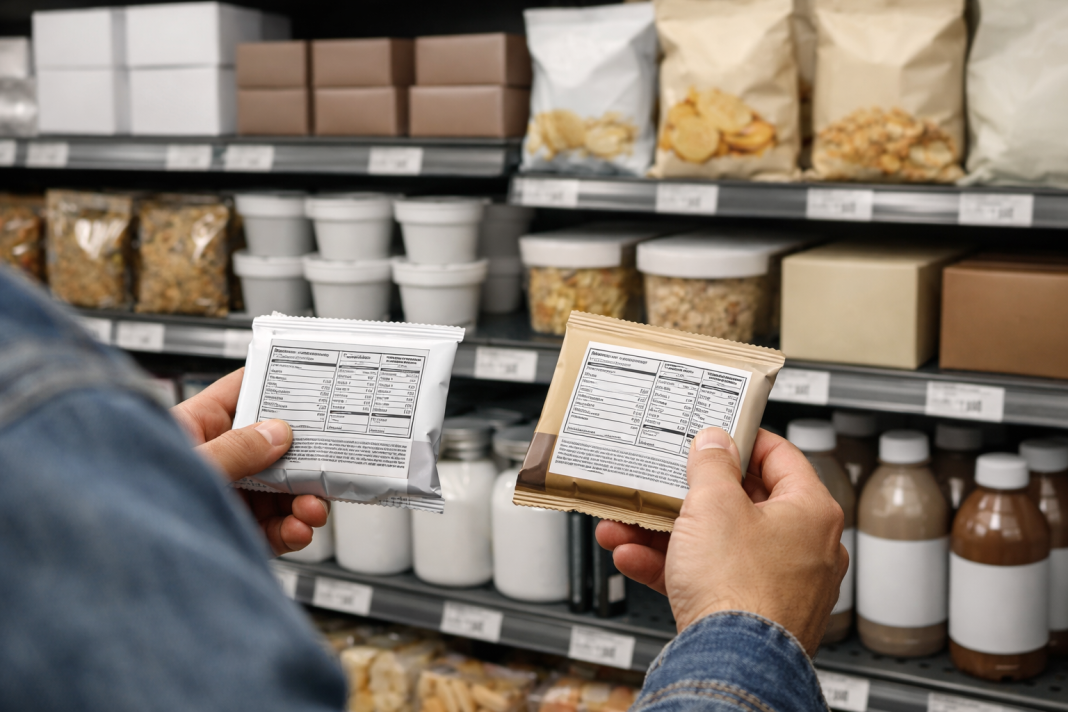

Protein has escaped the gym bag. It now appears in chips, wafers, cookies, yoghurt, lassi, cereal and burger add-ons. Bright packs promise “high protein”, “clean ingredients” or “guilt-free” snacking, often at a premium.
That rush is real. Reuters reported in August 2025 that Indian brands were pushing protein into familiar foods, while McDonald’s sold 32,000 vegetarian protein slices within 24 hours of launch. Search interest in “protein chips” and “protein bar” also reached five-year highs during 2025. Yet protein on the front does not cancel sugar, salt, saturated fat or a long ingredient list on the back.
Protein Has Moved Beyond Gym Shelves
Protein snacks in India are being sold to office workers, parents, students and older adults, not only athletes. Convenience drives demand. A sealed bar is easier to carry than curd, eggs, sprouts or cooked chana. Social media has added glamour, with celebrity-backed wafers and short videos presenting protein as the upgrade every snack needs.
The timing explains why buyers should slow down. In June and July 2026, FSSAI scrutiny of words such as “healthy”, “natural” and “no added sugar” became a national food story. Notices do not prove that every labelled product is poor, but they show why attractive language should never replace the nutrition panel. FSSAI’s official X post dated 19 June 2026 detailed notices over claims and labelling.
A packaged item can supply protein and still be calorie-dense, salty or heavily sweetened. The ICMR-NIN Dietary Guidelines for Indians 2024 advise restricting foods high in fat, salt and sugar, along with ultra-processed foods. Protein should be judged as one part of the food, not as a health certificate.
Read The Back Of The Pack, Not Just The Front
Start with the serving size. Under FSSAI’s current Labelling and Display Regulations, nutrition information is generally shown per 100 g or 100 ml, or for a single-consumption pack, with per-serving details. The panel covers protein, carbohydrates, total and added sugars, fats and sodium. A tiny printed serving can make the numbers look lighter than the quantity people actually eat.
Next, compare similar products on the same basis. If one bar lists 10 g protein per 40 g serving and another lists 12 g per 60 g serving, the larger number is not automatically better. Check calories beside protein. Then inspect added sugar, total sugar, saturated fat and sodium. Savoury protein snacks can hide plenty of salt, while sweet bars may resemble confectionery with extra whey or soy.
FSSAI’s Advertising and Claims Regulations set conditions for protein language. A solid food may use a “source of protein” claim when it supplies at least 10% of the recommended dietary allowance per 100 g or per serving. “High” or “rich” protein requires at least 20% on those bases. These are legal thresholds, not a promise that the full product is balanced.
A 30-Second Protein Snack Check
Before adding a packet to the cart, check:
- Protein per serving and per 100 g, so pack sizes can be compared fairly.
- Calories besides protein, especially for bars, wafers, nut mixes, and baked chips.
- Added sugar, total sugar, saturated fat, and sodium, not one highlighted nutrient.
- The first five ingredients, since ingredients appear in descending order by weight.
- Allergens such as milk, soy, peanuts, tree nuts, gluten or egg.
- Expiry date, storage directions, sealed packaging and the FSSAI licence number.
Ingredients, Allergens, and Price Deserve A Second Look
The protein source changes the product’s taste, digestion, and suitability. Whey and milk proteins will not suit someone with a milk allergy. Soy, peanuts and tree nuts are also common allergens. Pea protein may suit some vegan buyers, but “plant-based” says little about salt, oils, flavours or sweeteners added around it.
Ingredient order can expose the gap between branding and formulation. A pack showing sugar, glucose syrup, refined flour or oil near the top may still contain protein, but it may not fit the reason you are buying it. “No added sugar” also does not mean sugar-free. Total sugars can come from milk, fruit or other ingredients.
Price needs its own calculation. Divide the pack price by grams of protein, then compare it with everyday foods. Roasted chana, peanuts, milk, curd, paneer, eggs, soy chunks and dal can often provide protein for less money, although they differ in portability and shelf life.
Protein snacks in India can be useful during travel, long workdays or after exercise. Buy them for what they contain, not for metallic packaging, influencer reels or one oversized number. A stronger choice usually has a recognisable ingredient base, a worthwhile protein serving, manageable sugar and sodium, and a portion you will genuinely eat.
FAQs About Protein Snacks In India
How Much Protein Should A Snack Contain?
Look for a useful serving amount that fits your diet, appetite, activity level and meals.
Are Protein Chips Healthier Than Regular Chips?
Not automatically; compare protein, calories, sodium, fat, ingredients and serving size before choosing either product.
Is A “No Added Sugar” Protein Bar Sugar-Free?
No; naturally occurring sugars and sweet ingredients may remain, so inspect total sugars and ingredients.
Should Children Eat Packaged Protein Snacks Daily?
Usually not daily; children need varied meals, while specialised products require advice from qualified professionals.
Are Expensive Protein Snacks Always Better?
Price reflects branding and format too; compare protein per serving, ingredients, freshness and overall nutrition.