
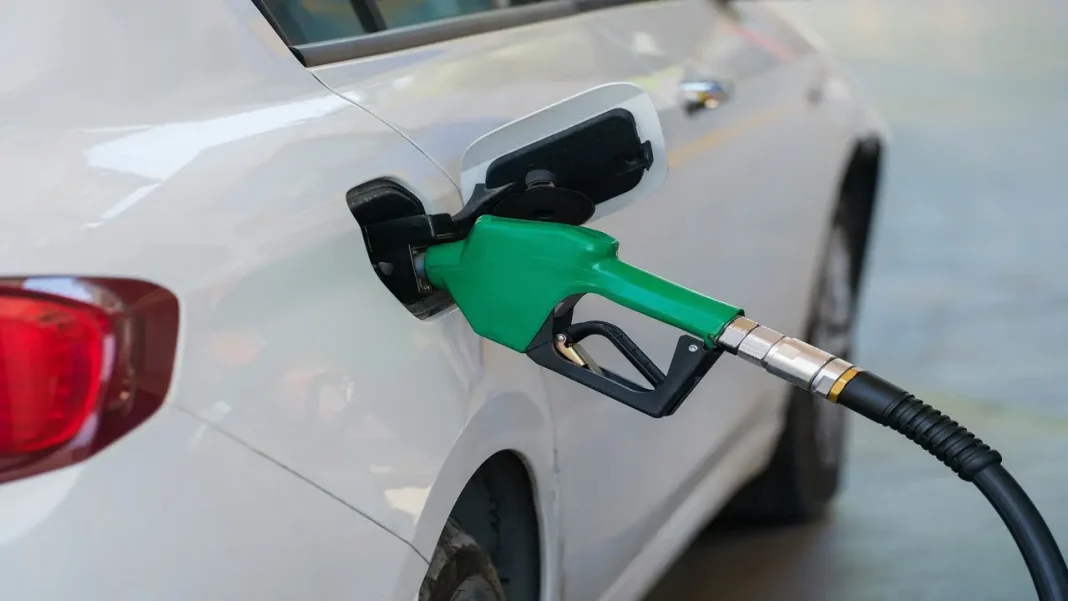

E20 petrol in India contains 20% ethanol and 80% petrol. It has become the country’s standard petrol blend, but motorists still have questions about falling mileage and older engine compatibility.
India’s Petroleum Planning and Analysis Cell recorded 20% average ethanol blending between November 2025 and August 2026. Government testing indicates that E20 may reduce fuel efficiency by 2% to 6%, depending on the vehicle and testing conditions.
Key Highlights
- E20 petrol contains 20% ethanol and 80% petrol.
- India’s average blending reached 20% in the 2025–26 ethanol supply year.
- ARAI testing found a 2%–6% fuel-efficiency reduction.
- Older E10-designed vehicles may experience a 3%–5% mileage decline.
- No nationwide increase beyond E20 had been approved as of October 2026.
What Is E20 Petrol, and Why Is India Using It?
Ethanol is an alcohol-based fuel produced from agricultural feedstocks. Mixing it with petrol reduces the quantity of conventional petrol required for every litre sold.
India introduced ethanol blending through a pilot programme in 2001. The average blend rose from approximately 8.1% in 2020–21 to 19.2% in 2024–25, reaching the 20% target ahead of its original 2030 deadline.
The government sees three major gains from this transition:
- Reduced dependence on imported crude oil.
- Additional demand for agricultural feedstocks.
- Lower lifecycle greenhouse-gas emissions, depending on ethanol production methods.
In a July 23, 2026, Lok Sabha reply, the Petroleum Ministry reported cumulative foreign-exchange savings exceeding ₹1.97 lakh crore under the ethanol blending programme.
For motorists, however, the immediate concern is how far their vehicle travels on one litre.
How Much Does E20 Petrol Affect Vehicle Mileage?
Ethanol contains less energy per litre than petrol. Consequently, a vehicle may consume slightly more fuel to cover the same distance.
The Automotive Research Association of India stated on July 4, 2026, that laboratory-tested E20-compatible vehicles showed a 2%–6% reduction in fuel efficiency.
The government separately estimated a 3%–5% reduction in certain older vehicles designed for E10 petrol.
Take a car previously delivering 20 km/l. A 3% mileage reduction would bring it to approximately 19.4 km/l. At 5%, it would fall to 19 km/l.
These are illustrative calculations, not guaranteed results for every model.
On July 28, 2026, the Ministry of Information and Broadcasting also addressed mileage concerns on X, citing an example of approximately 0.6 km/l lower efficiency.
Traffic, air-conditioning use and tyre pressure complicate comparisons. One disappointing tankful cannot establish whether ethanol alone caused the difference.
Is E20 Petrol Safe for Older Cars and Bikes?
Many vehicles sold before widespread E20 certification have owner’s manuals specifying E10 petrol. That has created understandable uncertainty.
Maruti Suzuki told officials in July 2026 that it had serviced 2.84 crore cars during FY 2025–26, including over 1.5 crore older vehicles. Its service data showed no reported E20-related abnormal corrosion or component wear.
Individual disputes still deserve attention.
A Raipur consumer commission ruling reported in July 2026 ordered replacement of a Grand Vitara sold with an older, non-E20-compatible engine following repeated breakdowns. The dealer had disputed responsibility and raised contaminated fuel as an explanation.
For owners of older vehicles, three details deserve attention:
- Fuel recommendation: Read the manufacturer’s handbook and model-specific advisories.
- Warranty coverage: Obtain clarification from an authorised service centre.
- Mechanical symptoms: Investigate repeated starting problems, leaks or unusual running behaviour rather than automatically blaming ethanol.
An E10 certification label does not establish that an engine will fail on E20. Nor does the absence of widespread failures rule out individual problems.
What Changed in 2026, and What Should Drivers Do?
India’s E20 policy faced fresh scrutiny in 2026 over mileage, fuel pricing and the limited availability of lower ethanol blends.
In August, Bharat Petroleum’s chairman discussed the possibility of offering E10 alongside E20. The discussion did not amount to an approved nationwide E10 rollout.
Motorists concerned about running costs can take three practical steps:
- Record litres purchased and kilometres driven across several comparable trips.
- Keep fuel receipts and service reports when reporting recurring problems.
- Request a written explanation from the manufacturer if fuel compatibility remains unclear.
E20 is now part of everyday motoring in India. Its effect on mileage is measurable, but the actual financial impact depends on fuel consumption, pump prices, and the vehicle itself.
For fresh policy information, follow the Ministry of Petroleum and Natural Gas and official manufacturer advisories.
Frequently Asked Questions
1. Does E20 petrol reduce car mileage?
Yes, some vehicles may deliver fewer kilometres per litre. ARAI reported a 2%–6% reduction in laboratory testing, although actual results vary with driving conditions.
2. Can older cars use E20 petrol in India?
Many older cars operate on E20, and manufacturers have reported no widespread related damage. However, owners should confirm model-specific compatibility and warranty conditions with manufacturers.
3. Is E20 petrol cheaper than regular petrol?
Ethanol blending does not automatically make pump prices cheaper. Drivers need to consider the retail price alongside kilometres travelled per litre to calculate their running costs.
4. Does E20 petrol damage bike engines?
Government testing has not established widespread engine damage from specification-compliant E20 petrol. Individual motorcycles may differ, particularly older models, so manufacturer guidance remains relevant.
5. Will India introduce E25 or E30 petrol soon?
As of October 2026, no nationwide increase beyond E20 had been approved. Higher blends would require further technical assessment and government decisions before implementation.
Explore More Fuel Updates, Vehicle Rules and Driving Guides!
1. Can Your Car Handle E85 Fuel?
Check out E85 fuel compatibility and what Delhi vehicle owners need to know.
2. Can You Refuel Without PUC?
Uncover the No PUC, No Fuel rule and how it affects vehicle owners.
3. Can MG Hector Hawk Run Petrol-Free?
Discover whether the MG Hector Hawk can travel 100 km without petrol.
4. Need Your Delhi PUC Certificate Today?
Find quick ways to obtain a PUC certificate in Delhi-NCR.
5. How Will CAFE III Change Cars?