

The Centre’s decision to replace Higher Education Secretary Vineet Joshi could have passed as routine bureaucracy in quieter weeks. It did not. Joshi has been shifted to the Ministry of Panchayati Raj, while Naresh Pal Gangwar has been appointed Secretary, Department of Higher Education, during fierce protests over alleged examination failures.
The official order does not connect the transfer with the agitation. That distinction is important. Yet politics is read through timing, and this move arrived beside parliamentary disruption, student marches, demands for Education Minister Dharmendra Pradhan’s resignation, and a promise from Prime Minister Narendra Modi to create fast-track courts for paper-leak cases. The government may call it an administrative reshuffle. Students will judge it by what changes next.
Why This Transfer Looks Bigger Than A Routine Reshuffle
Gangwar, a 1994-batch Rajasthan-cadre IAS officer, moves from the Department of Animal Husbandry and Dairying. Joshi, a 1992-batch Manipur-cadre officer, leaves a post that oversees universities, regulators and major higher-education policies. T.K. Anil Kumar has also been appointed School Education Secretary, placing new administrative heads across both education departments.
That does not prove a coordinated cleanup. The wider secretary-level reshuffle covered several ministries. Still, replacing the senior official responsible for higher education while exam anger dominates headlines creates an obvious public expectation: someone new has been asked to steady the system.
DD India’s official X post on the reshuffle confirms Joshi’s shift. The post is useful because it records the personnel decision without attaching a political explanation. That gap between the official wording and public interpretation is where this debate now emerges.
The Protests Are No Longer Only About One Leaked Paper
According to the NTA’s official release, NEET-UG 2026 was initially scheduled for May 3 for approximately 22.79 lakh registered candidates across more than 5,432 centres. It was later held again on June 21, with results declared on July 16. A disruption affecting an examination of that scale does not end when a fresh paper is printed. Families lose money, students lose preparation cycles, counselling calendars move, and faith in ranking systems falls.
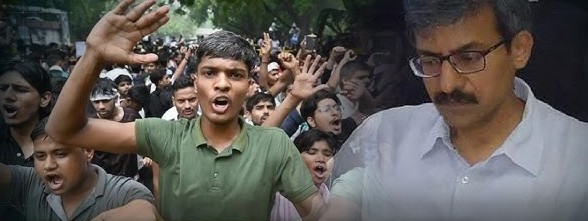
The agitation has also expanded beyond NEET. Protesters have raised recurring complaints about paper security, examination agencies, policing, unemployment and official accountability. Sonam Wangchuk’s 26-day hunger strike, the youth-led Cockroach Janta Party campaign, opposition demonstrations and protests inside and outside Parliament turned an exam controversy into a national political test.
Meanwhile, the NTA’s July 20 notice said some OMR sheets and scorecards circulating after the result were fabricated or digitally altered. That warning may be valid, but it also shows why trust has collapsed. Every document is now disputed, every screenshot travels quickly, and every delay creates another rumour.
What Serious Exam Reform Should Contain
The Prime Minister’s fast-track court announcement raises the cost of paper leaks politically, but punishment after damage cannot be the entire policy. India already has the Public Examinations law, with organised cheating offences carrying imprisonment up to ten years and fines reaching ₹1 crore. Strong penalties mean little when detection, evidence and prosecution move slowly.
A credible reform package should include:
- Independent security audits before every large national examination, followed by public compliance summaries.
- Separate teams for paper creation, printing, transport, centre operations and post-exam data handling.
- Real-time incident reporting, with candidates told quickly whether an exam, centre or shift is affected.
- A legally defined compensation policy covering fees, travel and verified losses after cancellations or re-tests.
- Time-bound grievance decisions, published investigation outcomes and personal accountability for preventable failures.
- External oversight of the NTA, rather than relying only on internal reviews after each controversy.
Technology can help, but “more digital” is not automatically safer. Computer-based tests create server, vendor and cybersecurity risks. Pen-and-paper exams create printing and transport risks. Reform must begin with mapping every point where a question paper, candidate record or score can be manipulated.
Is This A Genuine Reset Or A Temporary Pressure Valve?
My reading is that the government is preparing action, but a major exam overhaul is not yet proven. The secretary change and fast-track court pledge show political urgency. They do not yet amount to a published reform blueprint with deadlines, budgets and named responsibility.
Gangwar’s first credibility test will not be a speech. It will be whether the ministry releases a public plan covering examination security, NTA governance, student compensation, grievance timelines and independent review. The government must also explain which previous safeguards failed. Without that admission, a new officeholder may inherit the same machinery and the same blind spots.
The transfer may buy the Centre some breathing room. It cannot buy back a student’s lost year. If this reshuffle leads to enforceable procedures and visible accountability, it could mark a turning point. If it ends with one bureaucrat moved and another installed, protesters will rightly see it as personnel management, not exam reform.
Frequently Asked Questions
Who replaced Vineet Joshi?
Naresh Pal Gangwar officially replaced Vineet Joshi as Secretary, Department of Higher Education, on Thursday.
Was Joshi removed because of protests?
The official transfer order gives no reason, although its timing has invited strong political scrutiny.
What did Prime Minister Modi announce?
Prime Minister Narendra Modi announced fast-track courts for paper-leak cases and promised stringent punishment nationwide.
Will the NTA be restructured?
No complete restructuring plan is confirmed yet, but leadership changes have raised expectations of reform.
What reforms do students seek?
Students seek secure papers, independent audits, faster grievances, accountable officials, and protection from repeated disruptions.