

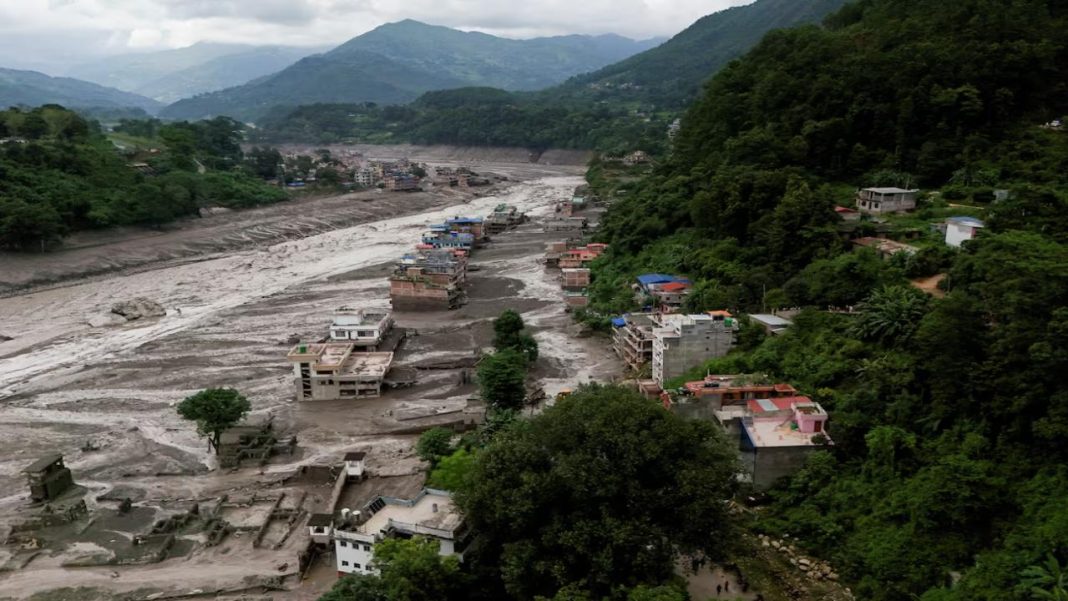

A wall of water and debris tore through northern Nepal on August 26, 2026, hitting Rasuwa and settlements along the Bhote Koshi-Trishuli river system near the Tibet border. The disaster quickly became an international rescue crisis because the corridor was crowded with pilgrims, tourists, residents, police personnel and workers.
One Nepal Tourism Board update listed 142 Indian nationals among missing foreign travellers. Broader missing-person totals kept changing as agencies checked tour manifests, immigration records and survivor reports. That distinction is important: when roads, bridges and phone networks fail, “missing” can include people who are stranded but alive and simply unreachable.
What Triggered The Nepal Flash Floods And Why Did The Toll Rise So Fast?
Early reports suggested an earthquake might have triggered the flood. The US Geological Survey later said the seismic signal was generated by a huge collapse of rock and ice, not an earthquake. Nepalese disaster officials are examining a possible ice-rock avalanche in the upper Lhende River area, followed by a debris blockage and sudden release of water.
The flood rushed through narrow valleys carrying mud, boulders and wreckage. Reuters reported severe damage to villages, roads, bridges and power infrastructure. Helicopters could not immediately land in some badly affected places because of weather, terrain and continuing river danger.
Videos from the border region spread rapidly online, showing vehicles, buildings and bridges disappearing into brown floodwater. But official agencies still had to verify names individually before changing casualty and missing-person lists.
Why Are So Many Indian Pilgrims And Tourists On The Missing Lists?
The Rasuwa corridor is a key gateway for travellers heading toward Tibet, including Kailash Mansarovar pilgrims. The Nepal Tourism Board said missing Indians were linked to organised travel groups, giving authorities passenger lists, hotel bookings, vehicle details, guide contacts and planned border-crossing times to check.
The Official Tourism Update Is Central To The Search
The Nepal Tourism Board’s official X update on August 26 published preliminary agency-wise details of missing tourists. It said the information was being checked with travel companies, guides, security agencies and local officials. That helps explain why the Indian count moved from earlier figures such as 105 and 133 to 142 in later updates.
Reports linked Indian travellers with operators including Samrat Tours & Travels, Leaf Holiday and Himalayan Glacier. Groups from Tamil Nadu and West Bengal were also being traced through state officials and tour coordinators. Changing totals do not necessarily mean more people disappeared later. Names can be removed when contact is restored, or duplicate records are found.
How Are Indian Authorities Tracking Pilgrims And Tourist Groups?
India’s response is running through the Embassy in Kathmandu, the Ministry of External Affairs, state governments, tour operators and Nepalese agencies. Families are being asked for names, mobile numbers, passport details, travel-company information and last-known locations so records can be matched against rescue lists.
- The Indian Embassy activated +977 985 131 6807 and +977 970 910 7500, both available on WhatsApp.
- Embassy officials are coordinating with Nepal’s government for rescue, relief and confirmation of Indian nationals.
- State administrations are collecting names of residents travelling in Nepal and forwarding verified lists centrally.
- Tour manifests are being compared with hospital, shelter, border and rescue information as communications return.
The Embassy’s official emergency contact system gives families a verified channel instead of relying on viral lists. India’s Home Ministry update said the MEA, Defence Ministry, Jal Shakti Ministry and other agencies were monitoring developments, while Bihar and Uttar Pradesh were told to stay alert over downstream river risks.
Prime Minister Narendra Modi spoke with Nepal Prime Minister Balendra Shah and said Indian teams were coordinating closely on rescue and relief, according to the official PM India statement. India also sent humanitarian supplies aboard an Indian Air Force C-130J. External Affairs Minister S. Jaishankar later said HADR and medical assistance had reached Kathmandu, with more support being mobilised.
What Happens Next As Rescue Teams Search The Himalayan Corridor?
The next phase is likely to be a slow reconciliation of lists. Nepalese police, tourism officials, hospitals, district authorities and travel companies must compare names as survivors leave cut-off areas. Families should therefore treat social-media claims cautiously until an embassy or local authority confirms a person’s status.
Officials have also warned that upstream blockages and unstable slopes could produce fresh surges. Search teams are working around broken roads, damaged bridges and debris-filled valleys, while rescue data keeps changing.
For India, the immediate priority is finding citizens, keeping family contact lines open and supporting Nepal’s rescue effort. The 142 figure is best read as a developing official tourism count, not a final casualty number.
FAQs
1. How Many Indians Are Reported Missing In The Nepal Flash Floods?
Nepal Tourism Board updates listed 142 Indian nationals missing, though verification is continuing across agencies.
2. Which Indian Embassy Numbers Can Families Call?
Families can contact +977 985 131 6807 or +977 970 910 7500 for emergency assistance.
3. Were Kailash Mansarovar Pilgrims Among Those Missing?
Yes, several missing Indian groups were travelling through Nepal toward Tibet for Kailash Mansarovar pilgrimage.
4. What Caused The Flash Flood?
Officials are investigating an ice-rock collapse and debris blockage that released floodwater downstream across valleys.