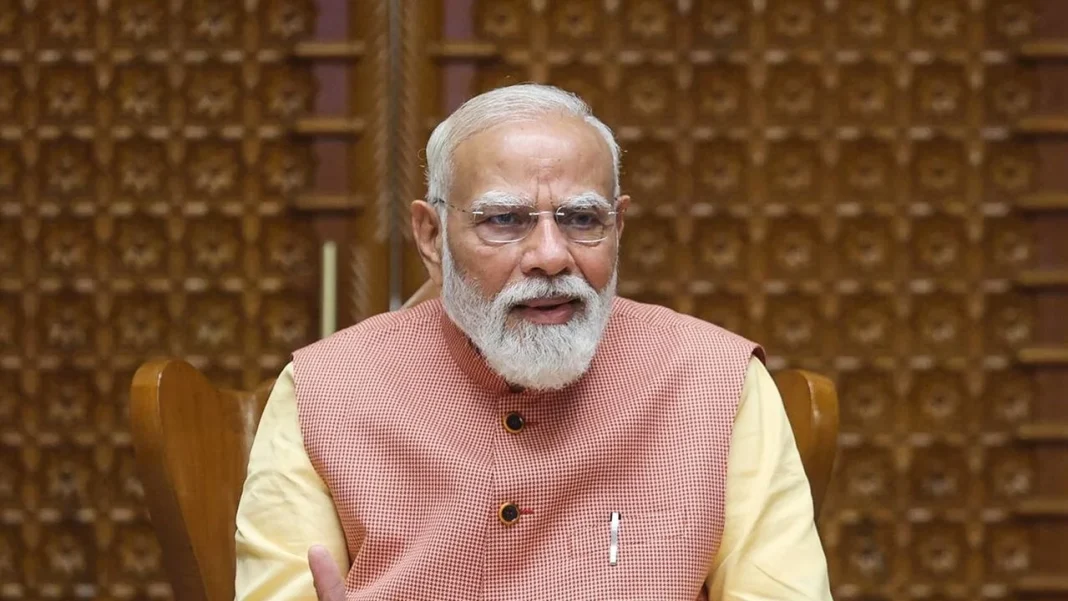

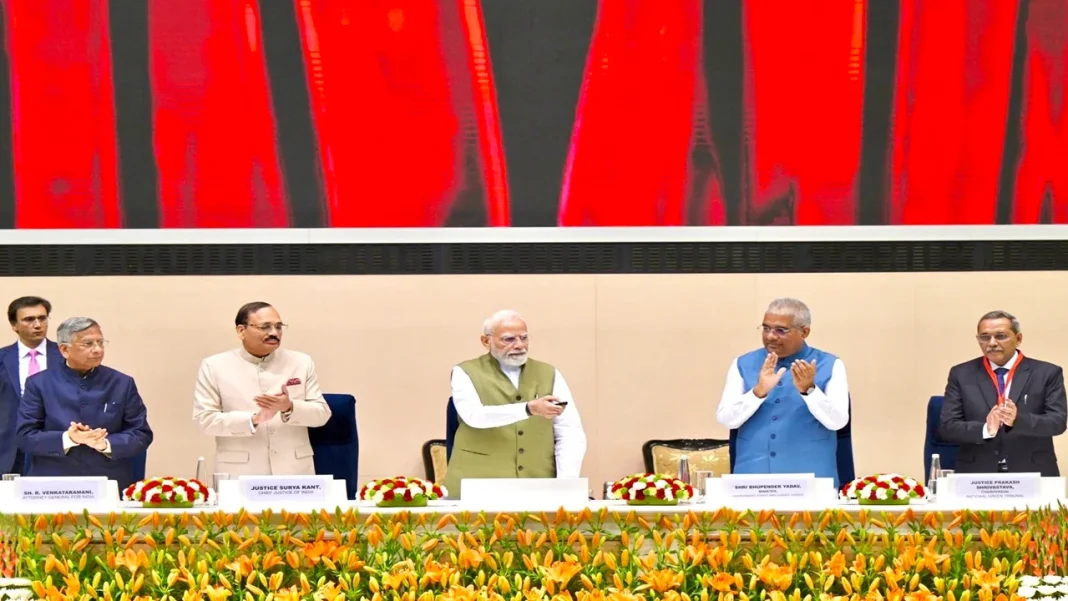

India’s two-day international environment and climate conference opened at Vigyan Bhawan, New Delhi, on September 19, 2026, putting climate justice, environmental law, clean energy, forests and cross-border environmental cooperation on one stage. Prime Minister Narendra Modi inaugurated “The Future of Environment and Climate Dynamics”, organised by the National Green Tribunal. Judges and judicial representatives from 17 countries are taking part alongside Indian judges, officials, experts and environmental bodies.
The conference is not a meeting to approve one named law or announce a ready-made policy package. Its published programme is broader. It is built around policy gaps, implementation, enforcement and future governance, which means several live environmental policy debates could feed into its recommendations.
Key Highlights From The New Delhi Climate Conference
- The NGT conference runs on September 19 and 20 at Vigyan Bhawan.
- Four technical sessions cover climate justice, environmental governance, planetary challenges and forest protection.
- Clean energy, green infrastructure, sustainable finance and liveable cities are listed in the agenda.
- Transboundary air pollution, shared water resources, biodiversity and marine ecosystems appear in Sunday’s programme.
- President Droupadi Murmu is scheduled to attend the valedictory session on September 20.
What Is The NGT Conference Trying To Do?
According to the Prime Minister’s Office, the gathering is meant to exchange judicial approaches, scientific knowledge and environmental governance experience while examining gaps in policy formulation, implementation and enforcement. The NGT’s official conference programme also lists circular economy, biodiversity, climate resilience and sustainable energy among its main themes.
That mix is important because the room includes courts, ministries and regulatory bodies such as State Environment Impact Assessment Authorities and State Wetland Authorities. The discussions can therefore move beyond climate targets and into how rules are applied, monitored and enforced.
Modi also used his opening speech to highlight India’s renewable-energy expansion, circular economy push, climate-resilient agriculture and forest cover. He said solar capacity had risen from about 2 GW twelve years ago to more than 160 GW. His official X account also posted from the conference, saying development and environmental sustainability can move together.
Which Policy Areas Could Come Under Discussion?
The clearest policy signals come from the four technical-session agendas rather than speculation. Saturday’s first session focuses on climate justice, equity, vulnerable communities, youth participation and environmental safeguards. That could bring adaptation finance, access to resources and rights-based climate policy into the conversation.
A second session turns to environmental law and governance. Its listed topics include stronger institutions, enforcement mechanisms, sustainable cities, pollution control, biodiversity conservation, clean-energy transition, green infrastructure and green finance. These are policy areas where implementation rules, institutional coordination and compliance systems can become as important as headline targets.
Sunday widens the lens. The “Planetary Environmental Challenges and Cooperation” session covers climate change, biodiversity loss, land degradation, water scarcity, shared natural resources and transboundary problems. Air pollution, shared waters, marine ecosystems and cooperation across jurisdictions are specifically named.
Forests get a separate session. The programme includes forest restoration, community participation, fires, land-use change, satellite monitoring and an Asian Development Bank Model Forest Act initiative. That makes forest governance one of the conference’s most concrete legal-policy tracks.
Why Clean Energy, Waste And Forest Rules Are In Focus
The opening speech pushed several current government themes into the spotlight. Modi cited rooftop solar, solar pumps for farmers, green hydrogen, clean mobility, nuclear energy, agroforestry and waste-to-resource programmes. He also referred to the ban on identified single-use plastic items and the circular-economy approach of reducing, reusing and recycling waste.
Still, the conference should not be read as proof that changes to any particular environmental law are imminent. The published sessions describe recommendations, cooperation and a future roadmap. Any actual amendment, notification or new scheme would require a separate government or regulatory process.
The strongest outcome to watch will be whether the two-day meeting produces specific recommendations on enforcement, climate finance, sustainable cities, forest restoration or cross-border environmental disputes. Sunday’s sessions could also show how international judicial and policy experience is folded into India’s environmental governance debate.
President Droupadi Murmu is scheduled to attend the valedictory session on September 20. Until the conference closes, the safer reading is that New Delhi is hosting a policy and legal dialogue, not announcing a single new climate rule.
FAQs
Who organised the New Delhi environment conference?
The NGT organised the two-day conference at Vigyan Bhawan in New Delhi on September 19-20.
Which topics are central to the conference?
Climate justice, environmental law, clean energy, green finance, forests, and transboundary cooperation led discussions across sessions.
Has India announced a new climate policy at the event?
No specific policy amendment was announced; sessions are designed to produce recommendations and governance roadmaps.
What did Prime Minister Modi highlight at the opening?
Prime Minister Modi highlighted renewable energy, solar growth, circular economy, climate-resilient crops, and forest cover.
Who is expected at the closing session?
President Droupadi Murmu is scheduled to attend the valedictory session on September 20 in Delhi.
Major Developments Shaping India Today
Can India Become A Chip Manufacturing Hub?
Check out how SEMICON India 2026 could shape the country’s semiconductor ambitions.
What Could Modi And Xi Discuss?
Find out what key issues may feature in the Modi-Xi meeting.
What Could India And Russia Announce?
Uncover the strategic areas India and Russia could discuss at BRICS.
What Climate Decisions Could BRICS Make?
Dive into the environment meetings and their potential sustainability priorities.
What Do New Challan Rules Change?
Browse the latest traffic challan changes and court appeal requirements.