

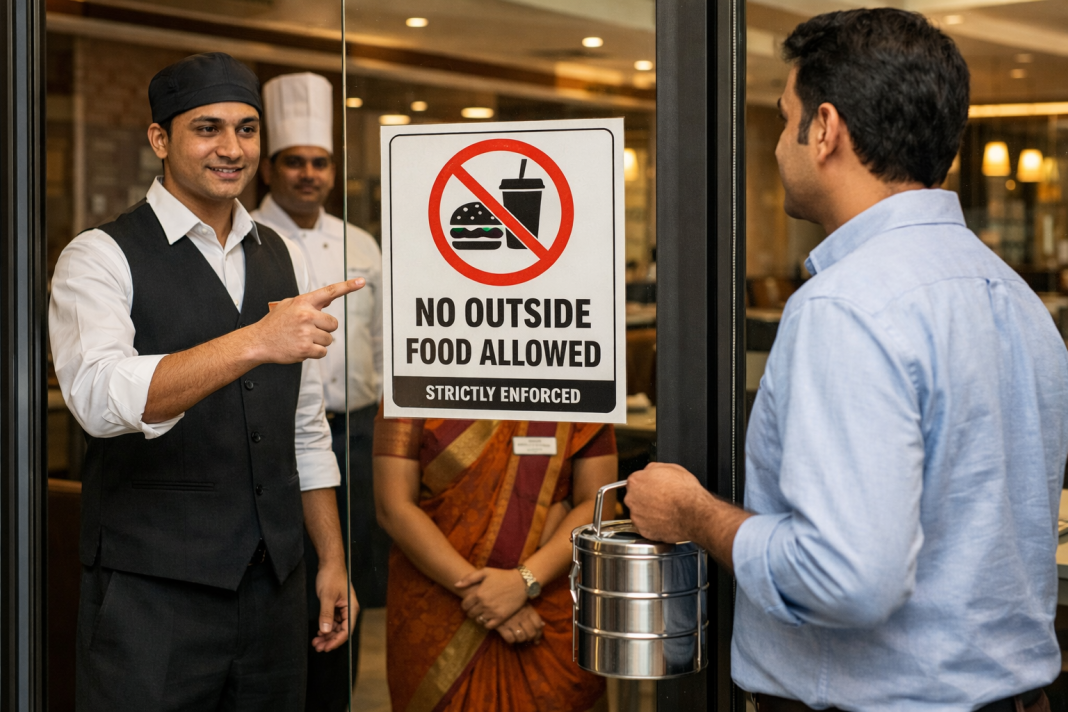

A fresh Mumbai consumer court ruling has sharpened a question many diners quietly ask: if someone is elderly, unwell, or on a restricted diet, can a restaurant still refuse outside home food? In this case, the answer was yes. The Mumbai Suburban District Consumer Disputes Redressal Commission dismissed a complaint after a woman said a Pune restaurant would not allow her mother-in-law to eat home-cooked food on its premises. The commission held that a restaurant can regulate how its space is used, and that refusal by itself does not amount to a deficiency in service or an unfair trade practice.
The ruling lands at a time when restaurant rights and consumer rights are colliding more often in India. Diners are more willing to challenge bills, service charges, water pricing, and food handling policies. But this order makes one thing plain: not every refusal by a restaurant becomes a legal wrong.
What Exactly Happened In The Mumbai Consumer Court Case
The complaint was filed by Kurla resident Kalpana Gaikwad against Pune-based Malvan Tadka Seafood Kitchen and Bar after the restaurant declined permission for her “unwell” mother-in-law to consume home-cooked food inside the premises. She also challenged the pricing of bottled water. The commission, however, found the medical material weak. It said the pathology report only showed lab findings and did not contain a doctor’s prescription, dietary instruction, or any record proving restaurant food was medically barred.
That gap proved decisive. The commission said there was no solid material to show that outside food was medically indispensable. It then added that no law was pointed out requiring a restaurant to permit outside food on its premises. On that basis, the complaint failed.
Why The Commission Sided With The Restaurant
The order rested on two simple ideas. First, restaurants are entitled to regulate use of their premises and impose reasonable conditions tied to service. Second, a customer cannot convert every disliked policy into a consumer dispute unless there is a legal duty being breached.
The commission also said hotels and restaurants offer a composite package of services, not just loose retail items. That is why it did not accept the over-MRP bottled water argument in this setting. According to the order, the customer visits for seating, table service, ambience, maintenance, hospitality, and related amenities, not only to buy a bottle off a shelf.
What This Judgment Does And Does Not Mean
- A restaurant can frame a no-outside-food policy.
- A diner cannot win only by saying the policy felt unfair.
- Strong medical proof could still matter in a different case.
- This ruling does not give restaurants a free pass on every billing practice.
- Service charge rules remain separate from outside food rules.
Where Consumers Still Have Strong Rights
This is where the story gets more interesting. The Mumbai ruling supports restaurant discretion on outside food, but consumer law is still hitting eateries hard on other practices. In January 2026, the Central Consumer Protection Authority said a mandatory service charge is an unfair trade practice and acted against 27 restaurants. It also said diners cannot be denied entry or service for refusing a service charge.
That means the line is not “restaurants can do whatever they want.” The line is narrower. They may control premises and service conditions, but they cannot force a charge that consumer law treats as optional. The Department of Consumer Affairs’ Jago Grahak Jago handle also flagged the 2026 crackdown on forced service charges through its official social media communication.
So, the legal takeaway is sharp: policy discretion is valid where no statutory duty says otherwise, but once consumer protection rules directly prohibit a practice, restaurants lose that shield.
Why This Story Is Getting Attention Now
This case is trending because it touches a daily-life friction point. Families often carry food for children, seniors, patients, or people with strict dietary habits. Restaurants, on the other hand, worry about hygiene, liability, service flow, and business control. The commission effectively said courts will not rewrite that balance unless the complainant shows a clear legal breach backed by credible evidence.
It also fits a bigger consumer-law pattern. In 2025 and 2026, courts and regulators have been more active on restaurant billing conduct, especially service charge disputes. That is why this order stands out: it backs the restaurant on outside food, even while the wider legal climate remains strict on unfair billing.
For restaurants, the message is to keep policies visible, neutral, and consistently applied. For diners, the lesson is different: if a medical exception is central to the complaint, bring a doctor’s prescription, treatment papers, and a direct dietary instruction. Without that, a case like this may not travel far.
FAQs
Can restaurants in India ban outside home food?
Yes, this ruling says they can, unless a specific law or proven exception overrides policy.
Did the customer lose because she lacked evidence?
Yes, the commission found no doctor’s prescription proving home food was medically necessary there.
Does this ruling allow forced service charges too?
No, service charge remains optional under CCPA rules and Delhi High Court-backed enforcement action.
Can restaurants charge above MRP for bottled water?
In dine-in composite service settings, courts have often treated it differently from retail sales.
What should diners carry for a medical-food exception?
Bring prescriptions, treatment papers, dietary instructions, and records linking the condition to restricted eating.