

Uttar Pradesh has stepped up its response to H1N1 after 551 swine-flu cases were reported across 57 districts, with infections clustering heavily in a few urban centres. Deputy Chief Minister and Health Minister Brajesh Pathak reviewed hospital readiness on August 29 and ordered separate flu OPDs, registration counters, testing for seriously ill patients and four to six isolation beds at district and joint hospitals.
One detail needs clearing up. Barabanki, Shravasti, Jhansi and Gorakhpur were the four districts specifically pulled up over weak hospital preparedness. The isolation-bed direction itself is statewide. Meanwhile, Gautam Buddh Nagar, Lucknow, Meerut and Ghaziabad currently account for nearly 70% of UP’s reported H1N1 cases.
What Has Uttar Pradesh Ordered Hospitals To Do?
The Indian Express report on the UP preparedness review says Pathak checked wards, OPDs and emergency services through the state’s HOPE monitoring system and asked officials to fix shortages without delay.
Hospitals have been told to keep oseltamivir, commonly sold as Tamiflu, along with oxygen, nebulisers, masks and bronchodilators. Separate registration counters are intended to move fever and respiratory patients through screening faster instead of leaving them in crowded general queues.
Key measures now being pushed across Uttar Pradesh include:
- Four to six isolation beds at district and joint hospitals for seriously ill flu patients.
- Separate OPDs and registration counters where fever and respiratory complaints are running higher.
- Adequate stocks of antivirals, oxygen and respiratory-care equipment.
- Flu testing for seriously ill patients, particularly those with breathing difficulty.
- Extra surveillance in districts bordering Nepal and closer tracking of severe respiratory illness.
The Hindustan Times state tally puts Gautam Buddh Nagar at 189 cases, Lucknow at 113, Meerut at 54 and Ghaziabad at 32. Muzaffarnagar has reported 11 and Bulandshahr 10.
Is H1N1 Actually Rising Again In India?
Reported infections are rising, but health authorities are not describing the current situation as a repeat of the 2009 pandemic. In its August 25 seasonal influenza advisory, the Union Health Ministry said surveillance had found no new or unusual H1N1 strain and no unusual genetic shift.
H1N1 pdm09, the virus linked to the 2009 pandemic, now circulates as seasonal influenza. ICMR Director General Dr Rajiv Bahl said the changes being seen are expected seasonal changes.
Delhi offers one of the clearest signs of the current rise. The capital had recorded 2,308 H1N1 cases by August 26, while 138 new infections were reported within one 24-hour period. Hospitals there were also told to reserve isolation beds.
Fresh reports are appearing inside UP too. Varanasi had four confirmed cases by August 31, all described as stable, while a woman in Prayagraj tested positive and was admitted to an isolation ward. Hapur has also reported an H1N1-linked death, adding to concern in western Uttar Pradesh.
In Varanasi, the numbers need context. District reporting cited four confirmed local cases, while BHU hospital separately had 10 swine-flu patients under care, including three from Azamgarh. Hospital admission numbers can include people from other districts, so they should not be read as the district’s case tally. Local authorities have also expanded reserved beds and separate OPD arrangements.
What Symptoms And Precautions Should Families Watch?
H1N1 spreads mainly through respiratory droplets released when an infected person coughs, sneezes or talks. Symptoms often resemble regular seasonal flu: fever, cough, sore throat, blocked or runny nose, headache, body ache, weakness and heavy tiredness.
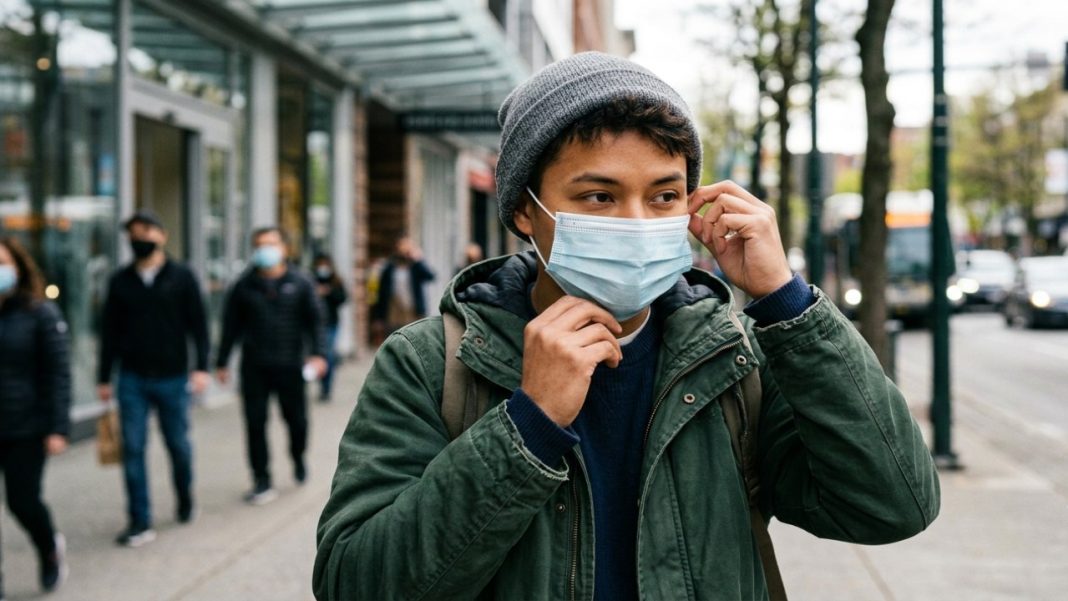
The National Centre for Disease Control’s seasonal influenza guidance includes advice on patient categorisation, home care, masks, testing and clinical management. The Health Ministry recommends frequent handwashing, staying home while sick, resting, drinking enough fluids and seeking medical care when symptoms become severe or keep worsening.
Who Faces Higher Risk?
Older adults, young children, people with chronic illnesses and those with compromised immunity can face more complications. Breathing difficulty or symptoms that become severe, persistent or progressively worse should prompt medical attention. Antivirals and antibiotics should not be self-started without medical advice.
For most families, the UP swine-flu alert is a call for caution rather than panic. The rise is visible in case numbers, but official surveillance has not found evidence of a newly dangerous strain.
FAQs On The UP Swine-Flu Alert
How many H1N1 cases has Uttar Pradesh reported?
Uttar Pradesh has reported 551 H1N1 cases across 57 districts, according to recent state data.
Which UP district has reported the most H1N1 cases?
Gautam Buddh Nagar leads Uttar Pradesh with 189 H1N1 cases in the latest state tally.
Are isolation beds being prepared only in four districts?
No, hospitals statewide were told to keep four to six isolation beds ready for patients.
Is the H1N1 virus circulating now a new strain?
No, ICMR says current H1N1 pdm09 circulation shows expected seasonal changes, not a new strain.
When should someone with flu symptoms seek medical care?
Seek advice when symptoms become severe, persist, worsen, or include breathing difficulty or chest pain.
More About Flu Defence as H1N1 Cases
UP Announces Free Bus Travel For Elderly Women: Who Will Qualify And When Could The Scheme Begin?